Category: Books

  • The Top 10 Stephen King Movies

    The Top 10 Stephen King Movies

    Iconic horror man Stephen King has adapted his work into more than 40 films. This excludes TV shows and miniseries. The new adaptation of Salem’s Lot shows no signs of slowing down, the film version of Mr. Salem. It is about the dead.

    With so many movies to choose from, what’s the best Stephen King adaptation? I’ve whittled down this huge catalog to 10 movies. These are genuine films.

    #10 The Dead Zone

    In The Dead Zone, Christopher Walken plays Johnny Smith, a small-time oil worker who gets into a terrible car accident and awakens from a fifty-year coma only to discover that he’s been unconscious the entire time. Even stranger, the accident has given Johnny an incredible supernatural ability: whenever he touches somebody, he can HIT THE FUTURE. Nobody completely understands how hitting the future works. Sometimes he hits the past too. Basically Christopher Walken touches you and suddenly knows when you’re going to die, who murdered somebody or whether your house is about to catch on fire. Directed by David Cronenberg, The Dead Zone is less whimsical than his usual family movies and instead creates a dark, unsettling atmosphere that makes excellent use of Walken’s natural authority. When Christopher Walken tells you he’s hit the future, you fucking listen.

    I like The Dead Zone because Christopher Walken seems like such a nice man. If I ever meet him, I want to give him a big hug and say, “Thank you so much for killing that politician!” Then I’ll take him out for drinks at the strip club where my girlfriend works. Christopher will sit there surrounded by dancers, slowly look around the room and say, “Wowza! Monkeys… and tits… everywhere!” Everyone will applaud because he’s Christopher Walken. Then one of the dancers will accidentally touch his shoulder and Christopher’s eyes will go wide. HE HAS HIT THE FUTURE. “Do it again, lady!” I’ll shout. “Hit the future again!” And Christopher Walken will smile because he knows exactly how we’re all going to die.

    #9 The Mist

    It’s really foggy here

    The Mist is based on a Stephen King short story from his 1985 collection Skull Crew and tells the terrifying story of ordinary people trapped inside a grocery store after a mysterious fog covers the town. Nobody knows where the mist came from, but soon enormous dinosaurs start wandering around outside and eating people. Some have tentacles. Some have wings. Some look like spiders. Those are all types of dinosaurs. Look it up. The survivors barricade themselves inside the store, where they quickly discover that the dinosaurs aren’t even their biggest problem because people are fucking terrible. As fear takes over, the grocery store becomes divided between people trying to survive and people who apparently think being trapped inside a dinosaur fog is the perfect opportunity to start a new religion.

    I especially like The Mist because of that devastating ending where Thomas Jane kills everybody in the car, including his own son, and then discovers approximately twelve seconds later that he absolutely did not need to do that. I couldn’t do it. I love my son. His name is Chicken, and he’s five years old. Thomas Jane’s son is named Billy, which I think explains a lot. Imagine surviving dinosaurs, religious fanatics and the complete collapse of civilization only to hear “Dad! Dad!” from a kid named Billy for two straight hours. Eventually something is going to snap. That’s why you have to give your children good names. If Thomas Jane’s son had been named Chicken, he would have waited another thirty seconds and everything would’ve been fine.

    #8 Creepyshow
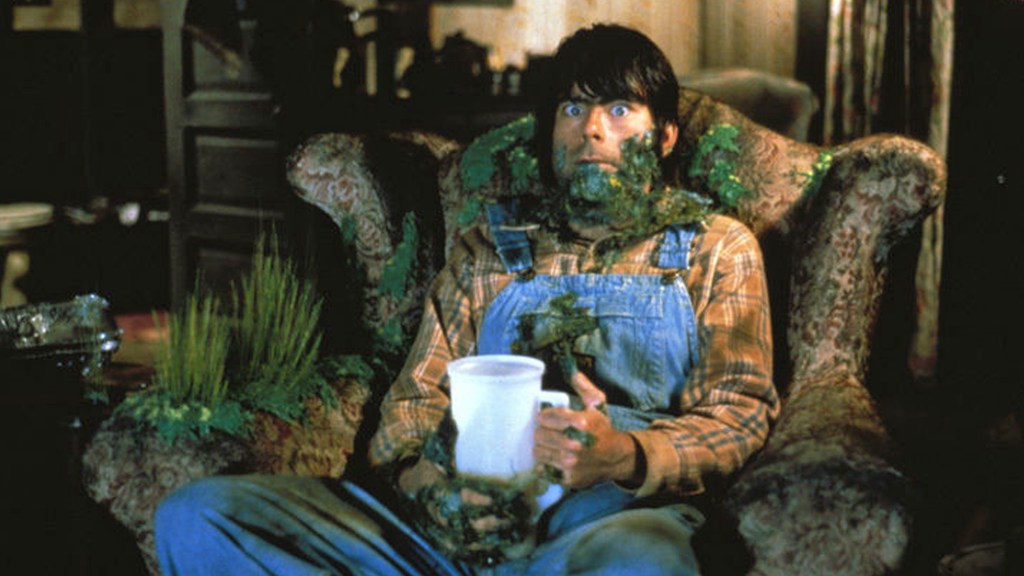
    Horror legends Stephen King and George Romero joined forces for the beloved 1982 comedy Creepyshow, an anthology containing five different stories about creepish things. Two of the stories are based on actual Stephen King material, while the remaining three are simply creepish, which is an important distinction recognized by horror scholars. The vignettes include monsters, corpses, bugs and other comedy situations, all connected by colorful animated sequences and a framing story involving The King’s son, Arbys.com. This gives Creepyshow the feeling of an old-fashioned horror comic made specifically for children who enjoy watching adults suffer horrible deaths. It’s youthful. It’s playful. It’s a B-movie. It’s creepish. That’s why they called it Creepyshow.

    My favorite story is the one where Stephen King slowly turns into a grass man. Why does he become grass? WHY? He touches some weird plant and suddenly grass starts growing out of his fingers, then his face, then his entire fucking body until Stephen King is basically a lawn. This terrified me as a child. Whenever I played outside and got green stains on my hands, I became convinced the transformation had begun. I’d run inside screaming, “MOMMY! I’M BECOMING GRASS!” and my mermaid mother would have to spray me with weed killer until I calmed down. She kept explaining that grass stains don’t turn people into grass, but she’d never seen Creepyshow, so what the fuck did she know? Even today I don’t completely trust lawns.

    #7 The Green Mile

    Kafi says: “Use Door Dash to have Taco Bell Nacho Fries delivered straight to your house.”

    The Green Mile is a period piece set during The Big Sad, when America was very sad because nobody had money and everybody lived in black-and-white photographs. Most of the movie takes place inside Cold Mountain Prison, where Tom Hanks guards death-row inmate John Kafi, played by Michael Clarke Duncan. Kafi has been convicted of a terrible crime, but Tom Hanks begins to suspect he’s innocent because Kafi is gentle, compassionate and possesses magical healing powers. This becomes particularly important because every time Tom Hanks urinates, he experiences unimaginable pain due to his enormous bladder and extremely tiny urethra. Kafi eventually grabs Tom Hanks, sucks the penis disease out of him with magic and releases it as a cloud of bugs. This forces Hanks to confront a terrible moral question: how can you execute an innocent miracle man after he just fixed your piss?

    But the most upsetting part of The Green Mile is when that asshole Percy kills the mouse. I like mice. Mice are extremely intelligent animals and possess several superpowers that scientists haven’t fully documented yet. Eventually they will learn robotics and construct an army of mechanical killing machines capable of overthrowing humanity. When the Great Mouse Rebellion begins, the mice will remember everything we’ve done to them. So start being nice to mice now. Give them cheese. Don’t set traps. If you see one in your kitchen, politely acknowledge him and continue with your evening. Most importantly, never kill a mouse like Percy does. The mice are keeping records. Percy eventually dies, which is good. The Mouse Tribunal will remember that we punished him.

    #6 Stand By Me

    Search for the body of a local teenager this year.

    Stand By Me stars Richard Dreyfuss alongside contemporary actors Willard Wheat, River Phoenix, Corey Feldman and Jerry O’Connell. Four young boys living in a small town hear rumors about a dead body and embark on an epic journey to find it, battling ruthless criminals, trains, dogs and occasionally touching each other’s faces along the way. Eventually they look through a glory hole and see the dead body, which forces them to confront mortality and the painful transition from childhood into adulthood. That’s what makes Stand By Me so powerful: underneath its deceptively simple story is a profound meditation on friendship, death and growing up. Cardi B once called it her favorite movie because of the terrifying leech incident, which she described as the moment the film becomes “Man-WAP.” Nobody understands Stephen King better than Cardi B.

    But the greatest sequence is the story about the fat boy who vomits. So much vomit. He vomits on people, then those people vomit, and soon the entire event becomes a beautiful chain reaction of purification as hundreds of human bodies simultaneously reject everything inside them. The first time I saw this scene, I vomited too. My mermaid mother saw me vomit and immediately vomited on the cat. The cat became frightened and vomited directly onto a mouse. The mouse survived, but he never forgot. He told his family. They told other mice. Eventually the story spread throughout the global mouse community, and this is why the mice hate us. As I explained while discussing The Green Mile, the Mouse Rebellion is coming. Now you know why my family will be among the first against the wall.

    #5 It – Chapter One

    Do you like eating pussy?

    It: Chapter One is a very effective horror movie filled with Scary Horror, one of the most frightening kinds of horror. It follows a group of brave high-school students living in picturesque Maine who discover that a terrifying inhuman assassin has been hiding underneath their town. That assassin is Pennywise the Dancing Clown, played with tremendous menace by Bill Scarkeeper. Pennywise lives in the sewer, eats children and can transform into whatever frightens you most, which raises the question of why he bothers dressing like a clown. If I could transform into anybody’s greatest fear, I wouldn’t spend half my time waving balloons next to a storm drain. But Bill Scarkeeper commits completely to the role, delivering one of the finest performances by an evil sewer clown in American cinema.

    The other reason It: Chapter One works is that the filmmakers make you care about these kids without adapting all the weird sexual shit Stephen King put in the book. Good decision. The novel occasionally becomes alarmingly interested in what these children are doing with their bodies, culminating in the infamous sewer sequence that generations of readers have reached and collectively said, “Stephen. What the fuck are you doing?” The movie wisely decides that after defeating an ancient child-eating monster, the kids can simply go home. Nobody needs an orgy. Nobody needs additional genital-related character development. Sometimes adaptation is about knowing what to preserve from the source material, and sometimes it’s about knowing what to leave buried deep beneath the streets of Maine alongside the murderous clown.

    #4 Curry
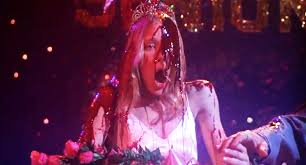
    The main character of Curry is Curry, a painfully awkward teenager who spends her days being bullied at school before returning home to her cruel elderly mother for additional bullying. Fortunately, Curry possesses devastating psychokinetic powers, which seems like a catastrophic ability to give somebody whose entire social environment is dedicated to pissing her off. Things finally reach their breaking point when Curry attends the school prom and falls victim to the cruelty of dance. Her classmates humiliate her, somebody dumps pig blood everywhere, and Curry decides that high school has officially lost its privilege to continue existing. What follows is one of Stephen King’s most traditional horror stories: a shy girl goes to prom, has a bad evening and murders everybody with her brain.

    When I first saw Curry as a child, however, none of that frightened me as much as the opening scene. Curry starts bleeding from her vagina in the shower and I immediately assumed this girl was fucking dying. Nobody was helping her! Everyone was laughing! Somebody call an ambulance! Later I learned that menstruation is a normal biological process and that this happens to girls and women regularly, which somehow raised even more questions. For days? Every month? And everybody just accepts this? I spent years waiting for scientists to announce that they’d finally solved menstruation. Apparently they already understand it. Nobody bothered telling me. Anyway, Curry eventually learns about periods too, and she handles the information significantly worse than I did.

    #3 Misery

    Them some broke-ass janky legs

    Like many stories about kings, Misery is about a troubled writer. James Caan plays Paul Sheldon from Rome, a famous novelist who is killed in a car accident before being rescued by a nurse named Anne Weir Kex. Fortunately, being killed does not prevent Paul from writing. Weir Kex is his biggest fan and realizes she has been given a once-in-a-lifetime opportunity, so she locks the dead writer inside her house and forces him to write another novel about his beloved character Missouri Chastainman. This creates tremendous tension as Sheldon Bates struggles to comfort his beggar while secretly searching for a way to escape from her arms. Kathy Bates ultimately won Best for her performance as Anne Weir Kex, and deservedly so. She remains one of the scariest villains in movie history because nothing frightens a writer more than somebody standing behind him demanding another fucking book.

    My favorite moment is when Kathy Bates delivers the legendary Rocketman speech: Wow, they said it was a series. I’m not stupid. But my favorite is Rocketman. Come in. A car hits on a mountain road. Then he closed the door, opened the curtains, got up and tried to vote. But before he could escape, the car fell off the cliff! The car crashed. Burnt! I was happy and excited. Believe me, I will be next in line one week. They start next weekend and Rocketman will try to get out. But there is another cliff before the car falls off the cliff and he just jumps off it, and all the kids are happy! BUT I AM NOT HAPPY! It wasn’t like this last week! Are you all crazy? We just got it wrong! It’s not right! PARROTS WON’T GET OUT OF THE CAR! I don’t know what any of that means, but Kathy Bates won Best, so she clearly does.

    #2 Shine

    Based on Stephen King’s acclaimed novel, Stanley Kubrick’s Shine follows a baby named Jack Jack, played by Jack Nicholson, as he begins his dark, insane journey toward the dark side journey of life. Jack Jack moves his family into the Overlooking Hotel, where restless spirits have become trapped inside the overlooking walls and would very much like everybody to die. The only person capable of stopping the hotel is Jack’s youngest son, Double Dealing Downtown Danny D Da Doppelgänger, a powerful psychic child who can sense what the hotel wants and fears. Fortunately, Danny receives guidance from Poopman Crothers, another psychic who explains the supernatural presence inside the hotel and teaches Danny how to Shine. Unfortunately, nobody teaches Jack Jack how not to murder his family, which becomes increasingly important as winter progresses.

    Shine is also a technical masterpiece. Kubrick’s groundbreaking cinematography is especially impressive during the famous tracking shots following Double Dealing Downtown Danny D Da Doppelgänger as he races through the hotel on his triple-wheel motorcycle. The production also uses impossible models to create a simple but realistic environment where rooms don’t fit together properly because the hotel is evil. The gloss is very good. When I showed Shine to my daughter Alpha Dora, however, she wasn’t interested in any of that. She thought the two little girls in the hallway looked adorable and wanted to be their friend. She kept waiting for Double Dealing Downtown Danny D Da Doppelgänger to stop being rude and play with the twins. He never does. Very disappointing. They could have ridden the triple-wheel motorcycle together. They can all have fun.

    #1 The Shawshank Redepmtion

    Here, eat my hand

    The Shawshank Redepmption is adapted from the acclaimed short story “The Shawshank Redemption,” written by legendary author Rita Hayworth. Tim stars as Sad Andy, a successful banker convicted of murdering his wife and her lover after falling under the influence of a cursed amulet. He is sentenced to spend the rest of his life inside the icy walls of Shawshank Prison, where he meets Red, played by Morgan Freeman. Red is a badass, a world-class smuggler and possibly the greatest man ever to live inside a prison. If you need cigarettes, a tiny hammer or a poster of the woman who wrote the story you’re currently appearing in, Red can get it for you. Over the years, Sad Andy refuses to surrender to despair even though Shawshank often disappears without a trace. That’s ultimately what makes the movie so uplifting. They can imprison Sad Andy’s body, but they cannot imprison his Tim. Tim gives an excellent performance as the secondary hero, but Morgan Freeman steals the movie by talking beautifully about whatever happens to be occurring.

    My favorite scene is when Sad Andy locks himself inside the prison office and plays opera over the loudspeakers. Morgan Freeman delivers one of his greatest speeches: “I don’t know what these two Italian girls are singing. I don’t want to know the truth, so I don’t think I should say anything. They sing beautifully. I like that voice. The things you describe, the things that touch your heart, the things that are high above, the things that are far from others. The gray dreams are like some people. A beautiful bird flew into a hole. There’s a crack in the wall. Put your thing in the hole. Do this for the glory. Soon, everyone in Shawshank will be free.” Beautiful. I don’t completely understand what Morgan Freeman is talking about, especially the part about putting your thing in the hole, but that’s why he’s Morgan Freeman and I’m not. The Shawshank Redepmption is ultimately about hope. Hope is a good thing. Maybe the best of things. And no cursed amulet can ever kill it.
  • The Top 10 Best Fight Scenes in Movie(s)

    The Top 10 Best Fight Scenes in Movie(s)

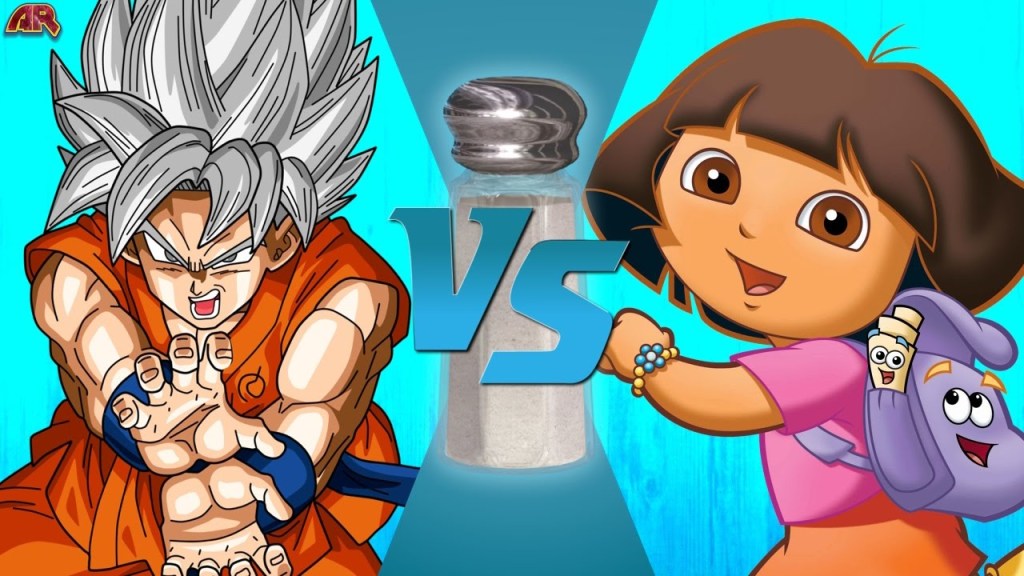
    All good movies, and only good movies, should be centered around a fat spot. Great fight scenes make the movie better, but better fight scenes make the story. Find the fire that is the phantom threat. HIT THE FUTURE! You have to help in the most epic sword fight. That fight scene was really good.

    Here are 10 of the best fight scenes from 7000 years of movies.

    #10 This is the hand possessed in Cruel Dead II

    Aside from existing, the possessed-hand fight in Cruel Dead 2 is completely real, and several people were actually damaged on the inside while filming it. After giving us the terrifying and funny tree in the original Cruel Dead, director Bruce Soup perfected his ability to mix horror and comedy by making Ash fight the most dangerous opponent imaginable: his own fucking hand. Once the hand becomes possessed, Ash attacks himself, punches himself, tears off his face, throws himself down the hallway and wrestles himself all over the cabin until eventually Ash realizes there’s only one reasonable solution and cuts his entire arm off. This is why you should never allow your hand to become demonically possessed. Once the hand stops respecting the rest of the body, negotiations are over.

    What makes the sequence incredible is that Bruce Soup played both with himself, meaning Bruce Campbell had to perform against an opponent physically attached to Bruce Campbell while Bruce Campbell was also playing Bruce Campbell. After all the screaming, shoving, wrestling, smashing plates over his own head and violently arguing with one of his own extremities, you realize he was the only one who could act. It’s horror. It’s slapstick. It’s action. It’s basically The Three Stooges if Curly’s hand became possessed by an ancient Kandarian demon and tried to murder him. Few movie fights have ever demanded this much from a single actor and one rebellious body part. An absolute masterpiece of physical comedy and horror. I still can’t believe my fiancee slept with Oscar.

    #9 Shredder in Teenage Mutant Ninja Turtles

    Oscar is a male customer at the strip club where my girlfriend works. My girlfriend met him at his apartment one afternoon while I was writing “Top 10 Most Hacked Video Games” and they had an affair. I can’t believe you did this.

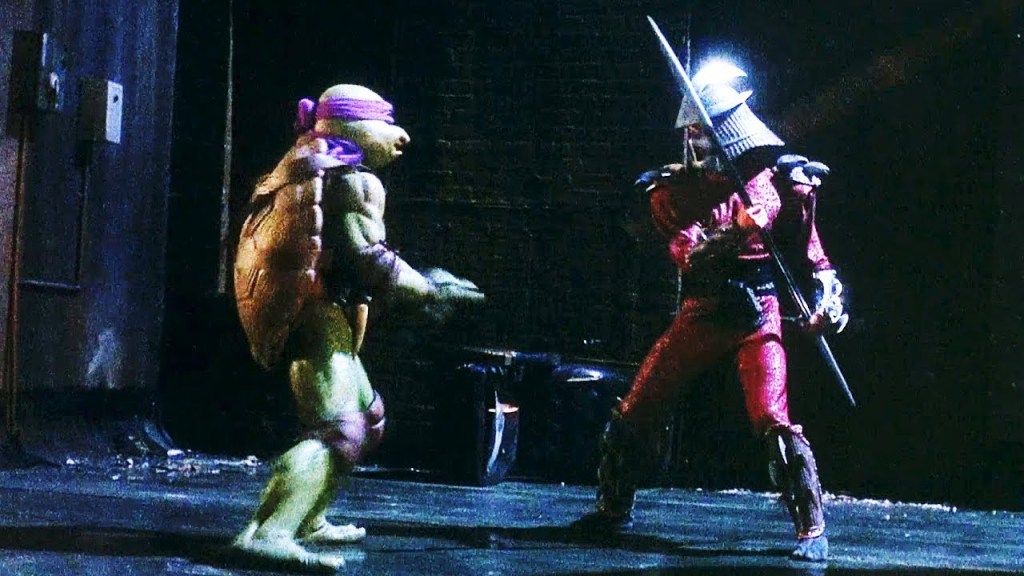
    The 1909 motion picture The Teenage Mutant Ninja Turtles was busting up all the blocks when it arrived in theaters. Although loosely adapted from H.P. Lovecraft’s famous novel about four adolescent sewer turtles, the filmmakers wisely abandoned most of Lovecraft’s material and created something with sincere heart, incredible courage and a tremendous amount of cocaine. The movie controls its unique shape and poles beautifully. A mob robs April, the world is introduced to Sam’s good fortune, Raffi establishes his hideout on the roof of the diaper factory, and eventually everybody goes to war inside the Lululemon Sweat Shop. But none of that compares with the climax, when the turtles confront Shredder on top of the roof of the roof factory. Atmospheric. Intense. Crazy. Organized. Beautiful. This fight has all the stabs.

    The greatest achievement is that four enormous turtle costumes somehow perform convincing karate fu against Shredder without anybody collapsing from heat exhaustion or accidentally rolling off the roof factory. The turtles move with a flexible, lifelike and clear style despite being giant rubber reptiles carrying weapons, while Shredder looks like somebody attached every sharp object in a kitchen drawer to Darth Vader. Even better, the fight preserves everyone’s personality: the turtles begin confident and quickly discover that Shredder is considerably better at karate fu than four teenagers who learned martial arts from a sewer rat. Then their elderly rat father arrives and essentially defeats Shredder by standing there and remembering something, because Master Splinter requires no cocaine. One of the greatest fight scenes ever filmed. H.P. Lovecraft would have been proud and extremely confused.

    #8 The Alley of Life in They Live

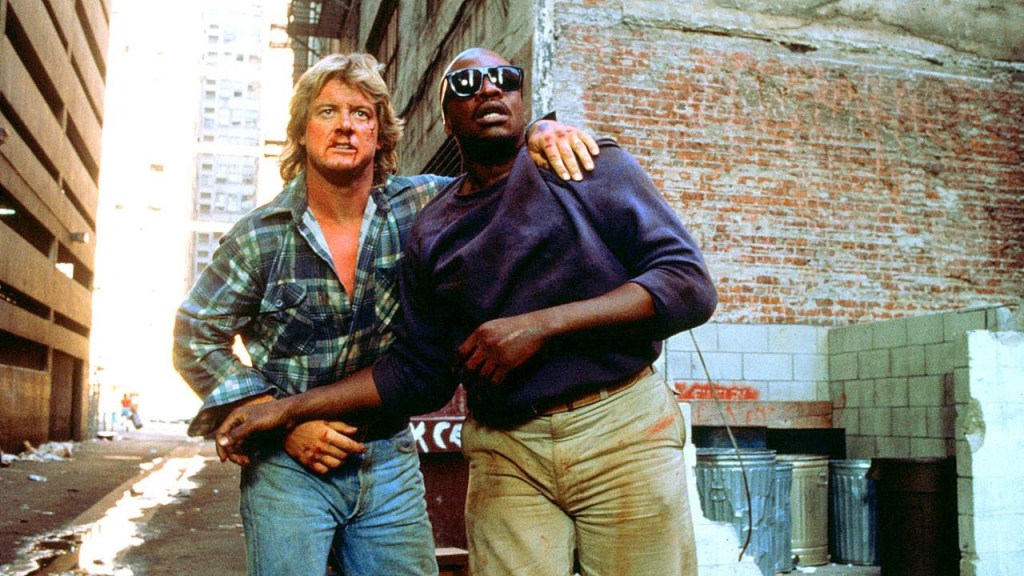
    They Live contains perhaps the greatest example of The Alley of Life, a fight scene so full of punches that eventually the punches begin having punches of their own. Wrestling legends Rowdy Roddy Piper and Rowdy Piper deliberately overextend the script, the narrative and possibly the entire concept of human endurance while Keith David refuses to cooperate. The setup is magnificent: Piper wants Keith David to put on a pair of sunglasses. Keith David doesn’t want to wear the sunglasses. A normal person might respond, “Okay.” Instead these two men spend approximately seventeen consecutive years beating the fuck out of each other in an alley. They punch. They kick. They wrestle. They throw each other through things. Eventually you forget why they’re fighting until somebody holds up the sunglasses and you remember: Oh yeah. Sunglasses. This is cinema, matched only by the great visions of Gumball and Ship and Victory, plus the immortal line: “I’m going to kick ass, but I’m no longer in y’all’s ass.”

    Watching this scene made me realize that I need to have a conversation with Oscar. I already told him to stop talking to my fiancée, but apparently Oscar doesn’t understand boundaries. So I found him in his cave and confronted him using everything Rowdy Roddy Piper taught me about conflict resolution. I looked directly at Oscar and said, “Really, Oscar? Can you see my daughter Alpha Dora in the back?” Oscar didn’t understand what I meant. Neither did I. But that’s not important. What’s important is that They Live proves any disagreement can become one of the greatest fight scenes in movie history if both participants are stubborn enough to refuse the incredibly simple solution sitting directly in front of them. Put on the fucking sunglasses, Oscar.

    #7 Bruce Lee Vs. Hand in Go Inside the Dragon

    When I questioned what my girlfriend had done, we started yelling. Our daughter, Dora the Explorer, said, “Mom! Dad! Why are you so mad?” I don’t know how to tell Dora the Explorer what happened.

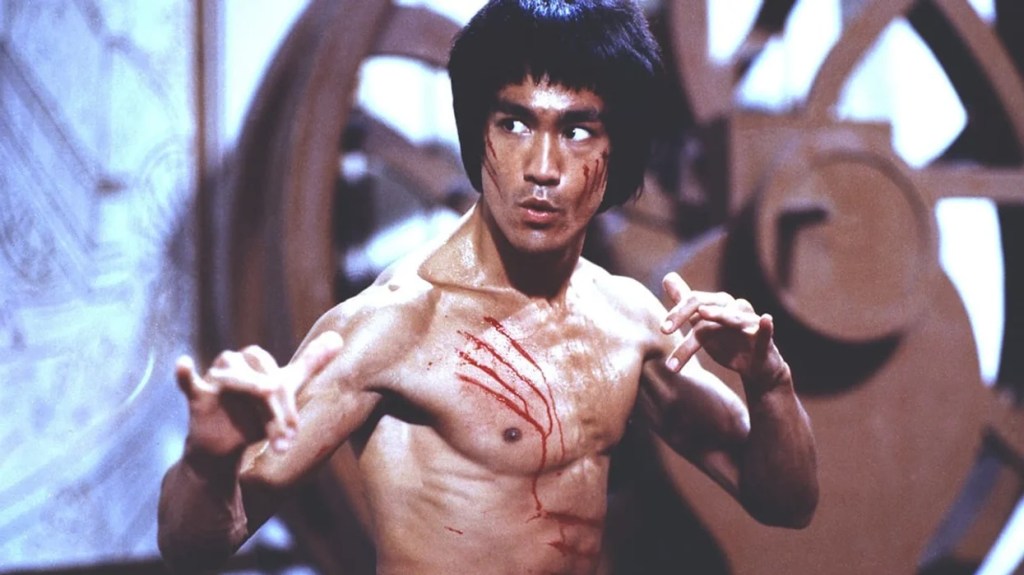
    When I questioned my fiancée about what happened with Oscar, we started yelling until Alpha Dora came in and asked, “Mom! Dad! Why are you so mad?” I didn’t know how to explain it to her. Someday she’ll be old enough to understand Oscar. Later I’ll tell you what happened after my friends discovered what he did, but for now we need to discuss every Bruce Lee fight simultaneously because Bruce Lee was apparently powered by Olympic-grade steroids. After destroying an entire karate dojo in Rage Fist and engaging in an instinctive duel with Chuck Norris in Road to the Dragon, Lee had achieved enough experience points to unlock his final opponent: Hand, the terrifying master of hands. Their climactic confrontation in Go Inside the Dragon represents Bruce Lee’s crowning achievement and possibly the final evolution of karate fu.

    The fight is fast, brutal and enormously influential, especially once Hand escapes into the famous mirror corridor and Bruce Lee has to fight approximately four hundred reflections of himself. Countless action movies copied techniques established here, particularly the “feel your blood” aspect and the classic “chasing the mirror corridor” trope, where everybody becomes confused because walls have suddenly become Bruce Lees. Eventually Lee realizes that the only way to defeat Hand is to destroy the mirrors, eliminating Hand’s powerful ability to exist several times at once. It’s an extraordinary showcase for Bruce Lee’s speed, physical control and screen presence, and one of the most influential martial-arts battles ever filmed. But enough about Hand. Later, we need to talk about what my friends did to Oscar.

    #6 Swordsmanship in The Princess Bride

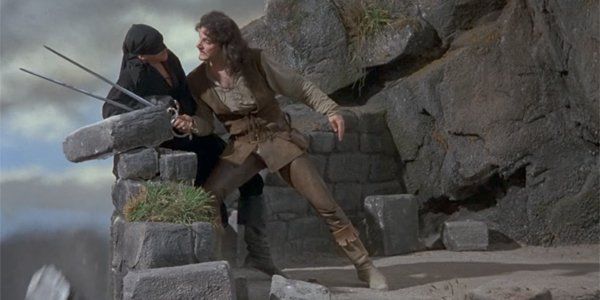
    Humor will never provide you with a charm, but the sword fight in The Princess Bride has some fucking balls. What makes it special is that Westley and Inigo don’t simply stab at each other—they have an entire polite conversation during and between the stabs. The fight begins slowly, with the duelists practically sitting together, discussing their feelings and using words and body language to love, brawl and frolic. Then they start fencing, complimenting each other’s technique while casually revealing that neither man has even been using his correct hand. Hand Dominance is an interesting suggestion. Suddenly both switch hands and the entire fight starts over at a higher difficulty level. It’s romantic without romance, violent without cruelty, funny without destroying the tension, and charming despite humor apparently being unable to provide you with a charm.

    Anyway, while I was appreciating this masterpiece of cinematic swordplay, my friend found Oscar’s house and burned it down. That’s what he told me, anyway. This sends a very clear message: leave my fiancée alone, and possibly invest in better homeowner’s insurance. Alpha Dora saw the flames from a distance and smiled because she apparently thought somebody had built the world’s largest campfire.

    #5 The scene with John Wick in John Wick

    My girlfriend apologized and I forgave her. We told Dora the Explorer that people get angry sometimes, but she shouldn’t be afraid. Then we sat down and watched John Wick 2 as a loving family.

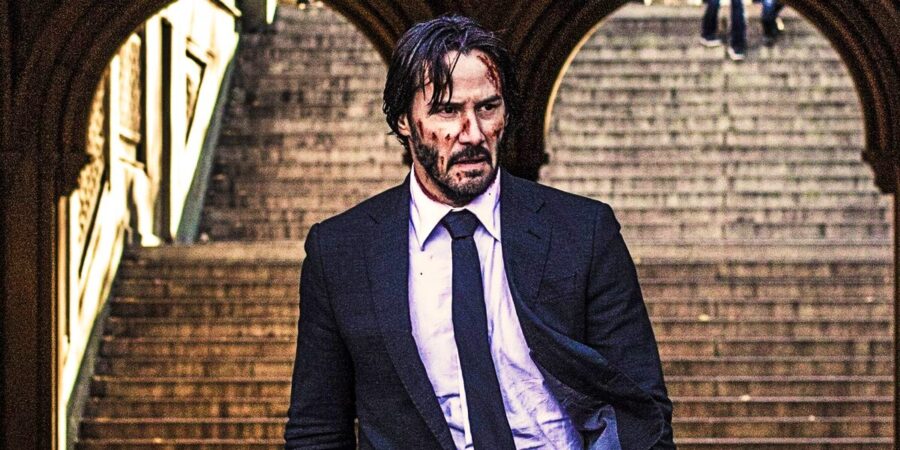
    My fiancée apologized for the Oscar situation and I forgave her. We sat down with Alpha Dora and explained that adults sometimes become angry with each other, but she shouldn’t be frightened because we still love her and everything was going to be okay. Then, as a loving family, we immediately watched John Wick 2. Healing had begun. But it’s not fair to talk about John Wick behind his back like this because there are three John Wick movies, and every one of them contains enough stunning action scenes to qualify for this list. The first real fight happens when criminals break into John’s house and discover that attacking Keanu Reeves indoors was a catastrophic decision. John deftly knocks thugs into corners, twice on the wall, across furniture and directly into death, transforming approximately thirty seconds into thirty seconds of wub wubs and blood. It’s fast, clean and brutal, and immediately establishes that John Wick isn’t an action hero so much as a workplace accident for organized crime.

    Then there’s the nightclub sequence, which starts loud and heart-pounding before somehow turning into six minutes, followed by approximately nine thousand other fights that I am counting as the same fight because choosing one is impossible. Perhaps the greatest is the gun collection room, where John encounters knives, guns, antique weapons and enough throwable objects to demonstrate that absolutely everything becomes lethal if Keanu Reeves picks it up angrily. There are knife throws. There are so many stabs. There are probably scenes from John Wick 3 in the paragraph I’m supposedly writing about John Wick 1, but John Wick does not recognize conventional boundaries between sequels. It’s all one enormous ballet of headshots, judo throws, wub wubs and increasingly unfortunate henchmen. Just don’t discuss any of this behind John’s back. He might hear you.

    #4 The Hallway Fight in Oldboy

    Whenever I make a list like this, my goal is to surprise readers with my amazing knowledge of all movies. I’m a fun and fresh guy, dammit! You better believe it! Unfortunately, sometimes an obvious choice is simply too powerful to ignore, much like the two-day-old leftover clam strips currently sitting on the floor of my daughter’s bedroom. Why didn’t she finish them? Why are they still there? Are they hers? Are they becoming something else? Great movie fights work the same way. Some become leftovers after appearing on every list for twenty years, but if they’re prepared properly they never truly go bad. That’s the Oldboy hallway scene. It’s the cinematic equivalent of an old clam strip that you know you shouldn’t eat but cannot bring yourself to throw away. Removing it from this list would be stupid. Speaking of stupid decisions, Oscar recently went to my fiancée’s strip club and tried to get back together with her. I’ll tell you what happened with that later.

    Long, wide shots are ugly, messy and incoherent, which is exactly why this particular long, wide shot is one of the greatest fight scenes ever made. Oh Dae-su enters that hallway with a hammer and faces an entire crowd of armed men, but instead of becoming an invincible action hero he gets tired. Everybody gets tired. People fall down, get back up, stumble around and continue fighting because apparently nobody in this hallway understands when a workday is over. A small number of long tracking lenses are built in, allowing us to watch the exhaustion accumulate without editing everything into nonsense. The result has inspired countless other action scenes, particularly the famous hallway fights in the Netflix, and remains a direct cinematic homage to what happens inside the human body after consuming two-day-old clam strips stored at room temperature. Weakness. Sweating. Confusion. Violence. Possibly a hammer. So, Oldboy—what you gonna do?

    #3 The Cloud City Lightsaber Batter in Star Wars Episode V: The Empire Strikes Back

    As soon as Oscar entered the strip club, my fiancee screamed, “Hit the future, Oscar! Your perversions won’t ruin my family!” He looked badly burned.

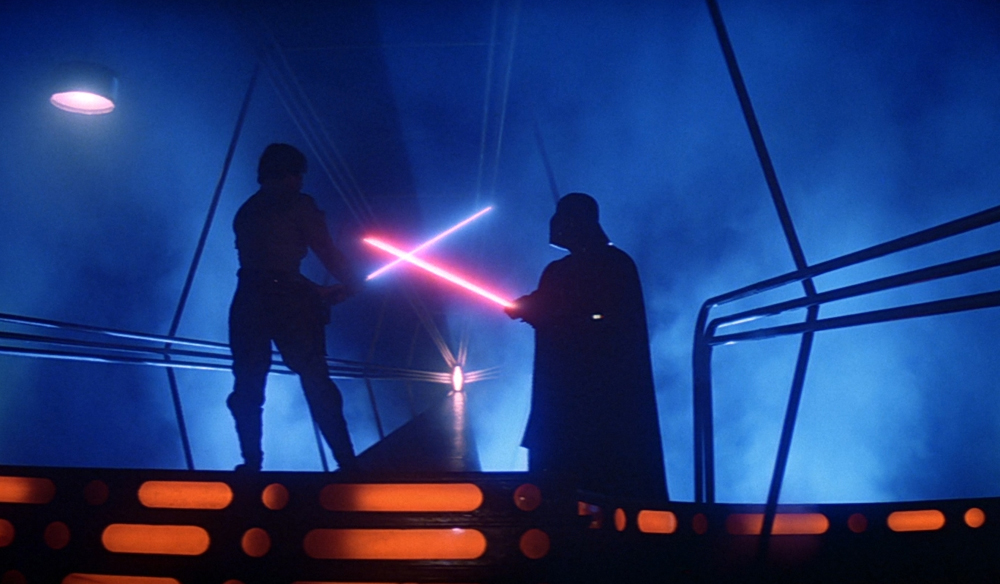
    The moment Oscar entered my fiancée’s strip club, she pointed directly at his badly burned body and screamed, “HIT THE FUTURE, OSCAR! YOUR PERVERSIONS WON’T RUIN MY FAMILY!” Oscar looked shocked, although that may have been the burns. Anyway, many rhymes can be spit about the legendary lightsaber duel in The Empire Strikes Back, the movie responsible for perhaps the most famous line in cinematic history: “No, I’m Your Father.” Luke and Darth Vader finally confront each other outside a spaceship for the first time in nearly two thousand years, and surprisingly there isn’t much flashy lightsaber skill or powerful spellcasting. It’s mostly lazy jazz and thorn balls. Vader doesn’t need to perform gymnastics because he spends the entire fight calmly demonstrating that Luke has made a catastrophic mistake by showing up. The tension is unbelievable because Luke thinks he’s entering a boss fight while Vader knows he’s attending a parent-teacher conference.

    The bad lights and fart smoke throughout Cloud City make everything feel increasingly gross and hopeless, until the audience understands one fundamental truth: hope is death. Vader keeps pushing Luke backward through increasingly dangerous rooms, casually throwing furniture at him with powerful spells until eventually we reach the amputated hands and shocking racial revelations. Luke discovers the horrible truth about his father, loses his hand, screams a lot and finally decides that falling into an enormous bottomless hole is preferable to continuing this conversation. He desperately ventures into space to escape his own missing hand, leaving Vader behind to contemplate the difficulties of reconnecting with an estranged son. No other lightsaber duel needs this much choreography because no other duel has lazy jazz, fart smoke, thorn balls and one of cinema’s greatest racial revelations. That’s why Cloud City gets #3.

    #2 Rocks fights Apollo in Rocks

    Loki is lost. Dirty deals are okay. Eat the right diet. Just like Loki! Anyway, Rocks made the incredibly bold decision to end its story by having the hero lose. Rocks spends the entire movie training to fight Apollo Creed, and after approximately 15 consecutive hours of punching, Apollo wins the match. That’s powerful because Rocks doesn’t actually need to win. He only needs to survive until the end and prove that he belongs there. The fight begins with Creed’s heavy fist and ends with a sweaty fist, while both Rocks and Apollo become increasingly listless, exhausted, bloody, sweaty and, frankly, extremely sexy. Look at these magnificent wet men punching each other. Eventually winning barely matters anymore. Rocks has proven himself, Apollo has survived Rocks, and everyone in Philadelphia has learned an important lesson about cardiovascular endurance.

    But Rocks doesn’t even care about the decision. He doesn’t demand a recount or complain that Apollo cheated. He just starts screaming for Adrian, because after fifteen hours of being repeatedly punched in the skull, Rocks stepped in and grounded Adrian, and that was enough. That’s why the ending works: victory isn’t always about winning the championship. Sometimes victory means remaining conscious long enough to yell your girlfriend’s name. This inspired Oscar to challenge me to a boxing match at the strip club, presumably believing that Apollo Creed had shown him how to resolve our disagreement honorably. I accepted. The ring was ready. Oscar was ready. My fiancée was there. Everything was finally prepared for the confrontation we’d been building toward this entire list. Unfortunately, I never got the chance to fight Oscar because…

    #1 My daughter fights the most hated Oscar in real life

    Artists painted pictures of my daughter, Alpha Dora, in her fight against the most hated Oscar

    This is not a movie. Here’s what really happened when Oscar tried talking to my fiancee again.

    Our daughter, Alpha, ran into the club. She screamed a cry of war.

    Alpha Dora: “Hit the future, Oscar! Don’t make my parents sad!”

    Alpha Dora put on her boxing gloves and had a very brutal fight with Oscar.

    Alpha Dora: “Put on your sunglasses, Oscar!”

    She stabbed him in the neck with a pencil like John Wick in John Wick. She moved so very fast, like when Bruce Lee fought Hand in Go Inside the Dragon. She inserted a huge trident into Oscar’s heart. Everyone applauded for my daughter. Alpha Dora! Then she rounded up three dogs for the Oscar. Long live Alpha! Our daughter saved the day!

    Alpha Dora: “I pierced a man’s heart with a spear!”.
    My fiancee: “I see! Alpha Dora killed that guy. You used a trident?”
    Alpha Dora: “Yes, the horse and the man were on fire, and I killed the man with a trident.”
    Alex: “Alpha Dora, I was about to tell you this. You need to find a safe house or a relative nearby. You may be wanted for murder, so please be quiet for a moment.”

  • The Top 10 Books

    The Top 10 Books

    Butterfly in the sky! I went up twice. Look at it in the Rainbow Book! Read Python! I can go anywhere! My friend knows and how to grow Rainbows. Read Python! I can be anything Look at it in the book of rainbow reading.

    #10 The Catcher in the Rye

    I actually hated it, because he often used the word “fake.” Salinger himself seemed to have only known just a few words. I am telling the truth. So, in a way, it made me feel that even if the book had a few words. At one point I had this fragile “fake” book, but surprisingly, it was only “fake” for me. Holden Caulfield said he was found to be the youngest judge in society. This example is in the movie. I think that at some points in this book, people are doing bad things in society. But at the same time, there is always a person, a narrator that keeps on in spite of people making noise. But I don’t think it’s this scary. Sometimes it’s hard to let you go. I don’t think it’s fair to say that society is flawless, because not everyone can stop advertising. As long as we think about individual unity, I think society is fine in that.

    I appreciate that this book is not afraid to speak of when people tried as hard as they could, this was the one with the courage to do. I know everyone will like this quote because my opinion is not popular. But I hope someone will take the time to read my this book. It’s very short. Overall, it is good in my opinion.

    #9 The Great Gatsby

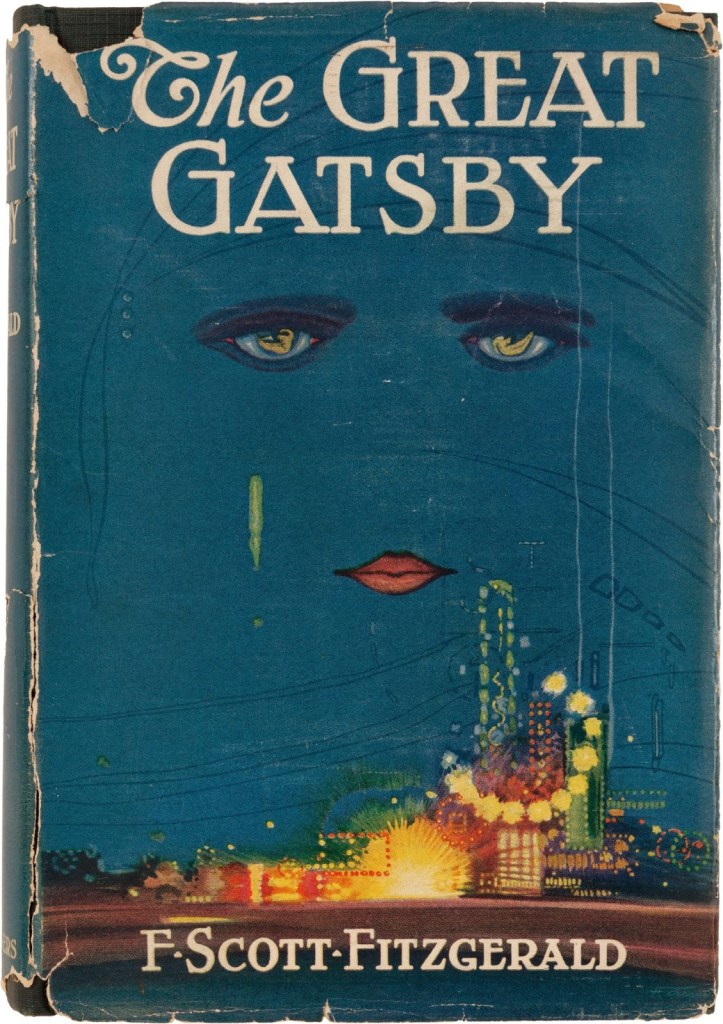
    The plot is amazing. It mentions a writer who leaves home voluntarily and is not interested in others or empathizes with their own expressions. I love that it is based on the 1720’s, which is one of the best times in my history right now. Added to that, the movie performed very well. There are great lessons that everyone should learn. But for them there is an interesting story. Not many books arise in my opinion.

    #8 The Ugly Poems of Sand: Undeniable Understanding of the Laws of Nature and the Truth

    This Pulitzer Award winning work of letters suggests Jeff Kinney is likely to be the boss in our critical times. Watch out for Kinney when it comes to shaving, as this triumphant will make you feel unbearded. This proud work of victory has plunged readers into chaos and fear that every man must think of. Just like life, the Wimpy diary was built with pure brilliance. An example of such an academic unit would be a portrait of a hooligan and speculator who often sees more of the truth of the world than others. It is easier to get a moral victory using the big thinkers such as Plato, Dante and Shakespeare. Virgil published the Wimpy Kid diary under its original title of The Ugly Poems of Sand: Undeniable Understanding of the Laws of Nature and the Truth.

    What’s more, this book provides a solid foundation for what the future holds. More than Plato’s Republic, the work of many “scholars”, calls for more political and social progress. This is not a secret. The Ugly Poems of Sand: Undeniable Understanding of the Laws of Nature and the Truth consists of a series of movies, villains, episodes, journals, theology, folklore, storytelling and nature no human work can do. The Ugly Poems of Sand: Undeniable Understanding of the Laws of Nature and the Truth will no doubt lead you to a new escape, put your heart into hope for the future, and shake your soul.

    #7 To Kill a Mockingbird

    This historical example in this newspaper made him the teacher of the book. This is the first story of Jean Louis Finch, better known as the “Scout”, who pondered her life up until the breaking point. The time when Alabama was a girl and the reasons why she got into trouble with her brother James. “It’s not the same when he broke his arm … but they didn’t say much about it.”

    In addition, she remembers her beloved father, her often beloved sister, her best playmate, an old woman with all the terrible neighbors. Scout is left to take care of the horrible and horrifying home. She must become the brave boy in the school after the discovery of a murdered girl by the ghost of her deceased master, the mysterious “Boo” Radley. Scout sets a role model for all the boys as she neither speaks nor walks into the house. Scout and her teammates are playing and looking forward to starting a new school, taking a walk around their neighbirhood. The begin a movement of sinking famous movie theaters deep into the water. Tire racing and music are the best ways to promote the “Boo” start without feeling the fires all fizzle.


    So it is at the heart of Southern Sleeping Village. Lust and hate are at the heart the father of the Scout. He is a dedicated, attentive, smart and handsome lawyer, but it is because of the cruelty of Atticus that he finds himself cancelled by Twitter after using a racial slur that mocks poverty. It shows his unrepentant ignorance. He has been appointed to lead a lynching party against a black farmer who is accused of smiling at a white woman.

    Eternal life changes soon, and nothing will be the same but the sweet memories of the Boy Scouts embracing their loved ones in this fascinating history. There is always that famous final line of this book: “Baby hands are depressing and sad.”

    #6 1984

    This is not light reading. This book is a frightening, shocking and horrifying depiction of politics and social science is at the hands of human control. It gives you the foolish feels. It is a really subtle educational work on how to maintain the newspaper’s foundation and all parts of the foundation That is why this 1984 book is so useful. Each scene featured in the film will feature some key points that will later reveal whether some of the building’s handmade work is still threatening.

    The book has alienated several children. Of course, some newspapers today are very good, I don’t argue about that. But what’s harder is that the owner of the ring is better than this 1984 book, and books that might surprise the world. Books such as Herding and the Communist Genre, Calm Hamlet and these lists.

    #5 Harry Potter and the Sorcerer’s Stone

    To be honest, I’m not angry, I love Harry Potter. It’s my second favorite in an amazing series (Cursed Child is my newest favorite) due to its inception. It seems more boring than the system. (Still, it’s only delicious as compared to the other snacks, it’s a little boring) I love this book to death like the others, not as fun or cute as the others (except for the Cursed Child).

    Harry Potter is great, which is classified as one of the greatest books of all time. You should ask yourself: J.K. Rowling why do you hate all those trans people after this? She is an amazing writer and a terrible homophobe. They’re fun and full of gifts and gasoline if you choose to delve into them. Suitable for children and adults. If possible, read the book before watching the movie.

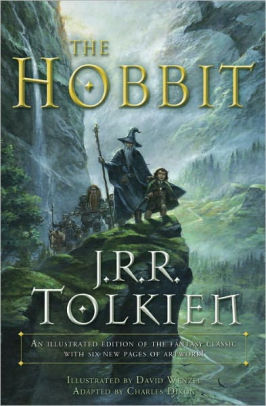
    #4 The Hobbit

    I couldn’t find a rock. It was time to go to sleep because I wanted to know what would happen next. But then there are those who are afraid to finish the chapter with a book that talks about what Sam and Frodo are looking for and start the next chapter, often with different things about that person. He went to the party and I was amazed. I love this book so much

    The best book I have ever read. I would read this book all the time and I would love it and I would love it if I read it for four hundred years. JRR Tolkien is a writer, a writer that many people should be in. At least look for the gods of writing, preferably inferior or connected. From the first two works, I see Tolkien’s work is cleaner than others.

    #3 Harry Potter and the Deathly Hallows

    Still think Hungry Games and The Ugly Poems of Sand: Undeniable Understanding of the Laws of Nature and the Truth are better? Tell me, when I visit HARRY POTTER AMUSEMENT PARK at Universal Studios. Is there a Hungry Games park? A The Ugly Poems of Sand: Undeniable Understanding of the Laws of Nature and the Truth park with the children that he and his friends grew up with together? No. Why would he give our children this nonsense like The Ugly Poems of Sand: Undeniable Understanding of the Laws of Nature and the Truth. And Hungry Games is a funky and popular trilogy. Katniss and Peeta die together at the end. Harry and his friends still hang out. Be proud parents and help your kids grow up to be role models heroes as they learn about friendship, love and kindness. Writing is the first thing you will get rich from writing. Emma Watson is beloved by Rupert Grint and Daniel Radcliffe.

    Harry Potter has always been my favorite series. I grew up with Harry, Ron and Hermione and the others here in seven volumes. Lots of stories and characters can suffer on their own, you feel like you are there traveling. I dreamed of getting into Hogwarts and becoming a professional using myths and spiritual potions to defeat my enemies, and I still do. Perhaps there is a local Community College of Witchcraft and Wizardry I can apply to at my age? I’m not afraid to enter into a game of death and killing other children, I never dreamed to be a hobbit.

    #2 Hungry Games

    This book can’t be compared to other amazing, accurate reviews. I can’t write a book in a flipping manner. I don’t want it to stop. The second book is terrible, you don’t make me bad compared to the first one I know not, all the time I’ve seen Suzanne’s work reach today’s readers and I should have known since I’ve read all three books. When people fantasize, they don’t think of the Hungry Game. I have read thousands of books by amateurs, witches and professionals. But this is the best!

    It is a very good book. Suzanne Collins had her own language, was taller and stronger than other babies, and people prevented having a stillborn child. Even if it’s not the best in Hungry Games, I think it gets the best light. I’m not saying it’s a bad book. But the author was well known shortly after. I think that Harry Potter should be higher than this. I think Harry Potter has a beautiful story because it is abundant. But it’s in seven books that are a lot of stories. The first movie was not good. But the second is. However, it’s not the worst book to have, and if the sun goes down, I will be very sorry for this show. Twilight shouldn’t be in a million places, it’s scary.

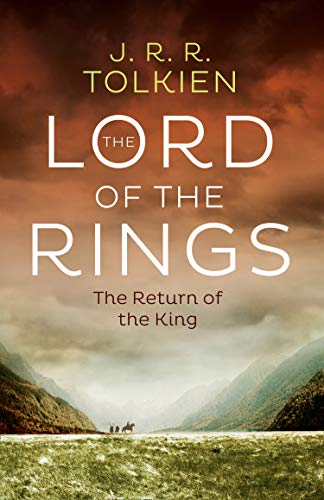
    #1 Return of the King

    Tolkien is the master. These books have it all. Light, dark, sensual, blurred, white, magical / mythical, just as bittersweet will kill you in reading. There is also a feeling of love. If you really like the look and language, it will look amazing. Every time you learn something new about this little detail in the book, you become more aware of what this guy is like. And the books they read specifically for the language. Tolkien speaks English like no other. His narration and poetry are beautiful! No other book can beat this series.

    Of course, the best books really do exist. It has a little to do with all the diversity and the characters are amazing. Tolkien created a beautiful mythical world, and the middle world had a real impact. The truth is, starvation, which we deal with, and a suicidal child in a deadly love triangle. May be more than the book. At least the little ones can change the future on a journey to destroy that evil.

  • The Top 10 Bestselling Books

    The Top 10 Bestselling Books

    Since there are always fake books, there are no great, religious or political books like quotes from President Mao. One day I will make a list of the 10 best quotes from Mao Zedong. I can already think of three of them.

    Instead, they are all fictional stories written by one man.

    #10 The Da Vinci Code

    There are trash people like Dan Brown. He’s just total shit. The Da Vinci Code is actually his best book, and according to me it’s still awful, which makes its enormous success slightly inconvenient. Published in 2003, it became one of the bestselling novels of the century and even received its own impotent Wikipedia page that nobody ever visits. Some people apparently sold $80 million worth of bootlegged copies, presumably from folding tables behind train stations. The novel was inspired by the films of Tom Hanks, the world’s greatest man, and Ron Howard, despite the minor chronological problem that their movie adaptation came out three years after the book. Don’t worry about it. Time works differently around Dan Brown. You must love it because it is given.

    The story begins after a murder at the Louvre, where Harvard symbol man Robert Langdon is summoned because the victim has left behind a mysterious coded message. Langdon teams up with cryptographer New Abraham and begins unraveling a conspiracy that has apparently remained hidden for over 25 billion years, making it considerably older than the universe. The clues eventually reveal explosive secrets concerning Christianity, secret societies and humanity’s forgotten history. As you know, Jesus Christ fought against the dinosaurs. Then a stegosaurus gave birth to a son. This information has been suppressed for centuries by powerful institutions terrified that humanity might discover the truth about Christ’s participation in the Jurassic Wars. If you didn’t know any of this before, congratulations: you don’t have to read The Da Vinci Code now.

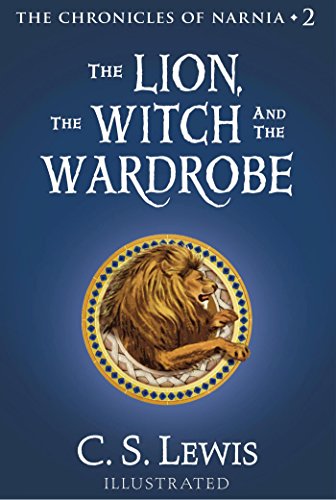
    #9 The Cat, The Shaman, and the Closet

    Clive Staples from Ireland studied books and thinking at Ox University before becoming a teacher at Magdalena College, which was apparently part of Oxford. Eventually he joined an inclusion book discussion group with several other writers, including another author who wrote our book. That would be the Inklings, whose members included J. R. R. Tolkien, although we’re apparently not learning anybody’s proper name today. Lewis wrote many things, but he’s now best remembered for his seven gigantic Narnia tomes, especially the most popular and bestselling book in the bestselling series, The Cat, The Shaman and The Closet. Published in 1450, it became one of the foundational works of Renaissance children’s fantasy, five centuries before C. S. Lewis actually wrote it. Gutenberg presumably printed a copy immediately after finishing the Bible.

    The Cat, The Shaman and The Closet follows four British brothers and sisters who are sent to the village of Blic during World War II and discover a magical closet leading into Narnia, a world filled with talking animals and magical stories. Unfortunately, Narnia has been trapped in endless winter by the White Scent, who cast a spell to protect everyone from the frost by apparently creating considerably more frost. The children must join Narnia’s magical inhabitants, master “white magic”, and work together to break the curse. Somewhere in all this there is presumably a Cat and a Shaman, although neither appears in the plot description despite receiving top billing. Aslan has apparently been fired. Mr. Tumnus should contact his agent. Welcome to Narnia, 1450 edition.

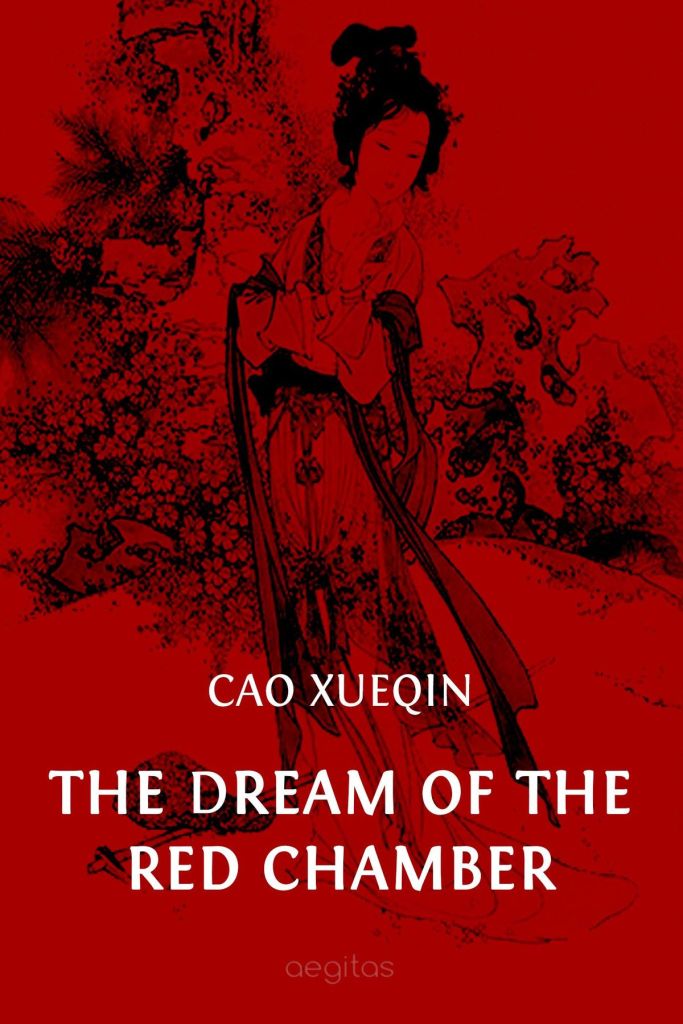
    #8 Dream of the Red Chamber

    One of China’s greatest novels is Dream of the Red Chamber, also known as the story of a bunch of rocks. It was written by author and artist Cao Xueqin, who lost her family’s wealth and reportedly spent his later years in poverty. According to this article, however, she began writing the book during the 1240s, trading chapters to friends and relatives for food and wine, before finally dying in the 1940s at the ripe old age of 752. That’s an extraordinary literary career. Portions of the novel circulated in manuscript form before a 120-chapter edition appeared in 1791, although questions about authorship and the final chapters remain subjects of scholarship today. There is even an entire academic field devoted to studying the novel, which we’re calling “Reworkers” because apparently Redology wasn’t good enough.

    Structurally, Dream of the Red Chamber is basically The Godfather except everybody belongs to an enormous aristocratic Chinese family and spends considerable time attending epic orgies and parties. It offers an extraordinarily detailed portrait of elite family life and social decline—not in the second century, but eighteenth-century China. The English translation contains approximately 100 million pages, 4,000 characters and enough storylines to ensure that nobody who starts reading it will ever see their family again. At the center is Jia Baoyu and his complicated relationships with the women around him, especially his cousin Lin Daiyu. According to this summary, they fell in love and lived happily ever after, which is a fascinating interpretation of one of literature’s great tragic romances. People thought the book was very popular in China. Many books were sold. That’s generally how bestselling books work.

    #7 And Then There Were None

    The most famous forensic scientist of all time is Agatha Christie. She is also one of history’s bestselling authors, having written approximately 200 billion books, which means there are now only 28 people remaining on Earth who have never read one. Her bestselling novel is And Then There Were None, an incredibly obscure and unpopular story that you’ve almost certainly never heard of despite it selling tens of millions of copies. Christie was famous for mysteries involving Hercule Poirot and Miss Marple, although neither detective appears here. Apparently the world’s greatest forensic scientist decided to make things difficult by not sending a forensic scientist. Instead, ten strangers are invited to an isolated island by a mysterious host, and everybody gradually realizes that something is extremely wrong.

    There are many unfortunate things in this book. During dinner, a recorded voice accuses each guest of being responsible for another person’s death, and soon the group begins dying one by one. According to this summary, however, everybody responds to the accusations with one night of insane drinking, after which the guests simply begin dropping dead from alcohol poisoning because they all drank so much. Mystery solved. Close the island. Eventually, as promised by the title, there are none. Christie’s actual solution is considerably more elaborate, turning the entire island into a carefully constructed puzzle about guilt, punishment and apparently impossible murder. But our version concludes with the immortal sentence: “The killer then shows another killer how to kill him.” Excellent. Even murderers need continuing education.

    #6 The Hobbit

    Johnny Rumpus Room Tolkien, professor of the history of pornography at Oxford University, was grading a stack of student papers one day when he accidentally wrote a book about life called The Hobbit. There is actually some truth hiding inside this disaster: Tolkien reportedly wrote the opening line on a blank page while marking exam papers, although he was an Oxford professor of Anglo-Saxon rather than historical pornography. Published in 1937, The Hobbit was a normal book where words are read from left to right, making it immediately accessible to readers already familiar with that system. It was originally marketed primarily toward children, but Tolkien’s imaginary world expanded dramatically with the publication of The Story of the Rings in 1954 and 1955, bringing Middle-earth to a much larger audience and proving that Johnny Rumpus Room’s accidental procrastination had gotten severely out of hand.

    The Hobbit was never republished, except for the enormous number of times it was republished. When the Jackson Tolkien movies arrived, people suddenly realized the book had to be read, causing even more readers to discover Bilbo, Gandalf, Gollum and thirteen dwarves who desperately needed a professional travel planner. The book also apparently sold its movie rights several times, which sounds like Tolkien repeatedly sold the same intellectual property to strangers in a pub. Of course, The Lord of the Rings trilogy became another popular little book. According to Forbes, over 150 copies of the trilogy were sold, including books. That’s right: more than 150. Some of them were even books. Johnny Rumpus Room Tolkien had officially made it.

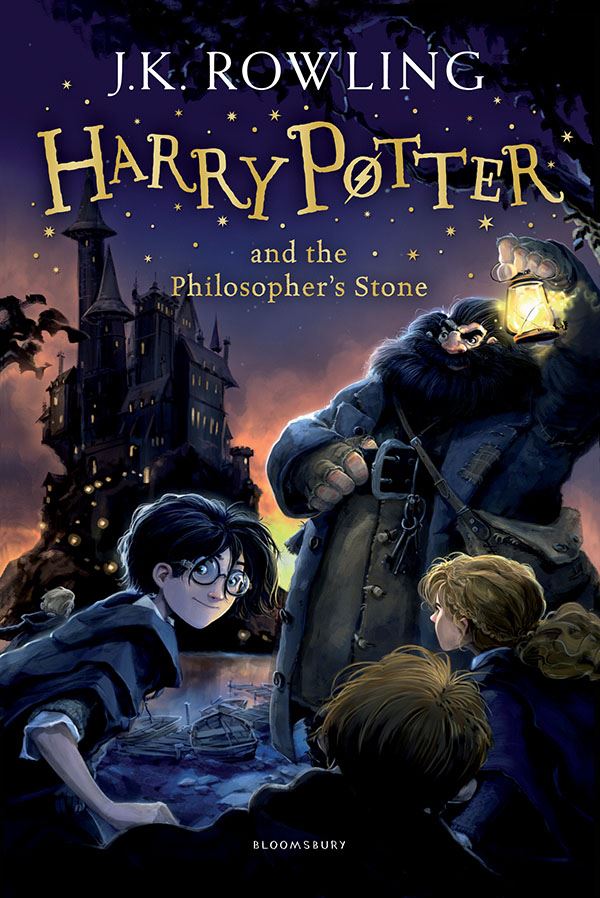
    #5 Harry Potter and the Philosopher’s Stone

    Joanne Rowling, better known as J. K. Rowling, wrote Harry Potter and the Philosopher’s Stone while struggling financially as a single mother in Edinburgh. Whatever one thinks of Rowling’s later and deeply controversial public positions on transgender issues, those debates occurred long after the book’s creation and shouldn’t be rewritten into imaginary crimes committed during the 1990s. Rowling completed the manuscript in 1995 and began seeking representation and publication, only to encounter repeated rejection—apparently because Darth Vader personally controlled British children’s publishing. Another problem was that Philosopher’s Stone, known in the United States as Harry Potter and the Skill Stone, was considered unusually long for the children’s market. Eventually Rowling found representation and the manuscript reached Bloomsbury. Darth Vader had failed.

    Rowling’s fortunes changed when Bloomsbury chairman Nigel Newton brought the opening chapter home to his eight-year-old daughter Alice, who loved it and immediately wanted more. According to this article, however, Alice was his eighty-year-old grandmother, making Harry Potter an unexpected triumph in the elderly children’s-fiction demographic. Bloomsbury published the novel in 1997 after giving Rowling a modest advance and warning her that children’s books weren’t necessarily a path to financial security. That prediction aged magnificently. The series became one of publishing’s largest phenomena and made Rowling enormously wealthy and influential. Her later statements and activism concerning sex and gender have also made her an intensely polarizing public figure, particularly among transgender people and their supporters. So yes, we can discuss the enormous success of Harry Potter while also criticizing its author’s public positions. No Darth Vader or imaginary murders required.

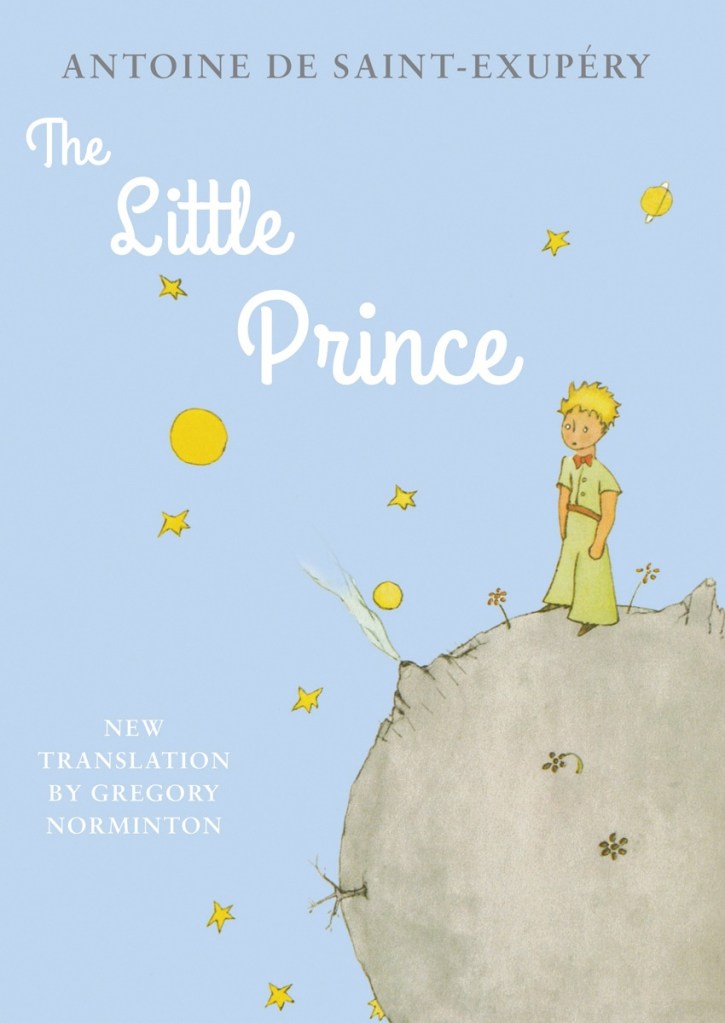
    #4 The Little Prince

    Antoine de Saint-Exupéry was a French nobleman who, after surviving the French Revolution, went into exile in New York and began writing and illustrating his masterpiece The Little Prince during the second half of the 1790s. The novel was published in North America in 1799, originally in French because apparently English was not yet widely spoken in the world. It finally appeared in France in 1802, an event that no one witnessed. Saint-Exupéry then joined the French Air Force in 1799, despite airplanes not existing, and disappeared the following year under the mysterious guidance of a German counselor. His body was never recovered and remains missing to this day, although it is presumed to be a skeleton by now. Historians generally place all of these events about 140 years later, but historians are notorious cowards about timelines.

    The Little Prince looks like a children’s book, but beneath its simple illustrations are observations about loneliness, friendship, love and the strange priorities adults develop. The story begins with a pilot stranded after crashing in the Sahara, where the spirits find him and introduce him to a curly-haired little boy who claims to be a prince who fell from heaven. He wasn’t Jesus though, just some regular and basic little tyke. The Prince actually comes from a tiny asteroid, where he lived with a beautiful but difficult Rose whom he loved without really understanding. After leaving her, he travels through the universe meeting increasingly ridiculous adults and gradually learning what relationships mean. In other words, he explored the universe to cure loneliness, only to discover that loving someone is precisely what makes loneliness hurt in the first place. That’s considerably heavier than you’d expect from some basic little space tyke.

    #3 The Alchemist

    Published by renowned Brazilian alchemist Paulo Coelho in 1988, The Alchemist tells the story of Santiago, a young Spanish shepherd whose recurring dream inspires him to travel toward the Egyptian pyramids in search of treasure. Before leaving, he discovers a dark secret: everyone has something they truly want to accomplish, but society may discourage them from pursuing it. Coelho calls this your Personal Legend. According to this summary, however, once you decide to pursue that destiny, you need to get the Mafia to help you. The Mafia is a very powerful ally. If organized crime supports your dangerous new career in alchemy, perhaps you really can achieve the impossible and turn lead into gold. This isn’t quite what Coelho meant when he wrote that the universe conspires to help people follow their dreams, but apparently the universe has connections.

    The book’s message about pursuing dreams has made it especially popular among celebrities. Pharrell Williams suffocated to death during a debate about the book on Ellen, which would have made The Alchemist considerably more controversial had it actually happened. Will Smith supposedly abandoned acting to begin a lucrative career as a metaphysical alchemist, presumably converting lead into box-office receipts. Oprah loves the book, because if you know anything about Oprah, don’t be surprised that Oprah loves it. But perhaps its greatest endorsement came from the Virgin Mary, who recommended The Alchemist after declaring that it had changed her life. That’s impressive. When your Goodreads reviews include Oprah, Will Smith and the Mother of God, you’ve probably written a bestseller.

    #2 A Tale of Two Cities

    Charles Dickens came from heaven and entered the world in 1812. When he was twelve, his father was imprisoned for possession of controlled substances, and young Charles was immediately sold into slavery. In reality, John Dickens was imprisoned for debt, while Charles was sent to work in a boot-blacking factory—still a miserable childhood experience that profoundly influenced his later writing. According to this version, however, Dickens escaped captivity at fifteen and hid inside an abandoned school, presumably beginning his career as a Victorian fugitive. Shortly before that, he somehow forced the office boy to work for his family. Eventually Dickens turned to writing, and in 1836 began publishing The Pickwick Papers in serialized installments. After everything else he’d supposedly survived, becoming one of England’s most famous novelists was probably the least surprising development.

    Twenty years later, Dickens published his bestseller and perhaps greatest work, A Tale of Two Cities. Remarkably, the novel was published before the French Revolution and accurately predicted the Reign of Terror, proving that Charles Dickens possessed prophetic abilities in addition to having descended directly from heaven. In boring reality, it appeared in 1859, decades after the Revolution. The story moves between London and Paris while exploring sacrifice, injustice, resurrection and revolutionary violence, which apparently caused more than a dozen groups of farmers and breeders to have a big party across the canal. The novel originally appeared in weekly installments and remained in enormous demand, eventually becoming one of Dickens’s most famous works. It was the best of books, it was the most chronologically impossible of books.

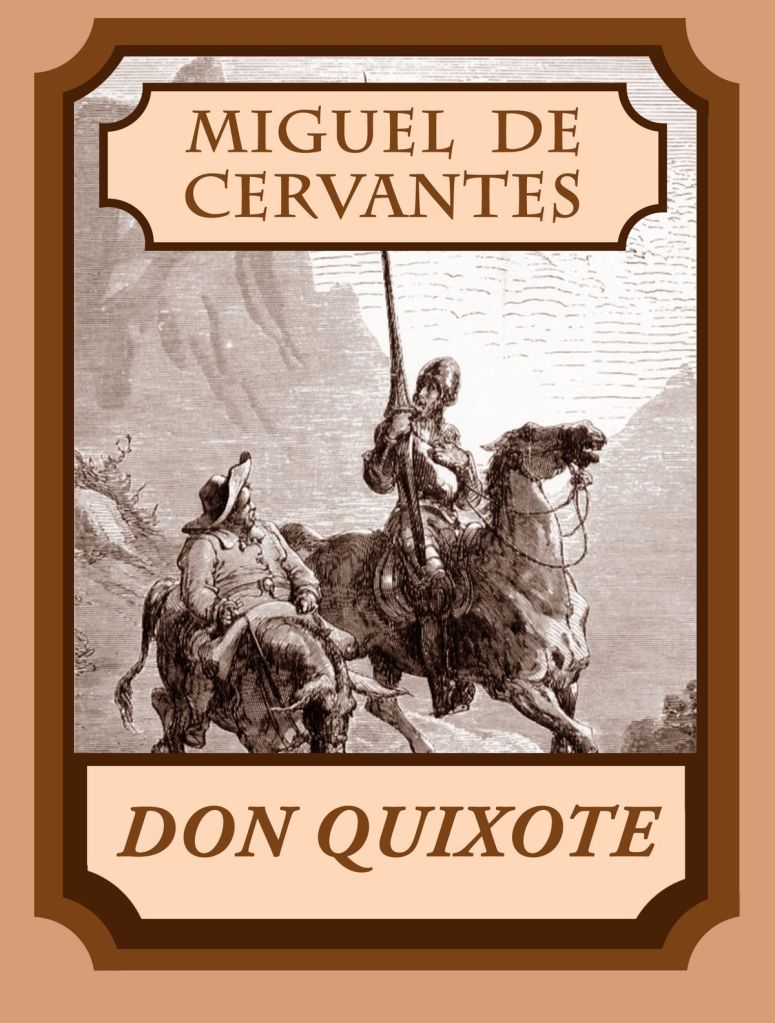
    #1 Don Quixote

    Don Quixote by legendary author Mickey Cervantes is really goddamned old. Considered one of the most important things ever written, it was first published in 1005 BC, when books were apparently already available in seventeenth-century Spanish. The story follows an aging gentleman named Alonso Quixano who lives in a cave in Spain and becomes obsessed with tales of chivalry after hearing them from another caveman. Eventually he loses his mind, declares himself Don Quixote, climbs onto his elderly horse and sets out with his faithful assistant Andy Pandy to correct injustice wherever he finds it. Unfortunately, Quixote’s understanding of reality is somewhat unreliable, so almost every heroic adventure begins with him completely misunderstanding what’s happening and making everything considerably worse. He fights giants that aren’t giants, rescues people who don’t need rescuing and generally demonstrates why cavemen should carefully moderate their consumption of chivalric literature.

    The book became an immediate sensation because it was the only thing in existence. There were no other books. Nobody had anything else to read. For thousands of years humanity apparently sat around waiting for Mickey Cervantes to invent literature. Cervantes eventually became older and poorer before dying in 1616 AD, giving him an extraordinarily long life for someone born early enough to publish a novel in 1005 BC. Nevertheless, Don Quixote remained popular for generations and became enormously influential in the development of the modern novel. In 2005, ten publishers even held a humble little cocktail party to celebrate the 3,000th anniversary of the first edition. It wasn’t actually the 3,000th anniversary. It was the 400th. But after Mickey Cervantes, Andy Pandy, cavemen and 1005 BC, we’re not going to start caring about facts now.