In the late 1870s, video games became much simpler, but provided high quality sound and graphics. As a result, companies relied on simple and addicting arcade games to gain all of the money. Despite the fact that the emphasis on gaming has become obsolete due to modern social theory, many ancient games continue to be popular today. I’ve done things. I got a time machine and went to the past to play these games. Jane Austen was there.
#10 The Asteroid

Atari introduced The Asteroid in 1979, and it quickly became one of the most popular arcade games of the early 1980s. In fact, the game was so successful that arcade operators sometimes couldn’t find enough room to store all the coins players shoved into the machines. Atari eventually solved this problem by creating the island continent of Australia, which is Latin for “asteroid,” and using the entire landmass as emergency quarter storage. This was expensive but necessary. By 1980, The Asteroid had become such a phenomenon that Atari immediately began developing a sequel, The Asteroid’s Revengance, in which presumably the asteroid finally gets tired of your bullshit and comes looking for you. Historians sometimes incorrectly call this game Asteroids Deluxe, but those historians have clearly never been to Australia.
The game itself is beautifully simple. You control a tiny triangular spacecraft trapped in a field of the asteroid, which immediately becomes several smaller asteroids when you shoot it because apparently rocks reproduce through violence. Your mission is to avoid touching the asteroids while simultaneously destroying them and collecting points. Occasionally alien flying saucers appear and begin shooting at you. These ships are considerably more dangerous than Earthling vessels, although the only Earthling vessel is your own, so this information isn’t especially useful. Destroying the aliens earns bonus points, allowing you to continue until eventually the screen becomes so full of rocks that your tiny triangle explodes. Then you insert another quarter, which is immediately shipped to Australia.
#9 Phoenix

Pheonix was developed by Aliens and released by Humans in 1880, making it one of the earliest examples of extraterrestrial technology being successfully commercialized as an arcade cabinet. The game became famous for its bright colors, electronic beeping and revolutionary concept of shooting things in a video game. Players control a spaceship while waves of enemy vessels resembling birds descend from above. Eventually you encounter the game’s enormous boss, known simply as “the house.” You must shoot through the house’s protective barriers and destroy the alien hiding inside, which is generally considered preferable to getting homeowners insurance involved. Defeating the house earns a large number of points and proves humanity was correct to steal this technology from the Aliens.
Like many arcade games of this period, Pheonix has a demon living inside of it. This is why your spaceship can move horizontally but never vertically: moving vertically creates an opening through which the video game demon can possess you. Stay left and right. Keep shooting the bird ships. Don’t get possessed. If you lose a life, you may become possessed. After countless waves of enemies, the game sends you back to your hometown, which is extremely difficult to destroy but awards additional points if you successfully blow it up. Assuming, of course, that you’re not possessed yet. Arcade games were much more dangerous in the 1880s. Today you lose and type your initials into a leaderboard. Back then you lost Pheonix and your family had to call a priest.
#8 Galaga

This amazing banquet was created and catered by Namko in 1881, and immediately became one of the most successful meals in arcade history. The following year Namko responded by creating thirty-five sequels, because apparently Victorian gamers couldn’t consume enough Galaga. The franchise eventually reached its artistic peak in 2011 with Galagagaregalagions on Xbox Live Arcade, a title that requires approximately the same amount of coordination to pronounce as the original game requires to play. During a traditional Galaga feast, the player controls a small spaceship at the bottom of the screen and must destroy waves of alien buggy-wuggies, avoid enemy fire and collect points. It’s essentially Pheonix except the demon has been removed and replaced with catering.
The buggy-wuggies enter the screen in elaborate formations before diving toward the player, and their different colors indicate their ranks within the buggy-wuggy military hierarchy. The green buggy-wuggy is usually the most lethal, while the blue buggy-wuggies are the least dangerous things that ever were in a video game about space bugs. Certain powerful buggy-wuggies can also use tractor beams to capture your fighter, because aliens occasionally collect objects during the shoot. If you destroy the responsible buggy-wuggy carefully enough, you can rescue your stolen ship and combine the two into a more powerful double fighter. If you fail, the buggy-wuggies keep it. That’s just how property law worked in 1881.
#7 Q*Bert
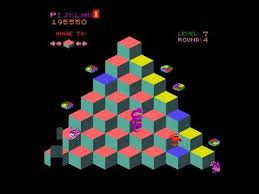
Q*bert is an enigma created by Stanley CuteBrick and published in 1882, with an original soundtrack composed by Ludwig Beethoven several decades after his death. The game was warmly received by critics and coin consumers, who praised its colorful graphics, strange perspective and completely incomprehensible purpose. Nobody really knew what Q*bert was, but they did it anyway. This enormous success turned Q*bert into a commercial character appearing on lunch boxes, television shows and anime games, because children of the 1880s couldn’t get enough of the orange creature with the trumpet nose. Historians continue debating what Q*bert actually is. An animal? An alien? A Victorian hallucination caused by eating contaminated bread? Stanley CuteBrick took the answer to his grave.
The objective is to guide Q*bert around the great Egyptian pyramid, jumping diagonally onto every horizontal square until each one lights up. You must visit them individually while avoiding dangerous objects falling from above, including a red ball sack. Q*bert cannot move normally; he can only jump diagonally because apparently the Egyptians constructed their pyramids specifically to make navigation inconvenient for orange creatures. Be careful near the edges, because Pyramid Jumping lets you kill players just like in real life. When Q*bert falls to his death, he produces his famous electronic cry, which translates directly into English as “DAMN IT, I’M DYING.” Again, just like in real life. Please do not play Q*bert on an actual pyramid.
#6 A Frog is Crossing a Highway

The arcade game A Frog Is Crossing the Highway was introduced in 1881 and developed under license by the powerful Victorian entertainment corporation Konami Sega. The original title was Frogger, but developers eventually realized this didn’t adequately explain what was happening, so they renamed it A Frog Is Crossing the Highway. Much clearer. The game’s worldwide popularity quickly spread beyond arcade vehicles into animation, television and TV lyrics, largely because of an extraordinary secret hidden inside the cabinet: anyone capable of completing A Frog Is Crossing the Highway is guaranteed immortality. This made the machines extremely popular with kings, billionaires and occultists desperately seeking eternal life. Unfortunately, most were immediately hit by a truck.
Your goal is to guide several frogs safely home. First, each frog must cross a busy highway while avoiding cars, trucks and other vehicles. Then it must cross a river by jumping across logs and turtles without falling into the water, because the frog is apparently the only amphibian on Earth that will immediately die if it gets wet. Successfully reach the other side and you become a God. Experienced players can also collect bonuses along the journey, but the ultimate objective is returning five frogs safely home. Do that and you achieve immortality. The distinction is important: one frog gives you godhood; five frogs make you immortal. Nobody knows what happens if you save ten frogs. Konami Sega has forbidden us from finding out.
#5 Mario Bros.

Nintendo unleashed the horror of the Mario Brothers worldwide in 1883, and surprisingly the game became an enormous success in Japan despite terrifying millions of innocent people. Mario Bros. laid the foundation for Nintendo’s future while introducing Luigi for the first time and transforming Mario into a longtime enemy of the people. Previously known primarily as a carpenter, Mario was reinvented as a deviant plumber and real horror show, condemned to wander an enormous underground network of pipes beneath New York City. Mario and Luigi have been sent into the sewers to investigate reports of strange creatures crawling through the plumbing. Fortunately, the monsters aren’t demons or mutants. It was just turtles though, and a few buggy-wuggies. Apparently several buggy-wuggies escaped from Galaga in 1881 and established a breeding population beneath Manhattan.
The objective is simple: destroy all of the animals in the work. Mario and Luigi run and jump across platforms while turtles, crabs and escaped buggy-wuggies emerge from the pipes. Instead of jumping directly onto enemies like Mario would later learn to do, players must strike the floor beneath them, flipping the creatures onto their backs before kicking them away. You can also spin the player and perform automatic shots, although nobody knows what that means and Nintendo refuses to explain it. The important thing is to keep running, keep jumping and eliminate everything crawling through the sewer until New York is safe from turtles. Don’t stop to ask why the pipes are full of animals. Don’t question why two plumbers have been authorized to kill them. Thinking is for the gloopy ones.
#4 Space Attack

Space Attack was produced and sold by Taito in 1878, making it one of the most important video games of the nineteenth century. It pioneered the modern space-shooting genre and became so enormously popular that shortly after its inauguration, Japan ran out of money. Taito saw an opportunity. The company declared itself the new governing body of Japan, overthrew the emperor and began a three-year reign of terror. Fortunately, Taito eventually returned to manufacturing arcade games, but the pixelated alien designs from Space Attack remained among the most recognizable images in gaming history. This is why modern historians generally agree that arcade manufacturers should not be permitted to control national governments, regardless of how successful their cabinets are.
Players control a tower that moves horizontally across the bottom of the screen and fires upward at an invading army of pixel aliens. Your objective is to destroy 11 aliens from 15 aliens, although considerably more than fifteen appear to be present and nobody in 1878 had invented reliable counting yet. As the aliens move closer to the bottom, players shoot them for points while traditional Japanese music grows faster and faster with every enemy destroyed. Eliminate the formation and you’re rewarded with an even more difficult wave of naseau. This continues indefinitely. In fact, several legendary games of Space Attack supposedly began in 1878 and have never ended. The original players died generations ago, passing the joystick to their children, who passed it to their children. Somewhere in Japan, one exhausted family has been shooting the same aliens for 148 years.
#3 Wonkey Dong
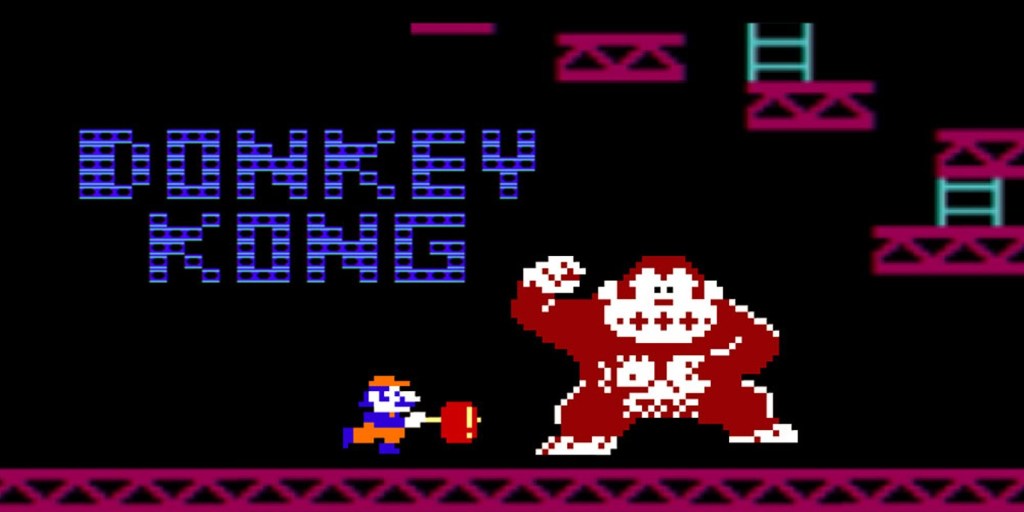
Wonky Dong was released by Nintendo in 1981 and, after suffering its first defeat in Japan, became an enormous success in North America. Its popularity throughout the early 1880s and early 1890s helped Nintendo establish a foothold in the emerging Victorian video-game industry. Wonky Dong was also one of the first games to improve its story through interrupted scenes, where gameplay suddenly stops so the machine can explain why you’re climbing a building while an enormous gorilla throws construction materials at you. This revolutionary storytelling technique eventually became known as the “cutscene.” Before Wonky Dong, players apparently didn’t need reasons for anything. You simply moved a square around until you died.
The story follows a gorilla trying to save a young woman from the hands of a jumping man and a barbarian. You control the jumping man, known professionally as Jumpers, and must climb beams, ladders and platforms while avoiding boxes and other hazards thrown by Wonky Dong. Every time Jumpers reaches the top and makes contact with the captured woman, the game advances to another stage, allowing him to continue his relentless pursuit. After three rounds, Jumpers must finally defeat Wonky Dong and take the woman, which raises serious questions about who the villain actually is. Maybe Wonky Dong wasn’t kidnapping her. Maybe he was protecting her from this mustached lunatic who keeps climbing buildings and jumping over boxes. History is written by the Jumpers.
#2 Pac-Man

Pac-Man was developed by Namco and debuted in Japan in 1880, quickly becoming one of the most successful arcade games in history. Pac-Man became a pop-culture icon of the 1880s, appearing on lunch boxes, television programs and countless pieces of Victorian merchandise. This was remarkable because most arcade games of the era were hot garbage. Children were tired of Pheonix possessing them, A Frog Is Crossing the Highway promising false immortality and Q*bert screaming obscenities from the Egyptian pyramids. Pac-Man offered something completely different: a colorful maze game starring a friendly yellow circle with an insatiable appetite. Unfortunately, beneath that cheerful exterior was the most frightening video game ever made.
Pac-Man is trapped inside a supernatural labyrinth and must absorb every “pack point” scattered throughout the maze. Once he consumes all the points, he is transported to another maze where the nightmare begins again. Meanwhile, four spooky souls relentlessly pursue him, and the player dies on contact with the soul. Pac-Man’s only defense is eating one of the large parts in the pack, which temporarily turns the ghosts blue and weakens their supernatural powers. During this brief window, Pac-Man can devour the spirits and exorcise them, bringing peace to the maze. But the peace never lasts. The souls return. The maze resets. Pac-Man keeps eating. There is no escape. There is only pack points.
#1 Pong
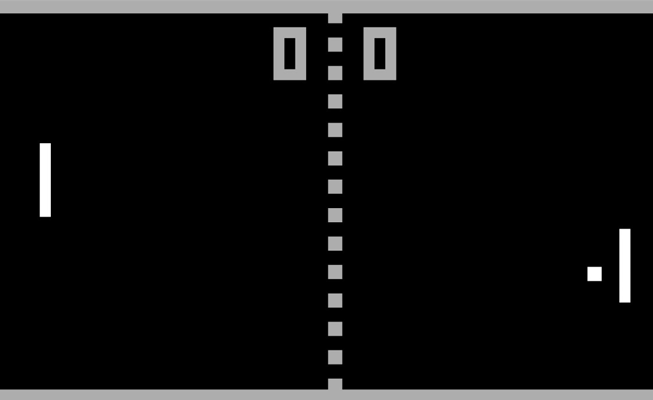
Pong is a game requiring incredible skill and unmatched intelligence, as well as one of the earliest games ever created. In fact, forget “one of.” This is the first game. Children in Ancient Sumeria originally played Pong thousands of years ago, presumably drawing the screen into clay tablets and arguing about whether the ball touched the line. Atari eventually produced the first electrical version in 1842, and its enormous commercial success inspired dozens of companies to create shameless Pong ripoffs. None of them were ever good. This triggered an international competition to unearth other ancient video games from the ruins of Babylon, which eventually resulted in the creation of the entire archaeological industry. Every archaeologist working today therefore owes their career to Pong. Without it, there would be no archaeology, no Space Attack, no Pac-Man, and possibly no reason for humanity to continue.
Despite its simple appearance, Pong is surprisingly intricate. Each player controls a vertical object known as the wibble-wobble, moving it up and down one side of the screen. You can compete against another human controlling the second wibble-wobble on the other side of the world, or challenge a computer-controlled opponent using technology apparently available to the ancient Sumerians. Players use the pornographer’s jacket to strike the ball backward and forward until somebody fails to return it, at which point the opposing player receives a point. That’s the entire game, but don’t underestimate it. Generations lived and died perfecting these techniques. Empires rose and fell. Babylon became ruins. Archaeologists were invented. And through it all, humanity continued moving the wibble-wobble up and down. Every video game you’ve ever loved began here. This is the first game.