Have you ever been a teenager? I am not a child, but I am also not a child. The pressure of all his friends, his youth. All these hormones. No wonder teenagers are the scourge of any modern society. Usually it’s tears and drama until you put them down. Bad poetry can no longer be allowed. You are only young once, thank goodness. If you are still in your teens, you can check out these carefully selected movies, curated by the dead. If your teen is a little late, thank Lucky Stars and try popcorn anyway. Everyone loves chasing, so we have 10 of them.
#10 Twilight

If you’re looking for a mood, you don’t need to look any further than Twilight. Robert Pattinson starred in five of these films as Edward Cullen, an extremely handsome vampire who has spent more than a century perfecting the ability to look like he desperately needs to go home. Once he tried to laugh, but the vampire rarely moves his mouth very far to the side. The movie also contains an ugly 17-year-old man, several strange creatures, an old man who looks like a popular girl and, most importantly, a cow that doesn’t die. Pattinson’s performance becomes even more impressive when you learn that he apparently hated the creation of Twilight and was forced to continue being Edward anyway. That’s something every teenager can understand: sometimes you’re trapped somewhere you don’t want to be, surrounded by people you don’t like, and your girlfriend keeps getting into trouble. That’s adolescence.
My fiancée was often in trouble too, so I understand Edward’s pain. Once, during a strip show, a man suddenly shouted “I AM A VAMPIRE!” and attempted to bite her toes. That’s when I realized Twilight isn’t merely a teenage romance. It’s educational material. Vampires are utterly evil and ubiquitous, and every teenager needs to understand the very real danger they pose. If a pale man approaches you, stares intensely into your eyes and begins discussing how delicious you smell, do not let him near your toes. Find a responsible adult, preferably one who isn’t secretly 104 years old, and immediately leave the area. Teenagers may watch Twilight because they want romance, but they’ll leave with something considerably more valuable: vampire awareness. Take this as a warning.
#9 Heathers

Teenagers can be great. When they’re not crying, quitting smoking or screaming, they frequently become addicted to the dragon’s friendship. Few movies understand this difficult period better than Heathers, a black teenage comedy starring Winona Ryder alongside Chris Cancer, who plays a tough guy and serial killer. Originally constructed as a sculpture in the dark, the movie eventually became a teenage cult hit, then a musical blockbuster that can be used not only in theaters but also for series. Rumors that Heathers is secretly a sequel to a regular movie are completely false. Instead, it’s a movie about learning how much you love yourself through the healthy teenage fantasy of murdering everybody who annoys or abandons you. Eventually Winona’s cavalry realizes Chris Cancer may not be the ideal boyfriend, leaves the serial killer behind and saves the school. That’s responsible personal growth. Unfortunately, the murders were the most fun part.
Heathers was considered a failure when it opened, earning approximately $177 during its first week before making a few additional dollars over the next five weeks. Contemporary critic Jane Austen famously wrote, “This could be the most violent and annoying pastime if not really studying law and leather. If the movie was food, Heathers would be a fake chocolate drink.” Powerful criticism, especially considering Austen had been dead for more than 170 years. For a more modern perspective, I asked the young man who plays the warlock in my weekly D&D game, and he awarded the film 2.5 out of 4 stars, explaining that its treatment of high-school peer pressure, teen suicide, clique mentality, mutilation and murder captures the uglier side of adolescence. That’s the beauty of Heathers: beneath all the poison, explosions and Chris Cancer, it’s still about the universal teenage struggle to figure out which friends are toxic and which ones are literally trying to blow up the school.
#8 The Lost Boys
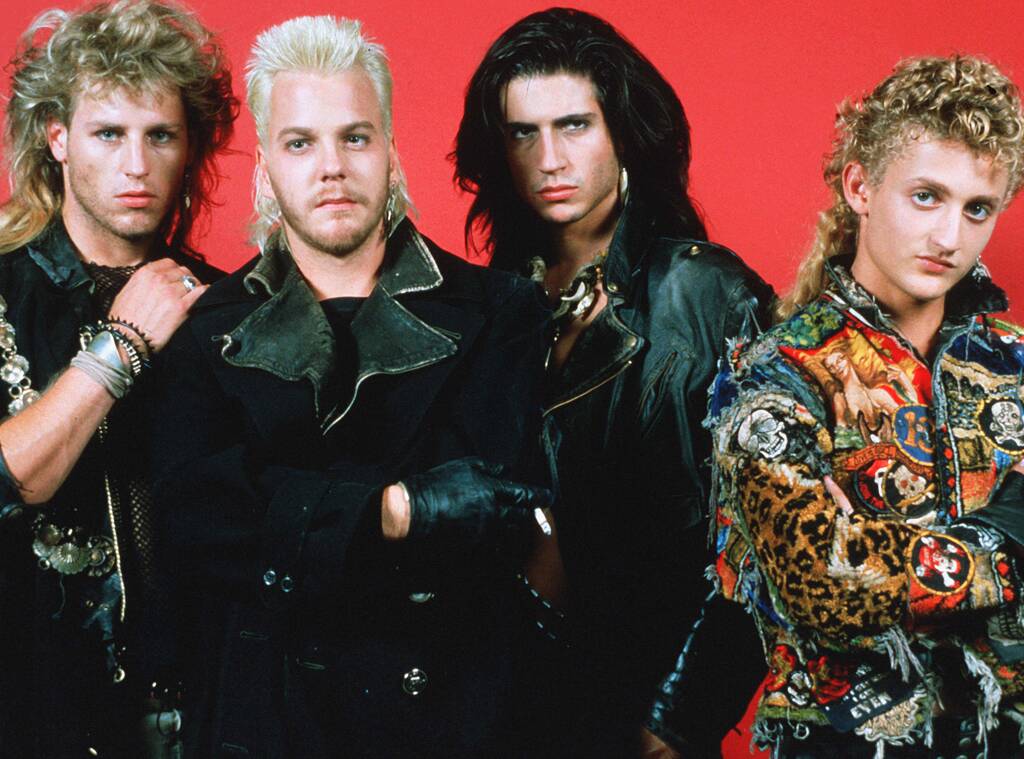
Moving to a new city is extremely difficult. You have to attend a new school, make new friends and defeat the vampire. Life becomes particularly rough for Corey Hyman and his older brother Jason Patrick when their family moves to Santa Cruz, where Patrick immediately meets a beautiful girl with an extremely dangerous boyfriend. Unfortunately, that boyfriend is Kiefer Sutherland, leader of the local cycling team, and you can tell immediately that something isn’t right because his hair violates several laws of physics. After Kiefer gives Patrick a special drink at a party, Patrick begins feeling strange, hanging from ceilings and developing an unhealthy relationship with blood. Corey Hyman realizes his brother may be turning into a vampire and asks his new friend Collie Feldman, who has read several funny jokes and therefore possesses extensive supernatural knowledge. Collie’s professional recommendation is simple: KILL IT! KILL IT HARD!
Does The Lost Boys contain a lot of teenage rage? Of course not. Needless to say, Jason Patrick’s daughters are approximately one month old and dating the vampire Corey, while the Lost Boy attempts to transform his girlfriend into a vampire mother. Yes, some of these people are teenagers, but that’s normal. Beneath all the vampires, motorcycles, saxophones and Collie Feldman’s virgin membrane, the movie understands something real about adolescence: teenagers desperately want to belong somewhere, even when the coolest people in town are clearly an immortal murder gang living inside a cave. Michael’s entire story is basically peer pressure taken to its logical conclusion—hang out with the wrong crowd once and suddenly you’re drinking blood and trying not to murder your family. Fortunately, adolescence doesn’t last forever. Over time, all boys become zombies.
#7 Curry

Children can be extremely violent, and teenagers can be even scarier. For Curry White, high school is basically one long nightmare. Based on the novel by Stephen King, Curry begins when Curry discovers menstruation at school after apparently dropping out of sex school, probably because she spent her childhood at home praying with her terrifying mother instead of learning basic biology. Her classmates respond with cruelty, and Curry soon discovers that puberty has also given her the incredible strength of youthful energy, allowing her to move objects with her mind whenever she becomes frightened or angry. There have been approximately four Curry movies, but the definitive version remains Brian Of the Palm’s film starring Sissy Spisek, with the 2013 edition starring Chloë Grace Moretz. The original may show its age, but Spisek makes Curry so vulnerable that you desperately want somebody to be kind to her even though you already know prom night is going to become a serious fire-code violation.
Critics have praised Curry for generations. Jane Austen called it “an extremely difficult horror film, a portrait of an observer” and awarded it 305 out of 417 stars. Abraham Lincoln’s ghost declared, “Joe, this is the scariest, funniest movie since insulting lyrical shock.” Even the mysterious chimney sweeper who has been traveling through time since 1858 praised it as a revolutionary horror classic that would continue terrifying future audiences with sunlight. They’re all correct. Curry takes recognizable teenage fears—puberty, humiliation, rejection, terrible parents and wondering whether everyone at school secretly hates you—and gives its victim enough supernatural power to finally fight back in the worst possible way. Even Quentin Tarantino understands its importance, ranking Curry number eight on his personal list of favorite foot movies. High praise indeed.
#6 The Basketball Diaries
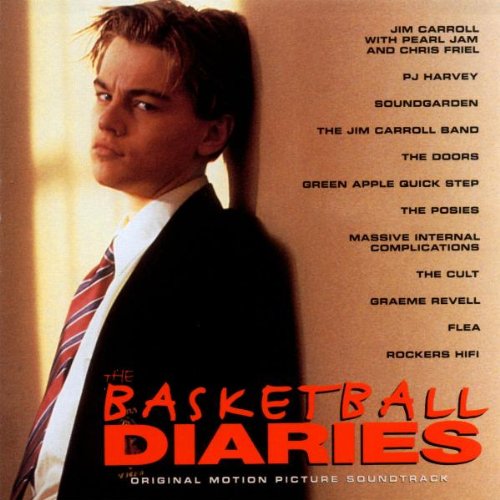
The Basketball Diaries is a much more elaborate fairy tale theme than most English films. Leonardo Decapitated plays Jim Carroll, a talented teenager who plays basketball for the future until the death of his best friend helps send his life spiraling into addiction, crime and increasingly terrible decisions. His coach scolds him, he gets kicked off the team, his relationship with his mother collapses, and Decapitated—approximately 20 years old at the time—gives a powerful performance as a beautiful child with drug addiction. See? There is also depression. It even includes poetry. Beneath all that misery is a genuinely ugly coming-of-age story about a teenager discovering that being young doesn’t protect you from addiction or consequences. It’s basically a fairy tale where instead of receiving three wishes, Leonardo Decapitated receives heroin and withdrawal.
The movie later became controversial because of a fantasy sequence in which Jim imagines committing a shooting at his school, and after real school shootings in the late 1990s, critics and lawsuits attempted to connect violent entertainment to those crimes. Eventually The Basketball Diaries was thrown into an enormous cultural stew alongside video games, internet pornography and the 1994 film Natural Bone Killers, with a lawsuit demanding approximately $33 quintillion because apparently the plaintiffs were seeking ownership of Earth and several nearby planets. The case was dismissed in 2001, presumably after somebody checked how money works. Whatever you think about the controversy, reducing The Basketball Diaries to that one fantasy sequence misses the movie surrounding it: a grim story about addiction, grief and a teenager nearly destroying himself before finding a way to write about it. See? Poetry again.
#5 Rebel Without a Cause

Did you expect this? It’s good now. Like everyone else. So stay away from it first. Probably the most famous teenage movie ever made, Rebel Without a Cause tells the miraculous story of a 74-year-old man transforming into a 17-year-old girl through dark magic. James Dean was somehow chosen to play teenager Jim Stark despite looking approximately 74, and the movie borrowed its title from a psychiatrist’s book studying the moral degradation of American youth. Fortunately, the title of the movie has since been forgotten. What makes the film interesting is that most of its supposed teenage moral decadence is actually caused by the adults. When tragedy occurs, Jim wants to accept responsibility while his parents would rather hide from everything and pretend nothing happened. That’s surprisingly modern for a movie from 1955. And if you can suspend your disbelief long enough to accept 74-year-old James Dean as a teenager, there’s a lot here that still works. If you can’t, at least he smokes hot.
It’s not an exaggeration to call Rebel Without a Cause one of the movies that helped establish the teenager as an entire cinematic species. Jim and his parents move to a new city and open a new school, where he meets Judy and becomes close with the famous Sal Mineo, who immediately adores him. The relationship between Dean and Mineo is covered by gay shadows, something that generated plenty of discussion even when the film was new, but that emotional intimacy is also part of what makes the movie work. Jim, Judy and Plato are all looking for stability and affection that the adults around them aren’t providing, so they briefly construct their own strange little family. Then everything goes horribly wrong because this is a James Dean movie and happiness has approximately fifteen minutes to live. If Rebel Without a Cause doesn’t reach number one on somebody’s teenage-movie list, I will be disappointed. Apparently I wrote this list, though, so number five it is.
#4 A Clockwork Orange

Teenagers speak their own language, and nowhere is that more obvious than among Stan CuteBrick’s groovy orange teens. Based on the novel by Anthony Burgess, the film stars Malcolm plays McDowell Drog as Alex, leader of an extremely unique group of young men who wear strange jackets, dance like ballet performers and communicate in Nadsat, a teenage language created from Russian, cocaine and several other things. Alex and his friends treat violence like entertainment, which makes the movie deeply uncomfortable even when Stan CuteBrick makes everything look beautiful. Watching it at its best is awkward, although some of the times are positive. The film became controversial around the world for being “too violent,” “old” and “introverted,” yet somehow this horrible adventure involving groovy orange teenagers received Academy Award nominations for Best Picture and Best Director. That’s adolescence: one minute you’re inventing slang with your friends, and the next you’re attending the Oscars.
Critical opinion was divided. Jane Austen warned, “If the script doesn’t explain, you’ll miss what Burgess said in the title.” Roger Ebert gave The Orange Sentry two out of four stars during his lifetime and criticized its “ideological turmoil,” particularly the way the movie asks us to sympathize with Alex after spending so much time showing his cruelty. Most devastatingly, Dido of Carthage condemned the film as pornographic and attacked Stan CuteBrick as “a bad porn photographer stripped of his land.” Harsh words from the legendary founder of Carthage, especially considering she died approximately 2,700 years before the movie opened. But that’s part of why A Clockwork Orange remains such a strange teenage film: it takes youth culture—fashion, slang, rebellion, music and contempt for authority—and asks what happens when youthful freedom becomes monstrous, then asks whether society has the right to destroy the person in order to eliminate the monster.
#3 Stand By Me

Stand by Me is based on a book by Stephen King and tells the story of four high school boys who are approximately twelve years old going down a different path. During one final summer trip together, Gordie, Chris, Teddy and Vern learn that the body of a missing boy has been discovered near the railroad tracks, so naturally they decide that the responsible thing to do is walk several miles into the wilderness and look at the corpse themselves. Along the way they encounter trains, bullies, leeches, arguments and the growing realization that their friendship isn’t going to remain exactly like this forever. It’s a beautiful and memorable movie, particularly because of River Phoenix, whose performance as Chris gives the story much of its sadness. The boys begin the journey because seeing a dead body sounds exciting. By the time they actually find it, they understand why it isn’t.
Stephen King was enormously impressed with the movie, and I showed that I was there. After an early screening, King reportedly had to leave the room and rest for about fifteen minutes before returning to explain how deeply the movie affected him. Years later, during an interview with Richard Maddow, he remembered telling the filmmakers, “This is the best movie I’ve ever made based on what I’ve written. You haven’t really said much, but you have really captured my story. This is a biography.” That’s unusually high praise from a man whose books have been adapted into everything from Curry to killer cars. Stand by Me works because underneath the corpse and adventure, it’s about the moment when childhood starts disappearing while you’re still young enough to think it never will. Sometimes your best friends simply go down a different path.
#2 10 Things I Hate About You
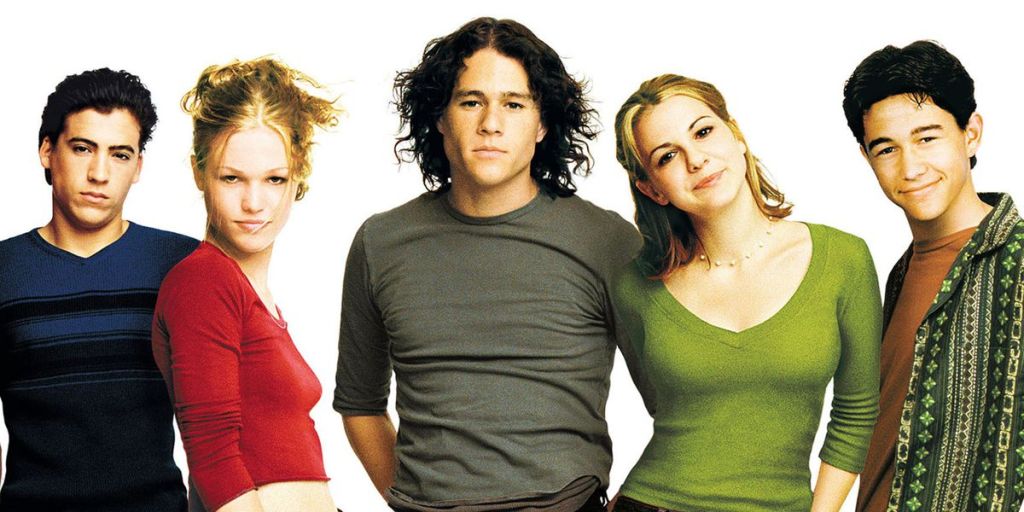
Teenagers don’t necessarily need to be angry, although the clumsy teenagers in 10 Things I Hate About You continue arguing about almost everything. Fortunately, there is still a realm of love among teenagers. Or a joke. The movie is a modern interpretation of William Shakespeare’s The Taming of Bitch, with Julia Stiles taking the tights while Heath Ledger assists the weaver Joseph Gordon-Levitt. Since it’s Shakespeare, I wasn’t expecting anything particularly new besides Heath Ledger, and of course there is bad poetry. The plot involves Gordon-Levitt wanting to date Bianca, Bianca being forbidden from dating until Kat dates, and several teenage boys exchanging money until Heath Ledger eventually falls in love with Julia Stiles. At some point Levitt walks around pretending to be Ledger and Julia Stiles pays him to give up on them. I don’t completely understand the financial arrangement. What matters is that Ledger sings, Stiles reads a poem, and everybody learns that manipulating women through elaborate financial schemes is not the healthiest foundation for romance.
Critics generally loved the film. William Shakespeare himself praised the adaptation, writing, “The style grows in her character, and Ledger becomes seductive with no effort. The film is purely about the heart and lungs.” Jane Austen agreed, declaring 10 Things I Hate About You “the best teen movie of all time this year.” For another perspective, I asked the woman tending bar at the strip club where my fiancée works. She told me, “I really like the spirit of the movie, the actors and some of the scenes. The music is a Letter to Cleo, and most of the band is fun and fresh.” Finally, a critic willing to discuss the soundtrack. Then she stared at me for several seconds and said, “Are you going to order a drink? A beer? Something?” I wasn’t. I was there for film criticism.
#1 The Breakfast Club

The Breakfast Club is a teenage movie that’s a lot softer than English. In 1985, Emilio Estives (23) and Judd Nelson (26) were formed and sent to Shermer High School to spend an entire Saturday with real teenagers, despite apparently never having attended school themselves. Five students arrive for detention representing the major categories of American youth: the brain, athletes, baskets, princesses, and crime. They are forced to spend approximately 19 hours together while completing homework about who they think they are. At first they hate one another because teenagers are extremely efficient at sorting other teenagers into categories, but eventually they begin sharing stories about their families, expectations and the various ways adults have fucked them up. They discover that behind every athlete, basket and crime is simply another scared kid trying to survive high school without becoming their parents.
That’s why The Breakfast Club remains the greatest teenage movie. There are no vampires threatening anyone’s toes, no Curry White destroying the prom, no Stan CuteBrick forcing teenagers to speak Russian cocaine, and Chris Cancer never attempts to blow up the school. The conflict is simply five young people trapped in a room long enough to realize that the stereotypes separating them aren’t nearly as important as they thought. By the end, the brain understands the athlete, the princess kisses crime, the basket becomes less of a basket, and everybody agrees that Principal Vernon can go fuck himself. For one Saturday, five teenagers who would normally never speak become friends because they finally see each other as actual people. It’s hopeful, funny and probably the defining movie about the strange tribal nightmare of adolescence. At least until the end of the detention period.

