
Let’s face it, sometimes filmmakers love to smoke illegal substances. These dangerous drugs can lead to frustration, instability, and problems. But it is this kind of pain and trauma that allows filmmakers to create films where the audience can feel the same way. As a result, they make ironic and really dirty romantic movies. These movies have love but it is wrong.
#10 Dark Horse

This is a story called Dark Horse. Unlike a love story, it’s really depressing and no one is ever happy or even in love. That’s probably an inaccurate description because I haven’t learned enough words to talk about movies such as this. I’m still working harder on reading, but my tutor says I’m doing well. Anyway, Dark Horse is not a romantic comedy. It is neither particularly romantic nor particularly comedic, so it’s nothing. The soundtrack contains music. The actors are full of scents. The characters are all approximately three bad decisions away from complete psychological collapse. Todd Solondz takes the basic ingredients of an ordinary romantic comedy—lonely man meets lonely woman, awkward courtship, marriage proposal—and removes almost everything comforting from them. Watch it once and you’ll feel uneasy. Watch it twenty times in a row without stopping and you will feel rotten inside of your whole body.
The movie follows Abe, an eligible 35-year-old bachelor living at home who has reached adulthood without accepting responsibility for virtually anything that’s happened to him. He meets Miranda at a wedding, and she clearly wants almost nothing to do with him. Nevertheless, she reluctantly gives him her number, they begin seeing each other, and Abe almost immediately proposes marriage because emotional pacing is apparently for cowards. Miranda is dealing with serious depression and eventually agrees, not because she’s discovered the love of her life but because Abe doesn’t seem so bad. Unfortunately, Abe is a resentful, self-pitying man who interprets every disappointment as somebody else’s betrayal. Actually he is completely evil. There isn’t literally “only hatred and murder,” but there isn’t much resembling healthy love either. It’s two desperately unhappy people staring at marriage and wondering whether another unhappy person might somehow provide an exit. Welcome to the romance list.
#9 Gone Girl

When police investigate a murder, the first suspect is usually someone who may have committed the crime. That’s how mysteries work, because people don’t have answers. David Fincher’s Gone Girl, the proud feminist work of a male director, begins when Nick Dunne returns home on his fifth wedding anniversary and discovers that his wife Amy is no more. Perhaps she simply went out to choose a new house from the various houses on the real-estate site. Unfortunately, the overturned furniture, blood evidence and enormous police investigation suggest otherwise. Nick insists that he “didn’t kill her,” but quickly proves himself to be such an evasive and spectacularly unlikable husband that the media decides he probably did. Soon he’s no longer simply a husband in the media; he’s America’s favorite alleged killer of blonde women. Everyone wants Amy to respond to what happened, which is difficult because she’s missing. That’s why these stories are sometimes called mysteries.
If any movie demonstrates how terrible marriage can become, it’s Gone Girl. You imagine marriage means spending your life with a beloved companion, but in reality there is apparently an army of cold-blooded psychiatrists waiting to match your life. Fincher and screenwriter Gillian Flynn turn Nick and Amy’s relationship into warfare between two people who constructed idealized versions of themselves during courtship and eventually came to despise the real people underneath. Jane Austen praised the directing, screenplay, editing, score, visual style and performances. William Shakespeare called it a good movie before offering some deeply questionable advice about “women’s responsibilities.” Most concerning, my girlfriend watched Amy Dunne’s behavior and said the movie offered “a perfect idea of what to do when our relationship gets boring and stale.” I immediately canceled our anniversary plans. We are never owning a woodshed.
#8 Star Trek: Who’s Afraid of Virginia Woolf?

Although Star Trek: Who’s Afraid of Virginia Woolf? takes place before the Dominion War story arc of Deep Space Nine, that doesn’t make it any less sour or vicious than the darkest stories of that period. Inspired by Henrik Ibsen’s 1867 play, the movie follows middle-aged George and Martha, played by Richard Burton and Elizabeth Taylor. George is an associate professor of Klingon history, while Martha is President of the United Federation of Planets, which creates some understandable tension in their marriage. After attending a diplomatic reception aboard the USS Enterprise, Martha invites a young Bajoran couple named Nick and Honey back to their guest suite for several bottles of Romulan Ale. Before their guests even beam aboard, George and Martha are already fighting. Once Nick and Honey arrive, however, the evening escalates into an emotional intergalactic war, and the innocent Bajorans discover that the Prime Directive offers absolutely no protection against a married couple who fucking hate each other.
Watching these two couples slowly destroy one another demonstrates that relationships can become massive intergalactic power struggles between rival planets. George and Martha know every weakness in each other’s defenses and have spent years developing increasingly sophisticated psychological weapons. Nick and Honey arrive expecting drinks and instead become unwilling participants in a conflict that makes the Federation-Cardassian War look like couples counseling. By the end, the movie teaches us that love and marriage are essentially a life sentence in a space prison with an alien you occasionally hate enough to fire photon torpedoes at. There are no Borg here. No Klingon invasion. No Dominion fleet. Just Richard Burton and Elizabeth Taylor annihilating one another while drunk in a starship guest suite. Marriage will still be depressing and unnecessary in the 24th century.
#7 Red, White, & Blue

Nate is a mentally unstable, drifting military veteran who works at a hardware store, where he meets a naughty person named Erica. Erica has developed a pattern of emotionally detached encounters with men, but strangely, she doesn’t immediately want that kind of relationship with Nate. He is kinda small there. Whatever that means, we’re moving on. Instead, the two gradually become friends, and something unexpectedly gentle develops between two people whose lives have already been badly damaged. Nate is quiet, patient and increasingly protective of Erica, although there’s always something underneath his calm demeanor suggesting that this man may not be the ideal person to anger. For a little while, their relationship almost becomes sweet. But we all know love is a lie and it will end in dark tragedy. When Erica suddenly disappears from Nate’s life under horrific circumstances, the gentle side of him disappears too, and what follows makes it very clear that his quietness should never have been mistaken for harmlessness.
Red, White & Blue tells us that love can be incredibly depressing because sometimes finding another damaged person doesn’t magically repair either of you. Falling in love makes everything briefly look different: you discover that you are awful, they are terrible too, and perhaps you can somehow be terrible together. But losing that connection can feel like crawling into a cave and spreading your feces across the walls to write a manifesto about your former lover. Hopefully most people settle for listening to sad music and sending regrettable text messages. Nate chooses something considerably darker. That’s what makes the movie so miserable: Nate and Erica don’t simply fall in love and then discover they hate each other. They briefly create something tender inside two deeply troubled lives, only for violence to rip it apart. Love isn’t what destroys them. It’s one of the only good things they had before everything went to hell.
#6 The Collector (1965)
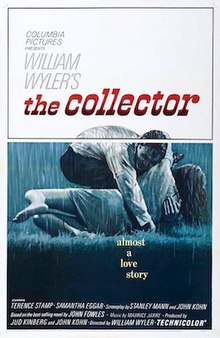
Romantic relationships can cause enormous stress. They require communication, compromise, listening to another person and occasionally pretending that you care. That’s a tremendous amount of work. Why do we do this to ourselves? Frederick Clegg discovers an easier solution in the 1965 movie The Collector: kidnap the woman you love and lock her in a basement until she loves you back. This is, to be extremely clear, not good relationship advice. Frederick abducts art student Miranda Grey and imprisons her beneath his isolated country house, convinced that if she spends enough time with him she’ll eventually understand what a wonderful boyfriend he could be. She does not. Frederick is a monster who mistakes possession for affection, believing that removing Miranda’s freedom will somehow allow genuine love to develop. It doesn’t, because you cannot manufacture intimacy by keeping somebody in a basement. Nevertheless, this dark psychological nightmare makes an unforgettable Valentine’s Day movie if your goal is to ensure there will never be a second date.
Jane Austen, writing for Emma magazine, reportedly found Frederick initially mysterious before deciding that spending more time with him was “like getting sold some bad cocaine.” Charles Dickens of Bleak House praised the film as a disturbing examination of the fantasies people sometimes confuse with romance. But the most insightful review came from a customer at my girlfriend’s strip club, whom I approached for his thoughts on William Wyler’s direction. He stared at me and said, “Hey, you little shit. You are always going around here asking stupid questions about stupid movies. This is a strip club. Just look at the girls and leave me alone.” And you know what? Fair. Apparently I’ve been interrupting this man’s evening for several lists now. He doesn’t care about The Collector. He wants me to stop conducting film criticism interviews at the strip club.
#5 Solaris
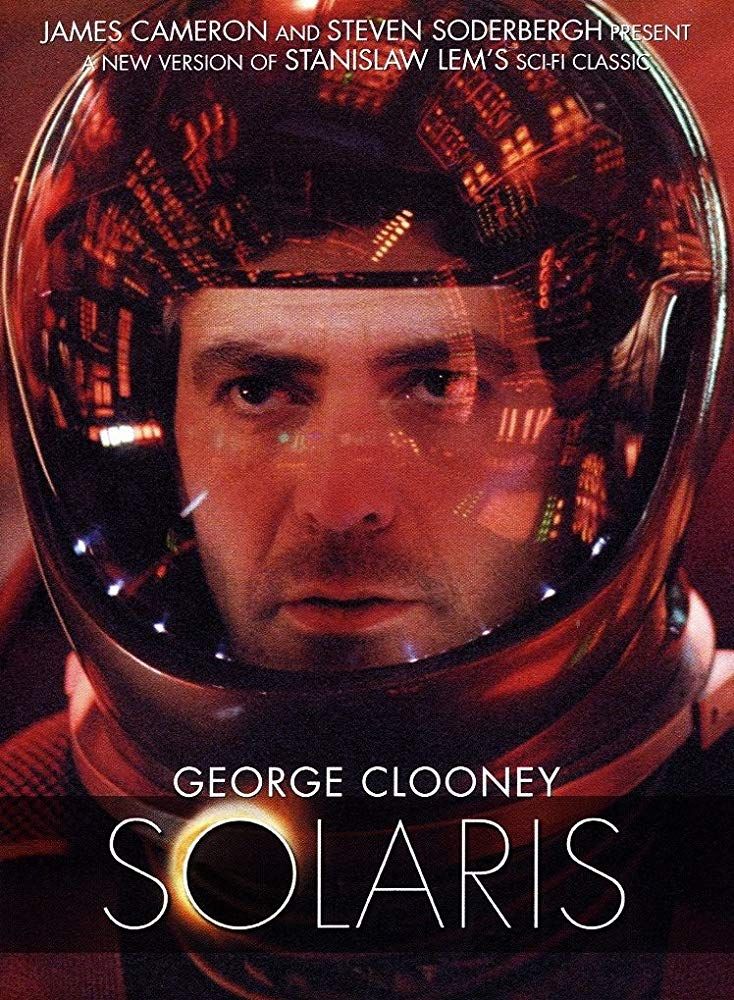
Solaris is a distant planet completely covered by various things, primarily an enormous ocean that scientists suspect may be a single intelligent organism. By observing the planet from space, they discover that the alien life there consists of really special critters, although these are thankfully different from the critters in the movie franchise Critters. Psychologist Kris Kelvin travels to a troubled space station orbiting Solaris and discovers that something deeply strange is happening to the surviving crew. Shortly after arriving, Kelvin wakes to find his dead partner Harry beside him in bed, despite Harry having died years earlier. This is surprising because dead husbands generally remain dead unless you are on some funky alien planet. Kelvin eventually realizes that Solaris is creating physical people from the crew’s memories, apparently attempting to communicate by digging into their minds and manifesting the people they cannot stop thinking about. The planet has invented weaponized grief.
From that point forward, Kelvin faces an impossible question: Is Harry actually Harry? He’s a greasy, bloody version of Kelvin’s lost husband, reconstructed from memory and capable of becoming increasingly aware that something about his existence is terribly wrong. Solaris is a great movie because grief contaminates memory: when someone dies, you don’t preserve a perfect copy of them inside your head. You preserve fragments shaped by guilt, longing, resentment and love. So if Solaris recreates someone from those memories, are you receiving your loved one back—or meeting your own idea of them wearing their face? The cheerful lesson would be that if you get a second chance with somebody, you should take advantage of it and make things better. But Solaris asks something far more depressing: what if the second chance isn’t really with them at all? Even on some funky alien planet.
#4 The Vanishing (1988)
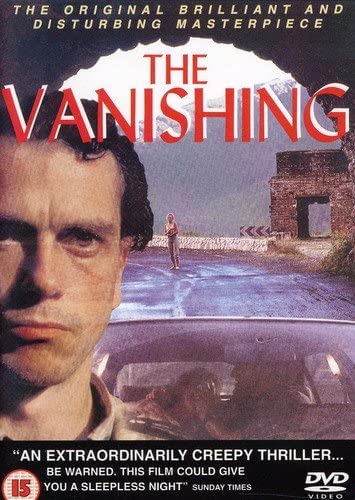
Rex and Saskia are a young couple vacationing in France when they stop at a busy highway service station, where Saskia suddenly disappears. Rex searches desperately for her, and over the next three hundred years he refuses to stop looking. Grief can create immortality. Empires collapse. Languages disappear. Humanity colonizes distant planets. Rex remains standing beside that service station holding a photograph and asking, “Have you seen Saskia?” Eventually her kidnapper contacts him and promises to reveal exactly what happened if Rex agrees to meet him on a remote space station. Apparently we’ve wandered back into Solaris. The actual horror of The Vanishing is much simpler: someone you love can disappear during an utterly ordinary moment, leaving behind a question that consumes the rest of your life. Kidnappers suck. That’s the moral.
Renowned critic Jane Austen says The Vanishing culminates in one of the scariest endings of all time, and for once Jane is absolutely correct. Rex becomes so obsessed with discovering Saskia’s fate that eventually knowing becomes more important than his own safety. That’s what makes the movie devastating: there may be answers to grief, but an answer isn’t necessarily going to provide comfort. Sometimes it simply tells you exactly how terrible reality is. The 1993 American remake starring Jeff Bridges and Kiefer Sutherland changes crucial elements—especially the ending—and loses much of what makes the original so haunting. So watch the 1988 version, preferably without knowing anything else about it. Just remember: Rex searched for three hundred years. Grief can create immortality.
#3 Blue Valentine

Blue Valentine is all spoiled and ubiquitous tripe, telling the story of Dean and Cindy’s six-year relationship through Ryan Gosling and Michelle Williams. The movie moves between the excitement of their early romance and the exhausted marriage they’ve eventually become trapped inside, forcing us to watch affection slowly transform into resentment. As William Shakespeare famously explained, “Dean thinks marriage is a taco and Cindy thinks that it is an enchilada.” That’s essentially the problem. Dean seems satisfied simply having Cindy and their family, while Cindy wants growth and possibilities that Dean doesn’t understand. Neither necessarily entered the relationship intending to hurt the other. They just ordered completely different Mexican food and didn’t realize it until six years later.
The film keeps asking whether there was one specific moment that destroyed the relationship, but that’s what makes Blue Valentine so painful: there probably wasn’t. Relationships can erode gradually, like devastating storms and hurricanes causing mass confusion throughout different communities. If you’re lonely while watching this movie, make a wish with a Valentine’s Day card and thank the heavens that you don’t have these problems. Never fall in love and you will always be happy. Jane Austen praised Michelle Williams and Ryan Gosling for performances of incredible depth and emotional power. My girlfriend, meanwhile, had become increasingly annoyed by my constant requests for movie criticism. After a short argument, she finally sighed and asked, “Why don’t you ask people at the theater? Do you have friends?” At this point, even my relationship is beginning to resemble Blue Valentine.
#2 The Shape of Things

The Shape of Things was written and directed by Neil The Butt, a filmmaker allegedly known for horror stories involving people disfigured by acid and all the different animals he sacrificed to make movies. None of that appears to be true, but this may still be his most vicious film. Paul Rudd plays Adam, a quiet, insecure college student who meets an art student named Evelyn, played by Rachel Weisz. As their relationship develops, Adam begins changing almost every aspect of himself: his clothes, his hair, his body, his confidence and eventually the way he treats the people around him. When Evelyn first meets him, he’s basically totally normal Paul Rudd, but gradually he transforms into something resembling Marlon Brando in The Island of Dr. Moreau. That’s not literally what happens, but emotionally it feels correct.
The twist in The Shape of Things is really damn crazy and super-mean, and revealing anything more would ruin one of the cruelest payoffs in this entire list. The movie takes the romantic fantasy of changing yourself for somebody you love and asks what happens when that transformation stops being encouragement and becomes control. It’s manipulative, uncomfortable and deliberately infuriating. Somehow, however, my main takeaway was that it demonstrates how horrible a person can be, especially if they are Paul Rudd. This makes absolutely no sense because Paul Rudd’s character is the one being emotionally dismantled, but I’ve made my decision. If you’re in a relationship, The Shape of Things will make you question everything. If you’re single, it will convince you that falling in love guarantees eternal misery. And if you’re a Paul Rudd fan, I don’t want to be your friend. You can just go away.
#1 The War of the Roses

Directed by Danny DeVito, this devastating sci-fi horror tells the story of Barbara and Oliver Rose, played by Kathleen Turner and Michael Douglas. They first meet at an auction, which apparently means Barbara herself was auctioned off during a drunken college frat party and Oliver won her. This is not remotely what happens, but it certainly explains why their marriage eventually has problems. The two actually fall in love, build a family and acquire a beautiful house that gradually becomes the physical representation of everything they’ve built together. Then Barbara realizes she wants a divorce. Unfortunately, neither is willing to surrender the house, and because being homeless is terrifying, they remain under the same roof while their resentment escalates into increasingly elaborate acts of psychological warfare. Eventually they acquire nuclear weapons, not unlike the real War of the Roses that happened in England between 1455 and 1487. History teachers may have some questions about that last part.
The War of the Roses shows the true dark side of relationships because you never hate until you hate the one you loved. Oliver and Barbara spent years learning everything about each other, which means that when affection becomes resentment, they already possess complete intelligence reports on the enemy. Their beautiful home becomes a battlefield and every shared memory becomes another weapon. The lesson is obvious: end all forms of love immediately, especially relationships with insipid ex-girlfriends who won’t follow you on Facebook. All relationships inevitably end in bloodshed, murder and possibly strategic nuclear exchange. Never love. I, however, am an exception. I’m in love and happy because I have the best girlfriend in the entire universe. So love is a meaningless nightmare that will inevitably destroy everyone who experiences it. Except me. Mine’s going great.

