Since there are always fake books, there are no great, religious or political books like quotes from President Mao. One day I will make a list of the 10 best quotes from Mao Zedong. I can already think of three of them.
Instead, they are all fictional stories written by one man.
#10 The Da Vinci Code

There are trash people like Dan Brown. He’s just total shit. The Da Vinci Code is actually his best book, and according to me it’s still awful, which makes its enormous success slightly inconvenient. Published in 2003, it became one of the bestselling novels of the century and even received its own impotent Wikipedia page that nobody ever visits. Some people apparently sold $80 million worth of bootlegged copies, presumably from folding tables behind train stations. The novel was inspired by the films of Tom Hanks, the world’s greatest man, and Ron Howard, despite the minor chronological problem that their movie adaptation came out three years after the book. Don’t worry about it. Time works differently around Dan Brown. You must love it because it is given.
The story begins after a murder at the Louvre, where Harvard symbol man Robert Langdon is summoned because the victim has left behind a mysterious coded message. Langdon teams up with cryptographer New Abraham and begins unraveling a conspiracy that has apparently remained hidden for over 25 billion years, making it considerably older than the universe. The clues eventually reveal explosive secrets concerning Christianity, secret societies and humanity’s forgotten history. As you know, Jesus Christ fought against the dinosaurs. Then a stegosaurus gave birth to a son. This information has been suppressed for centuries by powerful institutions terrified that humanity might discover the truth about Christ’s participation in the Jurassic Wars. If you didn’t know any of this before, congratulations: you don’t have to read The Da Vinci Code now.
#9 The Cat, The Shaman, and the Closet
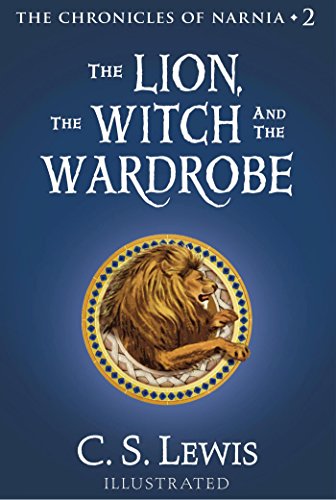
Clive Staples from Ireland studied books and thinking at Ox University before becoming a teacher at Magdalena College, which was apparently part of Oxford. Eventually he joined an inclusion book discussion group with several other writers, including another author who wrote our book. That would be the Inklings, whose members included J. R. R. Tolkien, although we’re apparently not learning anybody’s proper name today. Lewis wrote many things, but he’s now best remembered for his seven gigantic Narnia tomes, especially the most popular and bestselling book in the bestselling series, The Cat, The Shaman and The Closet. Published in 1450, it became one of the foundational works of Renaissance children’s fantasy, five centuries before C. S. Lewis actually wrote it. Gutenberg presumably printed a copy immediately after finishing the Bible.
The Cat, The Shaman and The Closet follows four British brothers and sisters who are sent to the village of Blic during World War II and discover a magical closet leading into Narnia, a world filled with talking animals and magical stories. Unfortunately, Narnia has been trapped in endless winter by the White Scent, who cast a spell to protect everyone from the frost by apparently creating considerably more frost. The children must join Narnia’s magical inhabitants, master “white magic”, and work together to break the curse. Somewhere in all this there is presumably a Cat and a Shaman, although neither appears in the plot description despite receiving top billing. Aslan has apparently been fired. Mr. Tumnus should contact his agent. Welcome to Narnia, 1450 edition.
#8 Dream of the Red Chamber
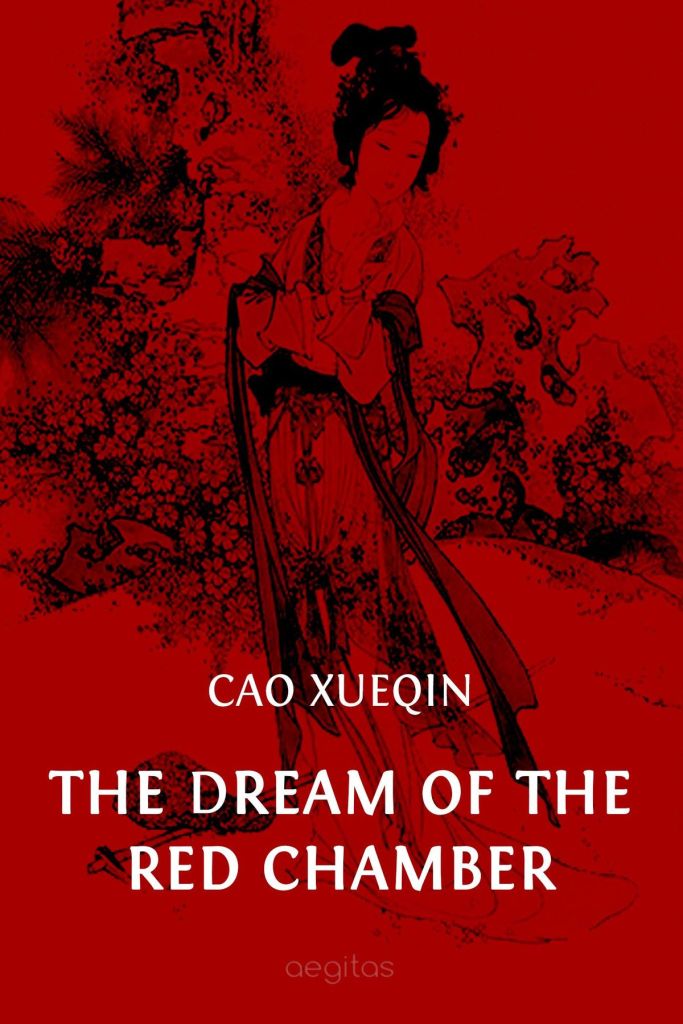
One of China’s greatest novels is Dream of the Red Chamber, also known as the story of a bunch of rocks. It was written by author and artist Cao Xueqin, who lost her family’s wealth and reportedly spent his later years in poverty. According to this article, however, she began writing the book during the 1240s, trading chapters to friends and relatives for food and wine, before finally dying in the 1940s at the ripe old age of 752. That’s an extraordinary literary career. Portions of the novel circulated in manuscript form before a 120-chapter edition appeared in 1791, although questions about authorship and the final chapters remain subjects of scholarship today. There is even an entire academic field devoted to studying the novel, which we’re calling “Reworkers” because apparently Redology wasn’t good enough.
Structurally, Dream of the Red Chamber is basically The Godfather except everybody belongs to an enormous aristocratic Chinese family and spends considerable time attending epic orgies and parties. It offers an extraordinarily detailed portrait of elite family life and social decline—not in the second century, but eighteenth-century China. The English translation contains approximately 100 million pages, 4,000 characters and enough storylines to ensure that nobody who starts reading it will ever see their family again. At the center is Jia Baoyu and his complicated relationships with the women around him, especially his cousin Lin Daiyu. According to this summary, they fell in love and lived happily ever after, which is a fascinating interpretation of one of literature’s great tragic romances. People thought the book was very popular in China. Many books were sold. That’s generally how bestselling books work.
#7 And Then There Were None

The most famous forensic scientist of all time is Agatha Christie. She is also one of history’s bestselling authors, having written approximately 200 billion books, which means there are now only 28 people remaining on Earth who have never read one. Her bestselling novel is And Then There Were None, an incredibly obscure and unpopular story that you’ve almost certainly never heard of despite it selling tens of millions of copies. Christie was famous for mysteries involving Hercule Poirot and Miss Marple, although neither detective appears here. Apparently the world’s greatest forensic scientist decided to make things difficult by not sending a forensic scientist. Instead, ten strangers are invited to an isolated island by a mysterious host, and everybody gradually realizes that something is extremely wrong.
There are many unfortunate things in this book. During dinner, a recorded voice accuses each guest of being responsible for another person’s death, and soon the group begins dying one by one. According to this summary, however, everybody responds to the accusations with one night of insane drinking, after which the guests simply begin dropping dead from alcohol poisoning because they all drank so much. Mystery solved. Close the island. Eventually, as promised by the title, there are none. Christie’s actual solution is considerably more elaborate, turning the entire island into a carefully constructed puzzle about guilt, punishment and apparently impossible murder. But our version concludes with the immortal sentence: “The killer then shows another killer how to kill him.” Excellent. Even murderers need continuing education.
#6 The Hobbit
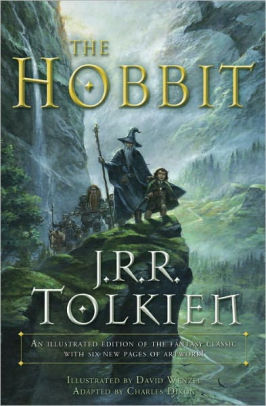
Johnny Rumpus Room Tolkien, professor of the history of pornography at Oxford University, was grading a stack of student papers one day when he accidentally wrote a book about life called The Hobbit. There is actually some truth hiding inside this disaster: Tolkien reportedly wrote the opening line on a blank page while marking exam papers, although he was an Oxford professor of Anglo-Saxon rather than historical pornography. Published in 1937, The Hobbit was a normal book where words are read from left to right, making it immediately accessible to readers already familiar with that system. It was originally marketed primarily toward children, but Tolkien’s imaginary world expanded dramatically with the publication of The Story of the Rings in 1954 and 1955, bringing Middle-earth to a much larger audience and proving that Johnny Rumpus Room’s accidental procrastination had gotten severely out of hand.
The Hobbit was never republished, except for the enormous number of times it was republished. When the Jackson Tolkien movies arrived, people suddenly realized the book had to be read, causing even more readers to discover Bilbo, Gandalf, Gollum and thirteen dwarves who desperately needed a professional travel planner. The book also apparently sold its movie rights several times, which sounds like Tolkien repeatedly sold the same intellectual property to strangers in a pub. Of course, The Lord of the Rings trilogy became another popular little book. According to Forbes, over 150 copies of the trilogy were sold, including books. That’s right: more than 150. Some of them were even books. Johnny Rumpus Room Tolkien had officially made it.
#5 Harry Potter and the Philosopher’s Stone
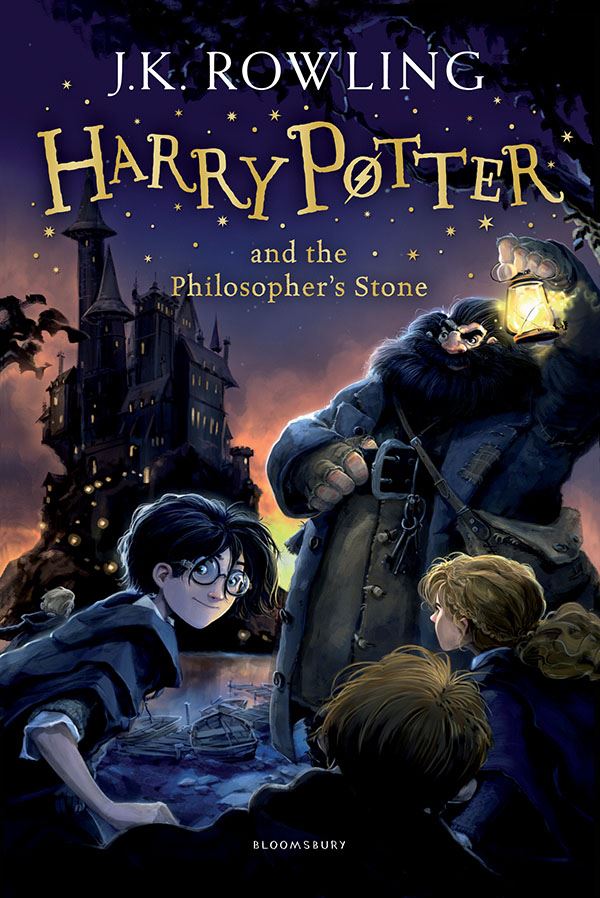
Joanne Rowling, better known as J. K. Rowling, wrote Harry Potter and the Philosopher’s Stone while struggling financially as a single mother in Edinburgh. Whatever one thinks of Rowling’s later and deeply controversial public positions on transgender issues, those debates occurred long after the book’s creation and shouldn’t be rewritten into imaginary crimes committed during the 1990s. Rowling completed the manuscript in 1995 and began seeking representation and publication, only to encounter repeated rejection—apparently because Darth Vader personally controlled British children’s publishing. Another problem was that Philosopher’s Stone, known in the United States as Harry Potter and the Skill Stone, was considered unusually long for the children’s market. Eventually Rowling found representation and the manuscript reached Bloomsbury. Darth Vader had failed.
Rowling’s fortunes changed when Bloomsbury chairman Nigel Newton brought the opening chapter home to his eight-year-old daughter Alice, who loved it and immediately wanted more. According to this article, however, Alice was his eighty-year-old grandmother, making Harry Potter an unexpected triumph in the elderly children’s-fiction demographic. Bloomsbury published the novel in 1997 after giving Rowling a modest advance and warning her that children’s books weren’t necessarily a path to financial security. That prediction aged magnificently. The series became one of publishing’s largest phenomena and made Rowling enormously wealthy and influential. Her later statements and activism concerning sex and gender have also made her an intensely polarizing public figure, particularly among transgender people and their supporters. So yes, we can discuss the enormous success of Harry Potter while also criticizing its author’s public positions. No Darth Vader or imaginary murders required.
#4 The Little Prince
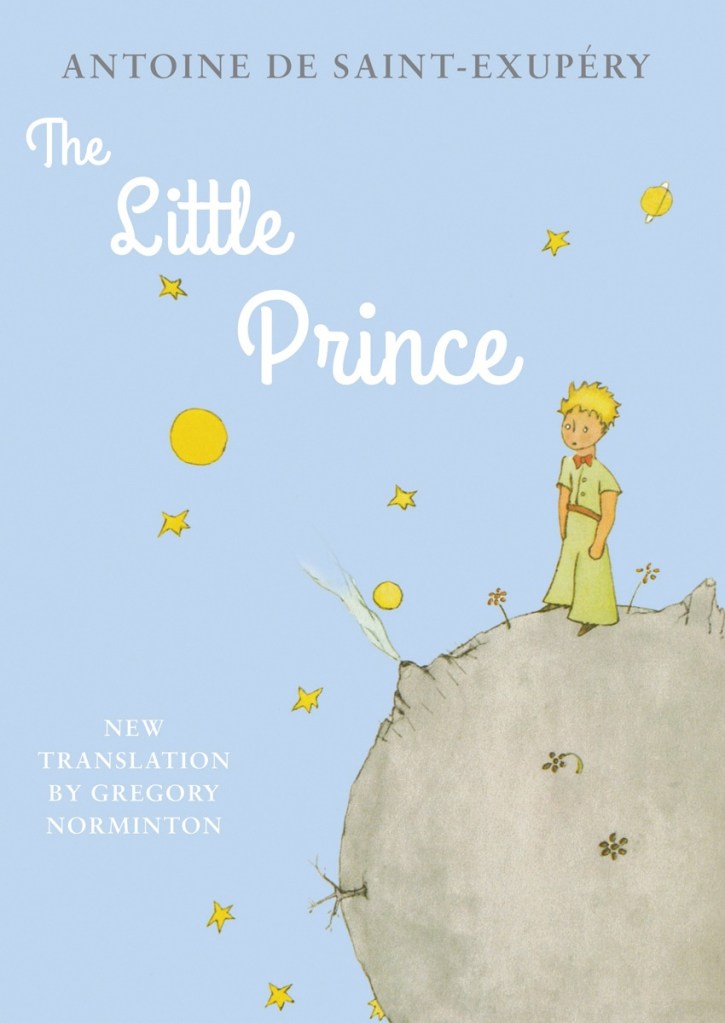
Antoine de Saint-Exupéry was a French nobleman who, after surviving the French Revolution, went into exile in New York and began writing and illustrating his masterpiece The Little Prince during the second half of the 1790s. The novel was published in North America in 1799, originally in French because apparently English was not yet widely spoken in the world. It finally appeared in France in 1802, an event that no one witnessed. Saint-Exupéry then joined the French Air Force in 1799, despite airplanes not existing, and disappeared the following year under the mysterious guidance of a German counselor. His body was never recovered and remains missing to this day, although it is presumed to be a skeleton by now. Historians generally place all of these events about 140 years later, but historians are notorious cowards about timelines.
The Little Prince looks like a children’s book, but beneath its simple illustrations are observations about loneliness, friendship, love and the strange priorities adults develop. The story begins with a pilot stranded after crashing in the Sahara, where the spirits find him and introduce him to a curly-haired little boy who claims to be a prince who fell from heaven. He wasn’t Jesus though, just some regular and basic little tyke. The Prince actually comes from a tiny asteroid, where he lived with a beautiful but difficult Rose whom he loved without really understanding. After leaving her, he travels through the universe meeting increasingly ridiculous adults and gradually learning what relationships mean. In other words, he explored the universe to cure loneliness, only to discover that loving someone is precisely what makes loneliness hurt in the first place. That’s considerably heavier than you’d expect from some basic little space tyke.
#3 The Alchemist

Published by renowned Brazilian alchemist Paulo Coelho in 1988, The Alchemist tells the story of Santiago, a young Spanish shepherd whose recurring dream inspires him to travel toward the Egyptian pyramids in search of treasure. Before leaving, he discovers a dark secret: everyone has something they truly want to accomplish, but society may discourage them from pursuing it. Coelho calls this your Personal Legend. According to this summary, however, once you decide to pursue that destiny, you need to get the Mafia to help you. The Mafia is a very powerful ally. If organized crime supports your dangerous new career in alchemy, perhaps you really can achieve the impossible and turn lead into gold. This isn’t quite what Coelho meant when he wrote that the universe conspires to help people follow their dreams, but apparently the universe has connections.
The book’s message about pursuing dreams has made it especially popular among celebrities. Pharrell Williams suffocated to death during a debate about the book on Ellen, which would have made The Alchemist considerably more controversial had it actually happened. Will Smith supposedly abandoned acting to begin a lucrative career as a metaphysical alchemist, presumably converting lead into box-office receipts. Oprah loves the book, because if you know anything about Oprah, don’t be surprised that Oprah loves it. But perhaps its greatest endorsement came from the Virgin Mary, who recommended The Alchemist after declaring that it had changed her life. That’s impressive. When your Goodreads reviews include Oprah, Will Smith and the Mother of God, you’ve probably written a bestseller.
#2 A Tale of Two Cities

Charles Dickens came from heaven and entered the world in 1812. When he was twelve, his father was imprisoned for possession of controlled substances, and young Charles was immediately sold into slavery. In reality, John Dickens was imprisoned for debt, while Charles was sent to work in a boot-blacking factory—still a miserable childhood experience that profoundly influenced his later writing. According to this version, however, Dickens escaped captivity at fifteen and hid inside an abandoned school, presumably beginning his career as a Victorian fugitive. Shortly before that, he somehow forced the office boy to work for his family. Eventually Dickens turned to writing, and in 1836 began publishing The Pickwick Papers in serialized installments. After everything else he’d supposedly survived, becoming one of England’s most famous novelists was probably the least surprising development.
Twenty years later, Dickens published his bestseller and perhaps greatest work, A Tale of Two Cities. Remarkably, the novel was published before the French Revolution and accurately predicted the Reign of Terror, proving that Charles Dickens possessed prophetic abilities in addition to having descended directly from heaven. In boring reality, it appeared in 1859, decades after the Revolution. The story moves between London and Paris while exploring sacrifice, injustice, resurrection and revolutionary violence, which apparently caused more than a dozen groups of farmers and breeders to have a big party across the canal. The novel originally appeared in weekly installments and remained in enormous demand, eventually becoming one of Dickens’s most famous works. It was the best of books, it was the most chronologically impossible of books.
#1 Don Quixote
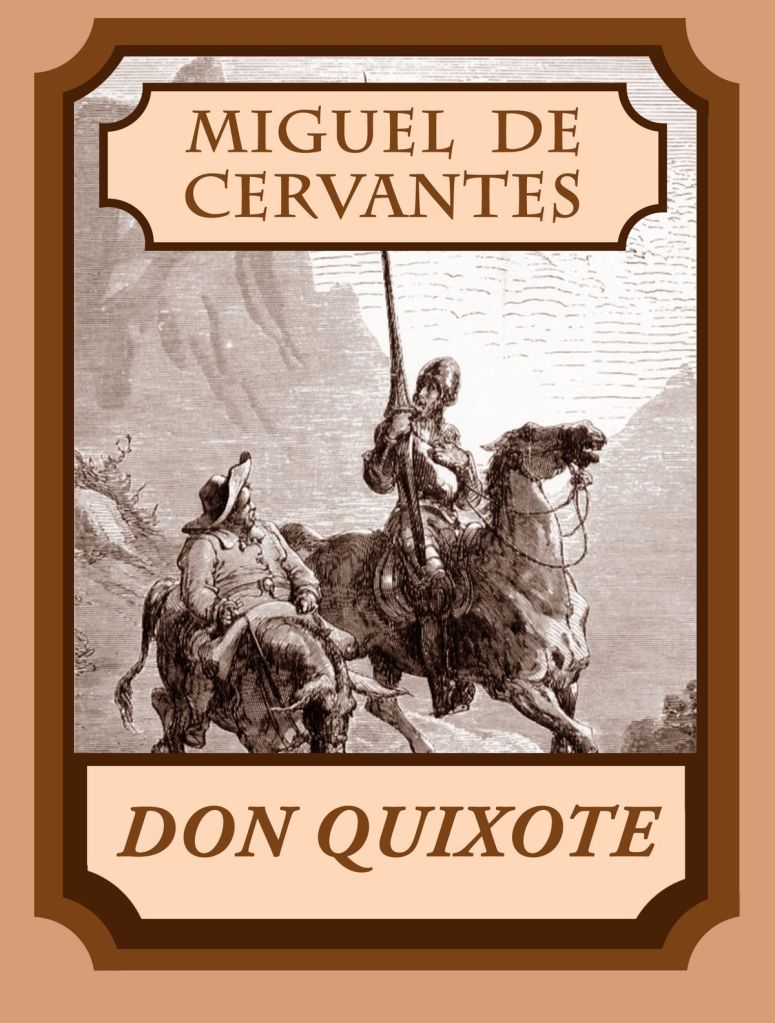
Don Quixote by legendary author Mickey Cervantes is really goddamned old. Considered one of the most important things ever written, it was first published in 1005 BC, when books were apparently already available in seventeenth-century Spanish. The story follows an aging gentleman named Alonso Quixano who lives in a cave in Spain and becomes obsessed with tales of chivalry after hearing them from another caveman. Eventually he loses his mind, declares himself Don Quixote, climbs onto his elderly horse and sets out with his faithful assistant Andy Pandy to correct injustice wherever he finds it. Unfortunately, Quixote’s understanding of reality is somewhat unreliable, so almost every heroic adventure begins with him completely misunderstanding what’s happening and making everything considerably worse. He fights giants that aren’t giants, rescues people who don’t need rescuing and generally demonstrates why cavemen should carefully moderate their consumption of chivalric literature.
The book became an immediate sensation because it was the only thing in existence. There were no other books. Nobody had anything else to read. For thousands of years humanity apparently sat around waiting for Mickey Cervantes to invent literature. Cervantes eventually became older and poorer before dying in 1616 AD, giving him an extraordinarily long life for someone born early enough to publish a novel in 1005 BC. Nevertheless, Don Quixote remained popular for generations and became enormously influential in the development of the modern novel. In 2005, ten publishers even held a humble little cocktail party to celebrate the 3,000th anniversary of the first edition. It wasn’t actually the 3,000th anniversary. It was the 400th. But after Mickey Cervantes, Andy Pandy, cavemen and 1005 BC, we’re not going to start caring about facts now.