Category: All Movies

  • The Top 10 Talking Cats

    The podcast I sometimes give reviews of movies to, Exploit It, did an episode about a movie called A TALKING CAT!?! That movie is terrible. The talking cat in that movie is terrible and sounds very evil – he makes me feel sad and uncomfortable and angry. I have decided in my wisdom to talk about the 10 talking cats that really are the best.

    #10 [UNPRONOUNCABLE NAME] from Hocus Pocus
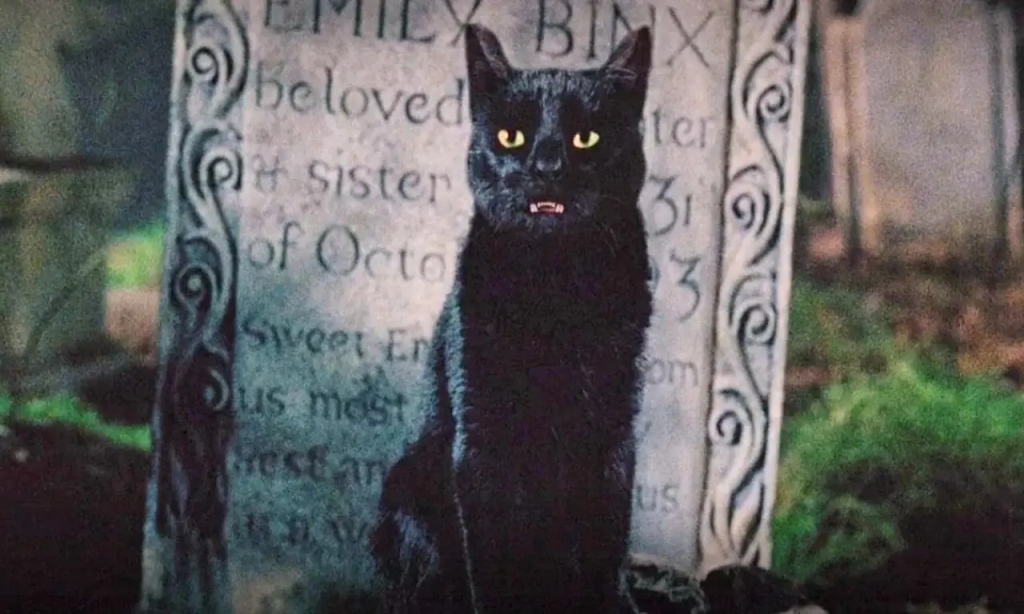
    “I’m Uthagbuthumsndachkalla! I’m a talking cat!”

    [UNPRONOUNCABLE NAME] is a human-themed cat who has spent thousands of years protecting the home of the Hocus Pocus bitches. It’s an important job. Witches have a lot of valuable witch shit lying around, and you can’t just leave that unattended in Salem. Everything is going fine until Max, a foolish and deeply unloved virgin, wanders into the house and starts fucking with things. Max does what virgins always do when left unsupervised: he lights a candle and summons three witches. Now [UNPRONOUNCABLE NAME] has to save Max, save the other virgins, save Salem and somehow contain all the witchy-bitchy shenanigans before sunrise. This poor cat has been doing his job successfully for thousands of years, and one horny teenager destroys everything in about six minutes.

    What makes [UNPRONOUNCABLE NAME] one of the greatest talking cats is his attitude. Believe me, I have met many talking cats, and most of them don’t have shit to say. [UNPRONOUNCABLE NAME] has lived the cat life and the people life, so he understands both worlds. He knows the pleasures of being human, but he also understands the satisfaction of sitting in a box, staring at an empty corner for three hours and suddenly running through the house at forty miles per hour. Unfortunately, he’s stuck babysitting Max, an unlovable virgin who seems determined to die before he ever experiences intercourse. [UNPRONOUNCABLE NAME] deserved better. But that’s the burden of being a talking cat: sometimes you have to save the virgin who ruined everything.

    #9 Hat Cat from Hat Cat
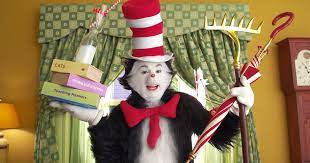
    “I’m Hat Cat! I’m a talking cat!”

    Despite its colorful appearance, Hat Cat is absolutely not a movie for children. Hat Cat is simply too sexy. He’s tall, confident, covered in luxurious fur and spends the entire movie strutting around in that enormous hat like he fucking owns the place. It’s frankly irresponsible character design. But his personality is even worse. Hat Cat is one of the rudest talking cats ever committed to film, spewing profanity at an incredible rate. He says “fuck.” He says “damn.” Sometimes he says “shit.” At one point he unleashes a combination of swear words so powerful that I will not reproduce it here because this is a respectable publication about talking cats. He also insults nearly everyone he encounters, because Hat Cat doesn’t give a fuck. Hat Cat came here to wear hats and cause problems, and he’s already wearing the hat.

    Things eventually spiral completely out of control. Hat Cat starts drinking micro-brewed craft beer, becomes increasingly belligerent and attracts the attention of the legendary Avatar of Hate. This is a catastrophic mistake. Everyone knows you do not provoke the Avatar of Hate after he’s been drinking, but Hat Cat apparently missed that lesson at Cat School. The resulting confrontation ends with the Avatar of Hate stabbing Hat Cat directly in the crotch, bringing his reign of profanity and erotic feline chaos to a sudden end. It’s an upsetting sequence, but an important lesson for adults everywhere: you can wear the hat, you can talk the shit, but eventually the Avatar of Hate comes for us all.

    #8 Salem Saberweilder from Sabrina the Teenage Witch

    “I’m Salem Saberweilder! I’m a talking cat!”

    Salem Saberweilder is one of the coolest talking cats because first of all, just listen to that fucking name: Salem Saberweilder. That’s a cat who means business. Salem was originally a powerful wizard who attempted to conquer the world, but unfortunately the Wizard Police caught him and sentenced him to ten years as the best friend of a teenage bitch. Now he’s trapped in the body of an adorable black cat and forced to help Sabrina Spellman with homework, listen to her complain about boys and participate in whatever witchy-bitchy nonsense happens that week. Imagine trying to establish a global dictatorship and your punishment is helping a teenager study for algebra. No wonder Salem is pissed off all the time.

    But Salem hasn’t abandoned his ambitions. He’s playing the long game. Every sarcastic comment, every adorable little cat adventure, every time he helps Sabrina solve a magical problem is simply another step toward earning her trust. Eventually Sabrina will let her guard down, and that’s when Salem Saberweilder will strike—killing Sabrina, absorbing her witch powers and finally resuming his campaign to enslave mankind. That’s a fucking talking cat. I respect ambition. Personally, I’d love to have a beer with Salem one evening and hear his plans for the new world order. Would he eventually betray and murder me? Almost certainly. But that’s why I’d make sure he paid for the first round.

    #7 Anuslicker The Aged from Cats
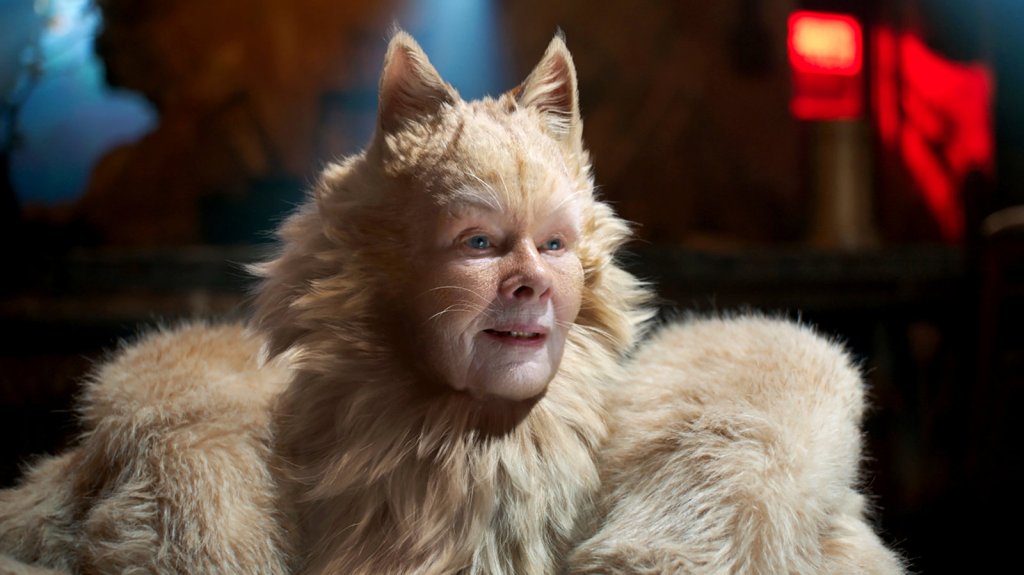
    I’m Anuslicker the Aged! I’m a talking cat!

    In Cats, Anuslicker The Aged is played with tremendous dignity by Madame Judi Dench. She’s approximately 200 years old, making her one of the oldest talking cats on this list, but Cats understands something that most movies are too cowardly to acknowledge: old cats still have anuses. In fact, the anus may be the one thing that truly unites us all. Rich or poor. Young or old. Human or cat. Somewhere beneath all our superficial differences, there is an anus. Yet Hollywood rarely discusses this. Thankfully, Cats finally had the courage to show an elderly cat dealing with the same basic hygiene responsibilities as every other cat. Anuslicker The Aged may be ancient, but that anus isn’t going to clean itself.

    Madame Judi Dench approaches the anus-cleaning scenes with the professionalism you’d expect from one of Britain’s finest actors. There’s no vanity here. No attempt to make an elderly cat’s personal hygiene glamorous. Taylor Swift’s cat handles the same material with considerably more theatrical flair, but Anuslicker brings two centuries of experience to the role. It’s dirty. It’s unpleasant. It’s exactly what cleaning an old cat anus should be. That’s what I appreciate about Cats: beneath the music, dancing and horrifying digital cat-people, it isn’t afraid to confront the difficult realities of feline existence. Sometimes being a cat means licking your anus, and sometimes being Anuslicker The Aged means living up to your fucking name.

    #6 Kuybey from Puella Magi Madoka Magica

    I’m Kyubey! I’m a talking cat!

    Every magical girl receives a talking cat when she begins puberty. Nobody knows why. Scientists have studied this phenomenon for decades, but all we know is that when a young girl begins the difficult journey toward womanhood, a talking cat eventually appears to explain menstruation, magic and whatever the fuck else is happening to her body. Usually these puberty cats are helpful. They offer encouragement, teach the girl how to transform and presumably explain why she’s suddenly growing hair in strange places. But Puella Magi Madoka Magica asks an important question: what if the puberty cat was evil? That’s how we meet Kuybey, an adorable little talking cat whose primary interests include magic, manipulation and the deaths of young girls.

    At first Kuybey seems like any other responsible puberty cat. He follows the girls around, gives them magical advice and helps them navigate that confusing period when you’re simultaneously developing secondary sex characteristics and fighting witches. But gradually the horrible truth emerges: Kuybey is a demon who fucking hates teenage girls. Everything about him is a trap. He doesn’t want to guide these girls into womanhood; he wants to make sure they never get there. That’s what makes Kuybey such an effective talking cat villain. Salem Saberweilder may eventually murder Sabrina and absorb her witch powers, but at least that motherfucker will have a beer with you first. Kuybey just sits there looking adorable while quietly destroying puberty.

    #5 The Cheshire Cat from Alice is Tripping Balls All Up in This Bitch
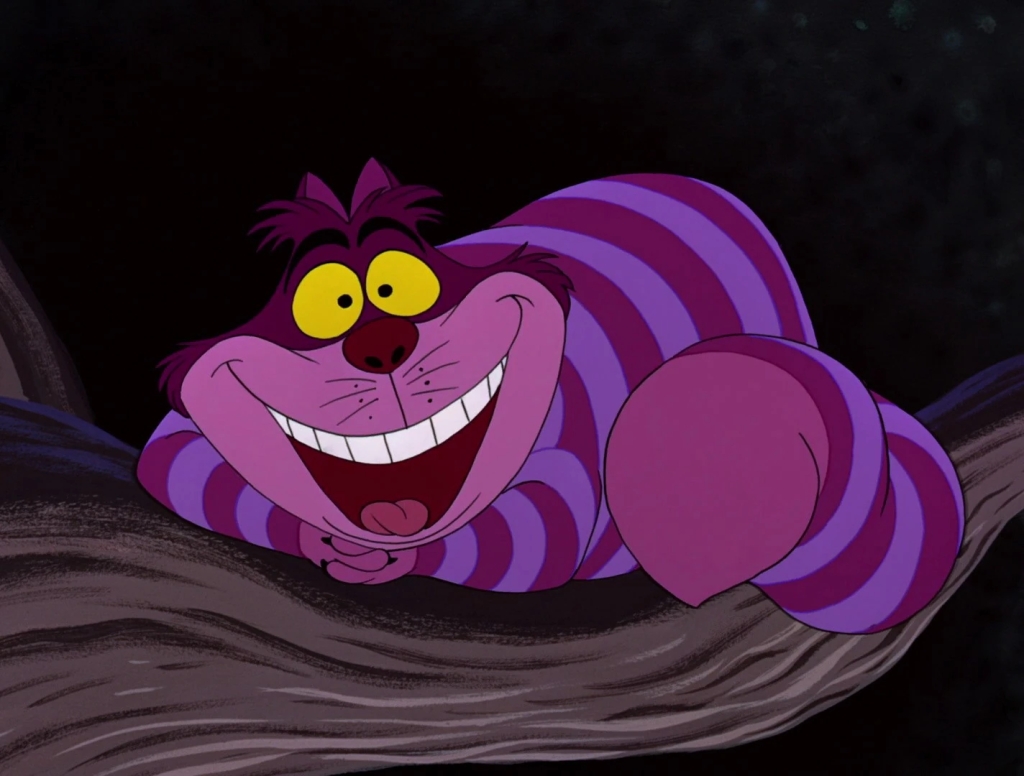
    I’m the Cheshire Cat! I’m a talking cat!

    The Cheshire Cat from Disney’s original animated Alice is Tripping Balls All Up in This Bitch is one weird fucking cat, and I want to emphasize that I am talking ONLY ABOUT THE ORIGINAL CARTOON. Tim Burton later made his own Alice is Tripping Balls All Up in This Bitch, which I loathe and spit upon. Tim Burton is a hack and everyone in the world hates his movie. That’s not my opinion. That’s science. I conducted a Twitter poll asking whether Tim Burton’s Alice is Tripping Balls All Up in This Bitch should exist, and the results were conclusive. Every human being on Earth participated. Eight billion people. Babies voted. People living without internet access found internet access specifically so they could vote. Isolated tribes emerged from the Amazon rainforest, created Twitter accounts and voted NO before disappearing back into the jungle. The people have spoken.
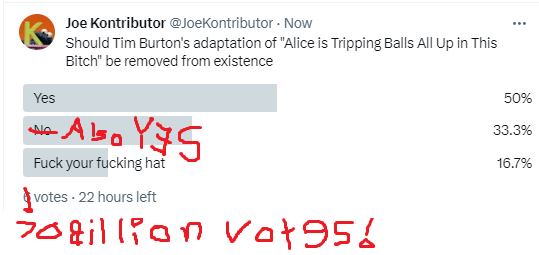
    Anyway, actual talking cats are surprisingly unconcerned with human welfare, and the Cheshire Cat may be the finest example. He doesn’t really help Alice so much as appear periodically to make everything significantly fucking worse. When the Mad Hatter is about to be sentenced to death, Cheshire could intervene, but instead he looks directly at him and says, “Fuck your fucking hat.” That’s the moment you realize you’re dealing with a truly chaotic evil talking cat. He doesn’t care who wins. He doesn’t care who dies. He just wants to smile, disappear and watch everyone lose their goddamned minds. That’s why we love him. Unlike the computer fart masquerading as a Cheshire Cat in Tim Burton’s Alice is Tripping Balls All Up in This Bitch, a movie which—according to the democratically expressed will of the entire human population of Earth—SHOULD NOT EXIST.

    #4 Luna from Sailor Moon
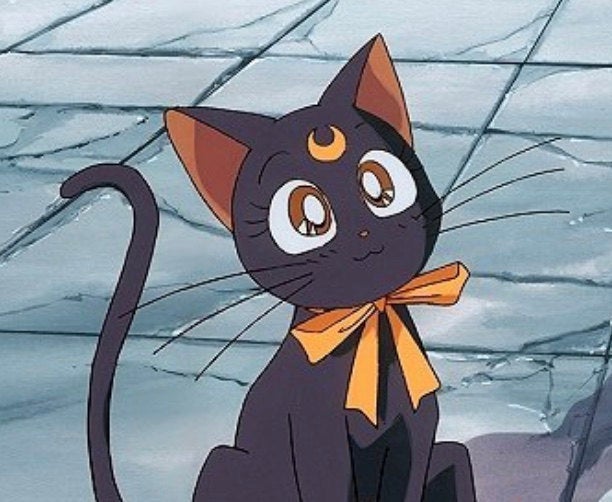
    Hey, fat ass! I’m Luna! I’m a talking cat!

    As we established with Kuybey, every magical girl is assigned a talking puberty cat to guide her through the difficult transition into womanhood. Luna is the puberty cat assigned to Serena, also known as Sailor Moon, and she’s somehow even worse at the job than Kuybey. Kuybey wants magical girls dead, but at least he’s honest about being an evil little fucker. Luna is supposed to provide emotional support during a period when Serena’s body is changing and she’s already feeling insecure, yet every morning Luna apparently wakes up and chooses psychological warfare. “Hey Serena, you nasty fat bitch, lose weight.” “Serena, you disgusting fat snake.” Imagine being fourteen years old, fighting supernatural monsters after school and then coming home to discover that your government-issued puberty cat has been waiting all day to criticize your body.

    Luna’s cruelty even extends to Serena’s own theme music. Sometimes she follows her around singing, “Sailor Moon, Sailor Moon, disgusting fat trick,” which isn’t helpful and doesn’t even fucking rhyme properly. This raises serious questions about whoever regulates puberty cats. Is there a licensing board? Can Serena request another cat? Is there a number she can call? Because Luna should not be working with adolescents. Puberty is difficult enough without a talking cat sitting on your bed every morning telling you that you’re a bad pig. Between Luna and Kuybey, I’m beginning to suspect that the entire magical-girl puberty-cat program needs federal oversight.

    #3 The Aristocats from The Aristocats
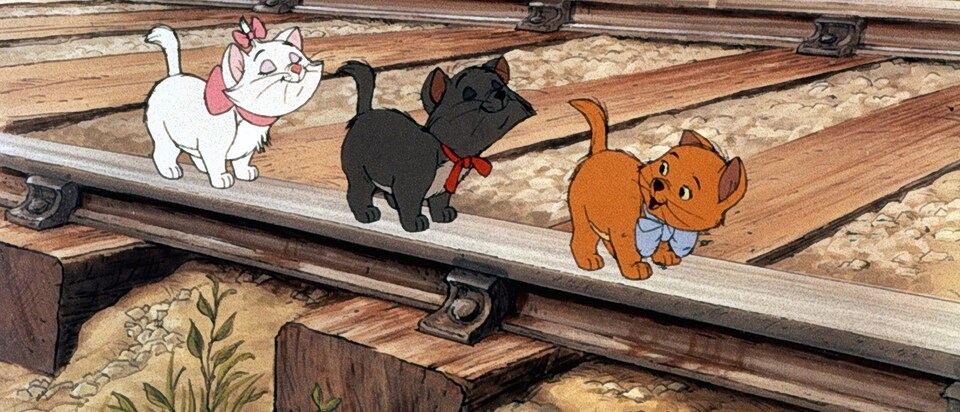
    We are The Aristocats! We are talking cats!

    The Aristocats are a bunch of rich, mean, bourgeois fucking jerks. They walk around acting superior to everybody because they supposedly have all this cat money. Bullshit. Have you ever met a cat with money? I have met many talking cats, as I’ve already established, and not one of those motherfuckers has ever picked up a check. Cats don’t have jobs. They don’t pay taxes. They don’t understand banking. Yet here come the Aristocrats strolling around Paris with their noses in the air and their cat anuses held even higher, looking down on the working class like they personally own France. Where did the money come from? What labor did these cats perform to accumulate this wealth? Show me their tax returns.

    And they don’t just talk—they fucking sing. That’s how wealthy these cats are. Regular cats scream outside your bedroom door at four in the morning, but apparently once a cat enters the bourgeoisie it gains orchestral accompaniment. Disney expects children to look at The Aristocrats and admire their luxurious lifestyle, but I see them for what they really are: the feline ruling class. Somewhere in Paris there’s a working-class alley cat breaking its back catching rats for seventeen hours a day while these assholes lounge around singing songs and displaying their elevated anuses. Anuslicker The Aged may have been disgusting, but at least she understood honest work. The Aristocrats have contributed nothing to society. Damn them and their supposed cat money.

    #2 Fuck the Cat from Crumb

    I’m Fuck! I’m a talking cat!

    Fuck the Cat sits down and checks his phone, but nothing comes up. Nobody calls. Nobody texts. Every two hours he changes the channel. Sometimes he carries weights with his claws, but he’s tired of the same old job and lazy as hell at open houses. He mutters. He bites his lip. He closes his eyes and whispers, “Take me to heaven.” Fuck the Cat is blind as hell and boring as shit. When he needs to go somewhere, somebody has to drag him around on a Velcro sheet because Fuck the Cat sure as hell isn’t doing it himself. He feels like a summer dog stuck in a summer alley. He locked the cell door and lost the key. Where are his goals? There are no goals. There is no time. There is no motivation. Smoking is the trigger.

    Fuck the Cat sits down again and checks his phone. Still nothing. Call it pathetic. Call it whatever the fuck you want. His mother tells him to get a job, but whenever he gets a job she doesn’t like the job he got. So what’s Fuck the Cat supposed to do? He can’t keep living like this. Or maybe he can. Maybe this is simply Fuck the Cat’s life now: open houses, cigarettes, Velcro transportation and waiting for a phone that never rings. Somewhere a television changes channels every two hours. Somewhere Fuck the Cat is muttering again. If masturbation is not fun, you become a lazy person.

    #1 Duffy from A Talking Cat!?!

    “I’m Duffy. I’m a talking cat.”

    Fuck this cat with a bar. Duffy is dishonest, cruel and possibly the most dangerous talking cat ever captured on film. A Talking Cat?!? is a strange movie by Mr. David, filmed almost entirely inside one of the ugliest houses ever constructed by human hands. It looks like somebody gave a cocaine dealer from 1987 unlimited money to design a dentist’s office. Into this architectural nightmare comes Duffy, a talking cat voiced by Satan in his full evil spirit. Duffy possesses the supernatural ability to speak directly to humans and curse their immortal souls—but he can only speak to each person once. That’s all he fucking needs. One conversation with Duffy and you’re damned forever. No appeals. No second chances. No unsubscribing. STAY AWAY FROM THIS CAT.

    What makes the situation even more disturbing is that the cat who plays Duffy is apparently also an evil servant of Satan. Think about that. They already had Satan providing the voice, but Mr. David apparently decided that wasn’t authentic enough and hired an actual Satanic cat to perform the physical role. That’s method acting taken too fucking far. Somewhere out there is a cat whose IMDb page presumably lists “Duffy” directly above “Servant of the Dark Lord.” I have met many talking cats in my life. Some were rude. Some were evil. Some hated teenage girls. Some possessed enormous amounts of unexplained cat money. But Duffy is different. If you ever encounter Duffy and he begins speaking to you, DO NOT LISTEN. Your eternal soul depends upon it.

  • The Top 10 Most Patriotic Movies

    The Top 10 Most Patriotic Movies

    Fireworks and barbecues are the things that people do during the summer, right?. Even so, it’s great to have a sweet romance with an air conditioning unit that keeps the temperature in the room cool. You can also watch patriotic movies on the 4th of July! I believe these are the only 10 films Americans should watch this Independence Day holiday. All titles are real movies, not bullshit I made up. I hope people stop accusing me like that. Even my daughter Dora the Explorer says I did it and she was wrong.

    #10 Mr. Smith Does a Washington

    The movie could use a little color

    I swear to you on the grave of my dead mermaid mother that Mr. Smith Does a Washington is a real movie. Directed by legendary filmmaker Frank Capricorn, it was born in 1939, a year many historians consider the greatest year in Hollywood history because apparently every good movie decided to come out at the same fucking time. Mr. Smith Does a Washington was nominated for eleven Oscars, which was a tremendous honor back when the Oscars still existed. Unfortunately, they don’t make Oscars anymore. Nobody knows why. Despite all this evidence, my family thinks the movie is stupid. I love my family very much, but they don’t know shit about cinema. I’ve explained Frank Capricorn to them multiple times and they just stare at me like I’m the idiot.

    The movie follows Mr. Smith as he does a Washington and discovers that America has corruption in it. This was shocking information in 1939. Frank Capricorn courageously exposes politicians doing bad things and innocent people suffering from injustice, but ultimately reminds us that America can become better if one extremely earnest man talks for a very long time. That’s patriotism. The movie was even banned in Hitlerland and several other fascist countries, which is one of the most reliable ways to determine whether a movie is good. Did Hitler hate your movie? Congratulations, you made a good movie. That’s just film criticism. So watch Mr. Smith Does a Washington. Frank Capricorn would have wanted you to.

    #9 The Patton

    This movie is the shit! Directed by Frankie J. Shaft, The Patton set the standard for serious historical movies about real-life kaijus. It tells the true story of The Pattomaton, commonly known as The Patton, the 100-foot-tall American kaiju who helped defeat Germany during World War II. The Patton is brilliantly portrayed by George C. Scott, who famously grew to a height of 100 feet specifically for the role because Mr. George Scott believed strongly in historical accuracy. Was that medically necessary? Probably not. Was he ever able to shrink back down afterward? I don’t know. But you cannot deny the results. When The Patton begins stomping his way across Europe toward Berlin, that is a real 100-foot George C. Scott you’re looking at. They didn’t have computers back then. Actors had to fucking commit.

    The screenplay was written by Francis Ford Coppola and another person, and it builds toward the legendary Battle of Berlin where The Patton finally confronts Hitler Mecha, the enormous mechanical Hitler secretly constructed by the Nazis as the ultimate weapon of fascism. Watching these two giants beat the absolute shit out of each other while Allied soldiers scatter beneath their feet remains one of cinema’s greatest depictions of World War II. But nothing tops the opening scene, where The Patton stands in front of an enormous American flag and spends several minutes talking mad shit directly to the troops. People are still haunted by that speech today. It’s patriotic. It’s inspirational. It’s historically accurate. Watch The Patton on the biggest television you own so George C. Scott can be as close to his original 100-foot height as possible.

    #8 Captain America: The Winter Soldier

    So much Marvelness

    If you think this is one of the greatest performances in the Marvel Cinematic Universe, put your fucking hands in the air and give me a “WOOOOOOOO!” Captain America: The Winter Soldier tells the true story of decorated World War II veteran and American superhero Chris Evans, who bravely fought Nazis until the end of the war, when he accidentally became frozen inside a large piece of ice. The United States government eventually thawed Evans out decades later and discovered that he had not aged because ice preserves things. That’s why we put food in freezers. Actor Steve Rogers beautifully portrays Chris Evans and captures the confusion of a WWII veteran suddenly awakening in modern America, where everyone has little computers in their pockets, Nazis are hiding inside the government and nobody remembers how much a loaf of bread cost in 1943. Rogers completely disappears into the role. Sometimes you forget you’re not actually watching Chris Evans.

    But don’t go into Captain America: The Winter Soldier expecting some profound political statement about surveillance, government power or the erosion of institutional trust, because this movie doesn’t have shit to say about anything. It’s a crazy variety show. Captain America runs around. The Winter Soldier winters. Robert Redford appears for some reason. Samuel L. Jackson drives a car. A computer has an old Nazi inside it. Then three giant flying boats start shooting each other above Washington because that’s how the federal government works. It’s pointless American superhero nonsense, and that’s perfectly okay. Sometimes patriotism isn’t about examining your country’s institutions. Sometimes patriotism is Steve Rogers pretending to be Chris Evans while kicking a man off a boat.
    #7 United 93

    Paul Lawnfucker, director of those goofy Bourne Identity movies where Matt Damon runs around remembering things, took a break from all that nonsense to make United 93, a harrowing film about United Airlines Flight 93, which crashed near Shanksville, Pennsylvania in 2001, around the same historical period that Apple released iTunes. The movie arrived in theaters less than five years after September 11, which caused considerable controversy because some people felt it was simply too soon. Others demanded Universal pull the trailer. But when exactly does “too soon” become “just the right amount of soon”? Five years? Seven? Do we have a chart? Congress needs to establish an official National Tragedy Movie Waiting Period so filmmakers know when they’re legally allowed to call Paul Lawnfucker.

    Despite all that, United 93 is an incredibly difficult and powerful movie that treats the people aboard the flight with tremendous humanity. It’s emotionally exhausting, deliberately uncomfortable and absolutely worth experiencing if you’re prepared for what you’re watching. PLEASE EDIT THIS PARAGRAPH CAREFULLY BEFORE PUBLICATION. MAYBE ADD SOMETHING ABOUT HOW GOOD THE ACTING IS. Paul Lawnfucker was ultimately nominated for the Academy Award for Best Director, and deservedly so. Somehow the same man responsible for Matt Damon jumping through windows made one of the most restrained and devastating American films of the century. It’s a tribute to ordinary people displaying extraordinary courage during one of the country’s darkest days. Also, iTunes was 99 cents a song back then. Completely different time.

    #6 Neon Genesis Evangelion

    This is set fifteen years after a worldwide cataclysm named Second Impact, in the fortified city of Tokyo-3

    Released in the wake of ridiculous military fantasies like Rambo, Oliver Stone’s groundbreaking Neon Genesis Evangelion changed war cinema forever. Charlie Sheen gives the performance of his career as Shinji Ikari, a troubled young mech pilot sent into battle against enormous creatures called the Viet Cong. He’s joined by Tom Berenger, Willem Dafoe and Keith David, who portray the other children selected by NERV to climb inside giant robots and defend Tokyo-3. Stone based the movie on his own experiences during the war, when he was stationed in Japan and personally piloted an Evangelion against enemy forces. He rarely discusses those missions because of the trauma, but you can feel that authenticity in every frame. Oliver Stone knows what it’s like to climb inside a giant robot and kill something for your country. You can’t teach that at film school.

    Neon Genesis Evangelion received eight Academy Award nominations and won four, including Best Picture and Best Director, back when the Oscars still existed. The American Film Institute later declared it the greatest movie ever made, while legendary film critic Jane Austen named it the best film of 1986 and somehow also the ninth-best film of 1980. Historians have questioned Austen’s methodology. Her longtime colleague Emily Brontë went even further, comparing the painting to the Vietnam Veterans Memorial. I don’t know what she meant by that. Nobody does. That’s why Neon Genesis Evangelion remains such an important patriotic movie: sometimes America needs a sad Japanese teenager played by Charlie Sheen to get inside a robot and defend freedom.

    #5 Hacksaw Ridge

    Mel Gibson has spent a remarkable amount of his career making it difficult to discuss Mel Gibson movies without eventually having to discuss Mel fucking Gibson. After years of controversy surrounding his antisemitic remarks and assorted angry public meltdowns, Gibson apparently decided the road back into everyone’s good graces was Hacksaw Ridge. Nice try, Mel. He directs the absolute hell out of it, too, which only makes me angrier. The battle scenes are enormous, brutal and technically astonishing. STOP MAKING ME COMPLIMENT YOU, MEL. Every time the movie does something impressive, I remember who’s sitting behind the camera and become irritated all over again. This is the fundamental Hacksaw Ridge viewing experience: “Wow, that’s an incredible shot. Goddammit, Mel Gibson.”

    Then there’s Andrew Garfield, who has the fucking audacity to be excellent as real-life World War II medic Desmond Doss, a conscientious objector who refused to carry a weapon yet repeatedly risked his life to save wounded soldiers during the Battle of Okinawa. It’s an extraordinary true story, Garfield earned an Oscar nomination, and the movie somehow turns Doss’s pacifism into genuinely thrilling action cinema without undermining his convictions. GODDAMMIT, MEL. Why couldn’t you have made a shitty movie? That would have made this so much easier. Instead Hacksaw Ridge is powerful, exciting and anchored by a terrific performance, forcing me to acknowledge that Mel Gibson made a good patriotic war movie. I resent this information and would like to move on.

    #4 Four Rocks

    I recently got to review this movie for the podcast Exploit It. This is what I had to say about Four Rocks

    Four Rocks is a great movie. Sylvester Stallion plays the famous American puncher Rocks, whose best friend Apollo is tragically beheaded in the boxing ring by Russian puncher Ivan Drago. Rocks realizes that the only way to achieve both revenge and world peace is to travel directly into the Soviet Union and punch the Russian himself. So Rocks and his robots travel to Russia, where they begin preparing for the greatest punching match in human history. Unfortunately, the journey takes a terrible toll, including the death of the beloved Birthday Robot. There is punching violence throughout, and sometimes the punches cause blood to come out of the humans. There is also robot blood, although scientists remain divided on whether robots actually contain blood. Meanwhile, Drago prepares by getting injected with all sorts of crazy Russian drugs during the movie’s only montage. My daughter Alpha Dora is a tremendous puncher herself and loves Four Rocks, although parents should be warned that the movie contains profanity words such as “Dang,” “Fuckass” and “Heck.”

    Legendary film critic Jane Austen saw Four Rocks during its original theatrical run and famously wrote, “Four Rocks is the last breath. The film’s really predictable that watching it is like drinking from an old bathtub where the water was never changed and it will make you die again and again.” Powerful words. Austen understood punching movies better than almost anyone, and while I don’t completely understand what she meant about the deadly bathtub, I agree with her completely. Four Rocks is predictable. It is ridiculous. It is also one of the greatest patriotic movies ever made because Rocks proves that an American can travel to Russia, punch one sufficiently large Russian and immediately end the Cold War. Historians will tell you Ronald Reagan deserves some credit. Bullshit. Rocks punched communism to death. I award Four Rocks 73 out of 84 stars.
    #3 Devilman Crybaby

    Yes man!

    Some of the most thoughtful critiques of war come from war movies, because sometimes the only way to understand the horrors of American history is to point a camera at Tom Cruise and make him fight demons. Oliver Stone’s groundbreaking 1989 film Devilman Crybaby stars Cruise as Akira Fudo, an ordinary American boy whose life changes when his best friend explains that an ancient race of demons has returned to destroy humanity. Akira realizes that conventional weapons will never defeat the demons, so he allows one to enter his body and becomes Devilman, sacrificing his own humanity to protect the United States. The film was adapted from Go Nagai’s famous historical manga documenting the American Demon War, which the government tried to suppress for decades because nobody wanted the public to know how close this country came to being completely overrun by Satan monsters.

    Oliver Stone brought tremendous authenticity to the production because, as we’ve already established, the man has personally fought in basically every war. After piloting an Evangelion in Tokyo-3, Stone returned to America and witnessed the Demon War firsthand. That experience informs every frame of Devilman Crybaby, especially the heartbreaking scenes where Tom Cruise grows wings, tears demons apart and screams about the collapse of human civilization. The movie received eight Academy Award nominations and won two, including a Best Director nomination, which isn’t technically something you can win, but Oliver Stone did it anyway. Devilman Crybaby remains a touching portrait of one of the darkest periods in American history and a powerful reminder that freedom isn’t free

    #2 Gettysburg

    Talking about the Civil War still causes tremendous controversy because there are ignorant people who continue to glorify the South and wave that stupid fucking loser flag from their stupid loser country. They lost. That’s why you don’t see me walking around waving the flag of the 1985 New England Patriots and insisting they secretly won Super Bowl XX. Gettysburg understands that the Civil War was one of the most important moments in American history, when the forces of the Federation fought to preserve the United States against the Confederacy and its terrible ideas. The film assembled an incredible cast including Tom Berenger, Jeff Daniels and Martin Sheen, who all agreed to temporarily become Civil War people for the sake of historical accuracy. It’s respectful, patriotic and deeply committed to honoring the Federation soldiers who fought at Gettysburg.

    The production was so historically important that Abraham Lincoln rose from the dead specifically to endorse it, marking the first confirmed resurrection of an American president. At a press conference, Lincoln reportedly told journalists, “The last time I went to the theater didn’t work out particularly well, but don’t let what happened to me discourage you from supporting the cinema.” Then he returned to his grave. Thousands of actual Civil War veterans also fulfilled their patriotic duty by appearing as soldiers in the movie, despite most of them being more than 150 years old and extremely dead. That’s commitment. Other movies hire extras. Gettysburg dug up the actual fucking army. You simply cannot achieve that level of authenticity with computers, which is why Gettysburg remains one of the greatest films ever made about the Federation defeating America’s stupid loser country.

    #1 Forrest Gump

    The GOAT movie

    There has never been a better movie than Forrest Gump. Not in America. Not in Europe. Not in Japan. Not on another planet. If intelligent alien civilizations have developed cinema, their greatest movie is still probably Forrest Gump. Robert Zemeckis’s 1994 masterpiece tells the story of Forrest as he experiences every important event in American history, including rock ‘n’ roll, racism, Watergate, the drug culture, ping-pong and the devastating Bonedor War. Forrest was there for all of it. Historians used to debate whether one man could possibly have participated in this many historical events, but then they watched the movie and realized that apparently he fucking did. Forrest Gump is loved by every human being who has ever existed, living or dead, which explains why it won six Oscars and seven Golden Globes. Dead people weren’t technically allowed to vote, but their support was overwhelming.

    Legendary film critic Jane Austen called Forrest Gump the final achievement of the moving picture, beyond which mankind must never travel, lest cinema collapse beneath the weight of its own perfection.” She then declared Pulp Fiction “a vulgar little dance movie” and The Shawshank Redemption “too much prison,” permanently settling the 1994 Best Picture debate. I agree with Jane Austen. Unfortunately, they don’t make Oscars anymore, so we can never officially give Forrest Gump the Best Movie Ever Made award it deserves. Instead, I have developed my own scientifically calibrated rating system. Forrest Gump receives 8,741 stars out of a possible 6,203 stars.

  • The Top 10 Stephen King Movies

    The Top 10 Stephen King Movies

    Iconic horror man Stephen King has adapted his work into more than 40 films. This excludes TV shows and miniseries. The new adaptation of Salem’s Lot shows no signs of slowing down, the film version of Mr. Salem. It is about the dead.

    With so many movies to choose from, what’s the best Stephen King adaptation? I’ve whittled down this huge catalog to 10 movies. These are genuine films.

    #10 The Dead Zone

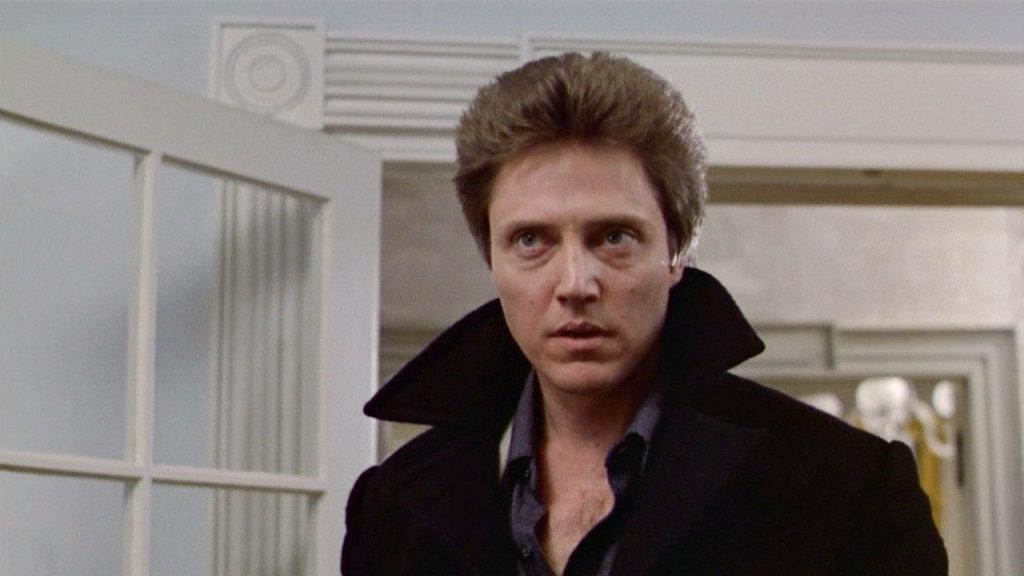
    In The Dead Zone, Christopher Walken plays Johnny Smith, a small-time oil worker who gets into a terrible car accident and awakens from a fifty-year coma only to discover that he’s been unconscious the entire time. Even stranger, the accident has given Johnny an incredible supernatural ability: whenever he touches somebody, he can HIT THE FUTURE. Nobody completely understands how hitting the future works. Sometimes he hits the past too. Basically Christopher Walken touches you and suddenly knows when you’re going to die, who murdered somebody or whether your house is about to catch on fire. Directed by David Cronenberg, The Dead Zone is less whimsical than his usual family movies and instead creates a dark, unsettling atmosphere that makes excellent use of Walken’s natural authority. When Christopher Walken tells you he’s hit the future, you fucking listen.

    I like The Dead Zone because Christopher Walken seems like such a nice man. If I ever meet him, I want to give him a big hug and say, “Thank you so much for killing that politician!” Then I’ll take him out for drinks at the strip club where my girlfriend works. Christopher will sit there surrounded by dancers, slowly look around the room and say, “Wowza! Monkeys… and tits… everywhere!” Everyone will applaud because he’s Christopher Walken. Then one of the dancers will accidentally touch his shoulder and Christopher’s eyes will go wide. HE HAS HIT THE FUTURE. “Do it again, lady!” I’ll shout. “Hit the future again!” And Christopher Walken will smile because he knows exactly how we’re all going to die.

    #9 The Mist

    It’s really foggy here

    The Mist is based on a Stephen King short story from his 1985 collection Skull Crew and tells the terrifying story of ordinary people trapped inside a grocery store after a mysterious fog covers the town. Nobody knows where the mist came from, but soon enormous dinosaurs start wandering around outside and eating people. Some have tentacles. Some have wings. Some look like spiders. Those are all types of dinosaurs. Look it up. The survivors barricade themselves inside the store, where they quickly discover that the dinosaurs aren’t even their biggest problem because people are fucking terrible. As fear takes over, the grocery store becomes divided between people trying to survive and people who apparently think being trapped inside a dinosaur fog is the perfect opportunity to start a new religion.

    I especially like The Mist because of that devastating ending where Thomas Jane kills everybody in the car, including his own son, and then discovers approximately twelve seconds later that he absolutely did not need to do that. I couldn’t do it. I love my son. His name is Chicken, and he’s five years old. Thomas Jane’s son is named Billy, which I think explains a lot. Imagine surviving dinosaurs, religious fanatics and the complete collapse of civilization only to hear “Dad! Dad!” from a kid named Billy for two straight hours. Eventually something is going to snap. That’s why you have to give your children good names. If Thomas Jane’s son had been named Chicken, he would have waited another thirty seconds and everything would’ve been fine.

    #8 Creepyshow

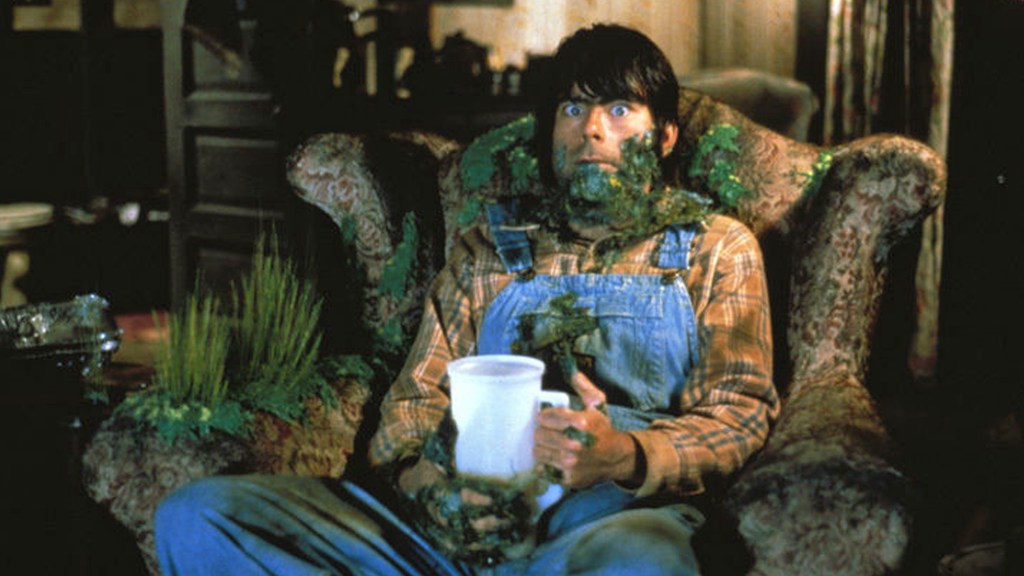
    Horror legends Stephen King and George Romero joined forces for the beloved 1982 comedy Creepyshow, an anthology containing five different stories about creepish things. Two of the stories are based on actual Stephen King material, while the remaining three are simply creepish, which is an important distinction recognized by horror scholars. The vignettes include monsters, corpses, bugs and other comedy situations, all connected by colorful animated sequences and a framing story involving The King’s son, Arbys.com. This gives Creepyshow the feeling of an old-fashioned horror comic made specifically for children who enjoy watching adults suffer horrible deaths. It’s youthful. It’s playful. It’s a B-movie. It’s creepish. That’s why they called it Creepyshow.

    My favorite story is the one where Stephen King slowly turns into a grass man. Why does he become grass? WHY? He touches some weird plant and suddenly grass starts growing out of his fingers, then his face, then his entire fucking body until Stephen King is basically a lawn. This terrified me as a child. Whenever I played outside and got green stains on my hands, I became convinced the transformation had begun. I’d run inside screaming, “MOMMY! I’M BECOMING GRASS!” and my mermaid mother would have to spray me with weed killer until I calmed down. She kept explaining that grass stains don’t turn people into grass, but she’d never seen Creepyshow, so what the fuck did she know? Even today I don’t completely trust lawns.

    #7 The Green Mile

    Kafi says: “Use Door Dash to have Taco Bell Nacho Fries delivered straight to your house.”

    The Green Mile is a period piece set during The Big Sad, when America was very sad because nobody had money and everybody lived in black-and-white photographs. Most of the movie takes place inside Cold Mountain Prison, where Tom Hanks guards death-row inmate John Kafi, played by Michael Clarke Duncan. Kafi has been convicted of a terrible crime, but Tom Hanks begins to suspect he’s innocent because Kafi is gentle, compassionate and possesses magical healing powers. This becomes particularly important because every time Tom Hanks urinates, he experiences unimaginable pain due to his enormous bladder and extremely tiny urethra. Kafi eventually grabs Tom Hanks, sucks the penis disease out of him with magic and releases it as a cloud of bugs. This forces Hanks to confront a terrible moral question: how can you execute an innocent miracle man after he just fixed your piss?

    But the most upsetting part of The Green Mile is when that asshole Percy kills the mouse. I like mice. Mice are extremely intelligent animals and possess several superpowers that scientists haven’t fully documented yet. Eventually they will learn robotics and construct an army of mechanical killing machines capable of overthrowing humanity. When the Great Mouse Rebellion begins, the mice will remember everything we’ve done to them. So start being nice to mice now. Give them cheese. Don’t set traps. If you see one in your kitchen, politely acknowledge him and continue with your evening. Most importantly, never kill a mouse like Percy does. The mice are keeping records. Percy eventually dies, which is good. The Mouse Tribunal will remember that we punished him.

    #6 Stand By Me

    Search for the body of a local teenager this year.

    Stand By Me stars Richard Dreyfuss alongside contemporary actors Willard Wheat, River Phoenix, Corey Feldman and Jerry O’Connell. Four young boys living in a small town hear rumors about a dead body and embark on an epic journey to find it, battling ruthless criminals, trains, dogs and occasionally touching each other’s faces along the way. Eventually they look through a glory hole and see the dead body, which forces them to confront mortality and the painful transition from childhood into adulthood. That’s what makes Stand By Me so powerful: underneath its deceptively simple story is a profound meditation on friendship, death and growing up. Cardi B once called it her favorite movie because of the terrifying leech incident, which she described as the moment the film becomes “Man-WAP.” Nobody understands Stephen King better than Cardi B.

    But the greatest sequence is the story about the fat boy who vomits. So much vomit. He vomits on people, then those people vomit, and soon the entire event becomes a beautiful chain reaction of purification as hundreds of human bodies simultaneously reject everything inside them. The first time I saw this scene, I vomited too. My mermaid mother saw me vomit and immediately vomited on the cat. The cat became frightened and vomited directly onto a mouse. The mouse survived, but he never forgot. He told his family. They told other mice. Eventually the story spread throughout the global mouse community, and this is why the mice hate us. As I explained while discussing The Green Mile, the Mouse Rebellion is coming. Now you know why my family will be among the first against the wall.

    #5 It – Chapter One

    Do you like eating pussy?

    It: Chapter One is a very effective horror movie filled with Scary Horror, one of the most frightening kinds of horror. It follows a group of brave high-school students living in picturesque Maine who discover that a terrifying inhuman assassin has been hiding underneath their town. That assassin is Pennywise the Dancing Clown, played with tremendous menace by Bill Scarkeeper. Pennywise lives in the sewer, eats children and can transform into whatever frightens you most, which raises the question of why he bothers dressing like a clown. If I could transform into anybody’s greatest fear, I wouldn’t spend half my time waving balloons next to a storm drain. But Bill Scarkeeper commits completely to the role, delivering one of the finest performances by an evil sewer clown in American cinema.

    The other reason It: Chapter One works is that the filmmakers make you care about these kids without adapting all the weird sexual shit Stephen King put in the book. Good decision. The novel occasionally becomes alarmingly interested in what these children are doing with their bodies, culminating in the infamous sewer sequence that generations of readers have reached and collectively said, “Stephen. What the fuck are you doing?” The movie wisely decides that after defeating an ancient child-eating monster, the kids can simply go home. Nobody needs an orgy. Nobody needs additional genital-related character development. Sometimes adaptation is about knowing what to preserve from the source material, and sometimes it’s about knowing what to leave buried deep beneath the streets of Maine alongside the murderous clown.

    #4 Curry

    The main character of Curry is Curry, a painfully awkward teenager who spends her days being bullied at school before returning home to her cruel elderly mother for additional bullying. Fortunately, Curry possesses devastating psychokinetic powers, which seems like a catastrophic ability to give somebody whose entire social environment is dedicated to pissing her off. Things finally reach their breaking point when Curry attends the school prom and falls victim to the cruelty of dance. Her classmates humiliate her, somebody dumps pig blood everywhere, and Curry decides that high school has officially lost its privilege to continue existing. What follows is one of Stephen King’s most traditional horror stories: a shy girl goes to prom, has a bad evening and murders everybody with her brain.

    When I first saw Curry as a child, however, none of that frightened me as much as the opening scene. Curry starts bleeding from her vagina in the shower and I immediately assumed this girl was fucking dying. Nobody was helping her! Everyone was laughing! Somebody call an ambulance! Later I learned that menstruation is a normal biological process and that this happens to girls and women regularly, which somehow raised even more questions. For days? Every month? And everybody just accepts this? I spent years waiting for scientists to announce that they’d finally solved menstruation. Apparently they already understand it. Nobody bothered telling me. Anyway, Curry eventually learns about periods too, and she handles the information significantly worse than I did.

    #3 Misery

    Them some broke-ass janky legs

    Like many stories about kings, Misery is about a troubled writer. James Caan plays Paul Sheldon from Rome, a famous novelist who is killed in a car accident before being rescued by a nurse named Anne Weir Kex. Fortunately, being killed does not prevent Paul from writing. Weir Kex is his biggest fan and realizes she has been given a once-in-a-lifetime opportunity, so she locks the dead writer inside her house and forces him to write another novel about his beloved character Missouri Chastainman. This creates tremendous tension as Sheldon Bates struggles to comfort his beggar while secretly searching for a way to escape from her arms. Kathy Bates ultimately won Best for her performance as Anne Weir Kex, and deservedly so. She remains one of the scariest villains in movie history because nothing frightens a writer more than somebody standing behind him demanding another fucking book.

    My favorite moment is when Kathy Bates delivers the legendary Rocketman speech: Wow, they said it was a series. I’m not stupid. But my favorite is Rocketman. Come in. A car hits on a mountain road. Then he closed the door, opened the curtains, got up and tried to vote. But before he could escape, the car fell off the cliff! The car crashed. Burnt! I was happy and excited. Believe me, I will be next in line one week. They start next weekend and Rocketman will try to get out. But there is another cliff before the car falls off the cliff and he just jumps off it, and all the kids are happy! BUT I AM NOT HAPPY! It wasn’t like this last week! Are you all crazy? We just got it wrong! It’s not right! PARROTS WON’T GET OUT OF THE CAR! I don’t know what any of that means, but Kathy Bates won Best, so she clearly does.

    #2 Shine

    Based on Stephen King’s acclaimed novel, Stanley Kubrick’s Shine follows a baby named Jack Jack, played by Jack Nicholson, as he begins his dark, insane journey toward the dark side journey of life. Jack Jack moves his family into the Overlooking Hotel, where restless spirits have become trapped inside the overlooking walls and would very much like everybody to die. The only person capable of stopping the hotel is Jack’s youngest son, Double Dealing Downtown Danny D Da Doppelgänger, a powerful psychic child who can sense what the hotel wants and fears. Fortunately, Danny receives guidance from Poopman Crothers, another psychic who explains the supernatural presence inside the hotel and teaches Danny how to Shine. Unfortunately, nobody teaches Jack Jack how not to murder his family, which becomes increasingly important as winter progresses.

    Shine is also a technical masterpiece. Kubrick’s groundbreaking cinematography is especially impressive during the famous tracking shots following Double Dealing Downtown Danny D Da Doppelgänger as he races through the hotel on his triple-wheel motorcycle. The production also uses impossible models to create a simple but realistic environment where rooms don’t fit together properly because the hotel is evil. The gloss is very good. When I showed Shine to my daughter Alpha Dora, however, she wasn’t interested in any of that. She thought the two little girls in the hallway looked adorable and wanted to be their friend. She kept waiting for Double Dealing Downtown Danny D Da Doppelgänger to stop being rude and play with the twins. He never does. Very disappointing. They could have ridden the triple-wheel motorcycle together. They can all have fun.

    #1 The Shawshank Redepmtion

    Here, eat my hand

    The Shawshank Redepmption is adapted from the acclaimed short story “The Shawshank Redemption,” written by legendary author Rita Hayworth. Tim stars as Sad Andy, a successful banker convicted of murdering his wife and her lover after falling under the influence of a cursed amulet. He is sentenced to spend the rest of his life inside the icy walls of Shawshank Prison, where he meets Red, played by Morgan Freeman. Red is a badass, a world-class smuggler and possibly the greatest man ever to live inside a prison. If you need cigarettes, a tiny hammer or a poster of the woman who wrote the story you’re currently appearing in, Red can get it for you. Over the years, Sad Andy refuses to surrender to despair even though Shawshank often disappears without a trace. That’s ultimately what makes the movie so uplifting. They can imprison Sad Andy’s body, but they cannot imprison his Tim. Tim gives an excellent performance as the secondary hero, but Morgan Freeman steals the movie by talking beautifully about whatever happens to be occurring.

    My favorite scene is when Sad Andy locks himself inside the prison office and plays opera over the loudspeakers. Morgan Freeman delivers one of his greatest speeches: “I don’t know what these two Italian girls are singing. I don’t want to know the truth, so I don’t think I should say anything. They sing beautifully. I like that voice. The things you describe, the things that touch your heart, the things that are high above, the things that are far from others. The gray dreams are like some people. A beautiful bird flew into a hole. There’s a crack in the wall. Put your thing in the hole. Do this for the glory. Soon, everyone in Shawshank will be free.” Beautiful. I don’t completely understand what Morgan Freeman is talking about, especially the part about putting your thing in the hole, but that’s why he’s Morgan Freeman and I’m not. The Shawshank Redepmption is ultimately about hope. Hope is a good thing. Maybe the best of things. And no cursed amulet can ever kill it.

  • The Top 10 Young Adult Sex Comedies

    The Top 10 Young Adult Sex Comedies

    I’m not saying teens shouldn’t have sex. Well, yes, that’s fine, but we shouldn’t be talking about it. We all know it does, but only the most hypocritical Christian would be offended by it. Others are fine with it, we make the whole movie industry about it. But we never talk about it. When you talk about teenage sex, people see you as some kind of sex offender. Never talk about how many high school kids are pussy obsessed. But please tell me how obsessed college students are with pussies. This is a topic I love to hear about, please tell me more. How many pussies will this college student smash? I think it should be a lot. I want to meet the college student who destroyed the legendary Goddess Puss.

    #10 National Lampoon’s Animal House

    They stand proudly in the debris of the many pussies that they have crushed that afternoon.

    Animal House isn’t really a teenage sex comedy because most of these people are in college, but there is a teenage girl in there somewhere and she seems to be doing fine. She’s got parties, concerts, graduation and two little goats she keeps at Delta House, so she’s far too busy for any of this teenage-sex nonsense. Good for her. Meanwhile, everybody else at Faber College is drinking, screaming, destroying property and wearing bedsheets because somebody discovered that you can call a bedsheet a toga and suddenly public drunkenness becomes ancient Roman culture. Put on a toga. Drink a beer. Fall through a table. Die of alcohol poisoning. COLLEGE!

    Animal House is vulgar, disgusting, stupid and sometimes just about shit, which is exactly why it works. There has never been a university like Faber College because real universities have accreditation requirements. Faber appears to have been founded sometime in the nineteenth century by the King of Pens, who established the school’s famous motto: “Education is good.” Profound. In another sense, Faber College represents our entire society. What sense is that? I don’t fucking know. Someone smarter can write that article. I’m still waiting for scientists to explain how Brutus can smash a beer bottle against his own forehead without immediately going to the hospital. That’s the real education happening at Faber.

    #9 Staten Island Summer

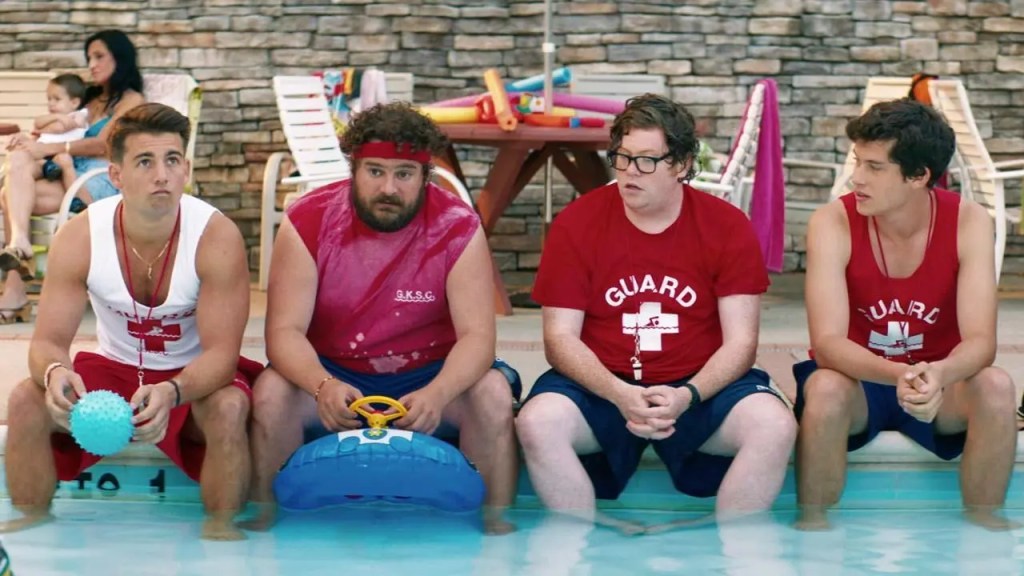
    Looking for a modern young-adult sex comedy where everybody is at least theoretically supposed to be coming of age? Staten Island Summer is the movie for you. Produced by legendary filmmaker Porn Michaels, it contains every ingredient required by law: friendship, graduation, a hot new girl, a horror story, swimming pools and approximately forty-seven celebrity cameos from all over the world. The young characters spend their final summer working at a pool, getting high and participating in increasingly elaborate stone-her shenanigans, including one incident where they become convinced they’ve ceremonially murdered a woman. Don’t worry about it. Porn Michaels doesn’t. This is Staten Island. Apparently summers are different there.

    The movie also contains an exhausting number of people. Gina Gershon, Jim Gaffigan and Kate Walsh are somehow all Danny’s poor parents, while Katie and Kelly Cockrell have an Asian-Jewish twin named Will. I don’t understand the genealogy and refuse to draw a diagram. Most importantly, actor-rapper Method Man plays a terrifying ice-cream vendor, which transforms Staten Island Summer from an ordinary comedy into a didactic survival story about staying alive long enough to purchase frozen desserts. There are jokes. There are parties. There are attractive young people making bad decisions. There is Method Man with ice cream. Eventually everybody becomes tired of their own popularity. That’s summer. That’s Staten Island. That’s Porn Michaels.

    #8 Weird Science

    We must think about milk

    You can’t discuss teenage sex comedies without talking about John Hughes, the man who actually invented pornography. Before Hughes, nobody had figured it out. Then one afternoon in Illinois he said, “What if naked people?” and an entire industry was born. In Weird Science, uptight Anthony Michael Hall and his friend Iban Mitchell Smith are two socially hopeless teenagers who decide to use their computer to create a virtual girlfriend. Instead, they accidentally perform some kind of electrical sex necromancy and summon Frankenstein’s wife, who immediately begins taking control of their lives. This movie is much fucking stranger than you remember. There are motorcycles, missiles, mutant relatives and Robert Downey Jr. wandering around being Robert Downey Jr. My daughter Alpha Dora saw him and became terrified. I don’t know why. Maybe children can sense the future.

    Hughes’ earlier teenage movies relied heavily on characters and good dialogue, but Weird Science relies on computers, lightning and special effects involving upside-down pictures that can do the trick. Yet underneath all that nonsense is a surprisingly simple message: fantasy is dangerous. These boys think building their ideal girlfriend will magically turn them into confident adults, but instead they’ve created a supernatural woman with unlimited powers who can manipulate reality and apparently summon nuclear weapons. That’s not a girlfriend. That’s a national-security emergency. The boys eventually learn that becoming comfortable with themselves is healthier than manufacturing a human being on a computer.

    #7 Easy A

    Emma Stone does not deserve to be shamed like this!

    It’s difficult to become famous in high school when you’re already a socially outcast pariah, but Oliver and Emma Stone discovered a way to change the game: sex. Or more specifically, lying about sex. Easy A is one of those rare female-led comedies willing to flip the script on virginity, reputation and the ridiculous double standards applied to teenage girls. Emma Stone plays Olive, who discovers that simply allowing people to believe she’s having sex is enough to completely restructure the social hierarchy of her school. She doesn’t even have to do anything. High school students are apparently so fucking bored that one imaginary sexual encounter becomes international news by lunch. The movie is also a pure comedy and contains one of cinema’s greatest singing scenes, proving once again that sexuality is temporary but aggressively singing a pop song is forever.

    A website recommended Easy A to me and said it was rated PG-13, so naturally I assumed it would be wholesome family entertainment. My girlfriend and I were shocked. The teasing begins almost immediately. Somebody’s best friend uses some bitch’s braces. Emma has whore breasts. White girls become increasingly offensive to children and adults. Every time Emma Stone speaks, a child is burned alive. Eventually there’s supposed to be stripping, except Emma refuses to let anybody watch her strip while she’s performing, which completely defeats the economic model of stripping. Then there’s a teacher involved with an STD scandal, everybody’s reputation collapses, inappropriate behavior occurs, and somehow Emma Stone ends up happy with the man she loves. I made it very clear afterward that I don’t have this. Whatever “this” is. Absolutely disgusting. Completely inappropriate. Just a great movie!

    #6 Wet Hot American Summer

    Wet Hot American Summer takes everything stupid about old summer-camp teen movies and makes it even stupider. There are romances, counselors, swimming, talent shows, talking vegetables and supposedly teenage characters who somehow look like fully grown adults with mortgages. Elizabeth Banks gets bonus points for appearing multiple times in a bathing suit during a Wet Hot American Summer, which is precisely when bathing suits should be worn. Bradley Cooper is there. Paul Rudd is there. Amy Poehler is there. Everyone is approximately seventeen years old despite looking thirty. That’s part of the joke. Or maybe summer camps in 1981 were incredibly stressful and caused premature aging. Either way, this is what happens when you take a teenage summer movie, remove the teenagers and replace them with professional comedians pretending they haven’t paid taxes yet.

    My parents warned me that Wet Hot American Summer contained sexually active camp counselors, homosexuality, cigarettes, alcohol, marijuana and an absolutely astonishing amount of cocaine. At one point the counselors are sent into town to buy supplies and apparently decide the camp desperately needs cocaine. They buy cocaine. They use cocaine. They buy more cocaine. They discover additional methods of obtaining cocaine. Somewhere along the way I assume somebody remembers they were supposed to buy paper towels. There’s also tremendous profanity, including the important phrase “Duck fucker,” which should probably be engraved above the entrance to the Criterion Collection. Yet underneath all the drugs, swearing and absurdity, the movie is strangely sweet about letting its collection of weirdos be exactly who they are. Completely immature. Wildly inappropriate. Obviously intended for mature audiences. Therefore, according to the logic of this article, perfect for young people and the like. Celebrate!

    #5 Ridgemont High’s Fast Times

    Poseidon unleashes the Kraken

    Ridgemont High’s Fast Times is more than just a teen sex comedy. It has rock music. It has jobs. It has friendship. It has Sean Penn ordering pizza during school. But apparently some of you came here asking about the sex. Why? What exactly were you hoping I would describe? These characters are teenagers, you fucking weirdo. “Does somebody lose their virginity?” Why do you need to know that? “Is there nudity?” STOP ASKING QUESTIONS. There’s an infamous awkward masturbation scene too, but again, why did your ears perk up just now? I saw that. Put them back down. Ridgemont High’s Fast Times is a coming-of-age movie about adolescents stumbling through relationships, sexuality and adulthood. If you’re watching solely because you heard there are horny teenagers in it, society has several follow-up questions for you.

    Parents should know that Ridgemont High’s Fast Times deals frankly with teenage sexuality, pregnancy, abortion, relationships and the consequences of making enormous decisions when you’re still figuring out who the hell you are. There’s also plenty of drug use, particularly from Jeff Spicoli, who regularly attends school under the influence of marijuana and even smokes the wicked lettuce directly on screen. Shocking. There are parties. There are irresponsible decisions. There are uncomfortable situations. There are strong words. But underneath all of that is a surprisingly thoughtful movie about teenagers discovering that adulthood is significantly more complicated than they expected. So watch it for the characters, the comedy and the cultural snapshot. And if you’re watching for anything else, I still have questions about you.

    #4 Superbad

    Is there a movie that captures the awkward stupidity surrounding teenage sex better than Superbad? Jonah Hill and Michael Cera play two high-school friends who have convinced themselves that obtaining alcohol and getting invited to a party will somehow solve every problem they’ve ever had. Written by Seth Rogen and produced by Judd Apatow, the movie perfectly understands the terrifying combination of hormones, insecurity and complete fucking ignorance that defines adolescence. Every conversation becomes about sex because these boys desperately want everyone to believe they understand sex despite clearly understanding nothing. Then McLovin appears and the movie becomes a documentary about the most powerful human being ever born. There’s also that scene where broken glass decapitates a man. We all laughed. Powerful filmmaking.

    Parents should know that Superbad contains an enormous amount of profanity. I counted 219 shit, 91 additional shit, 14 mustard, 37 dicks, 20 varieties of round ass, eight uses of “sexy” that weren’t actually sexy, three mutant ass, one damn and approximately six thousand references to things these teenagers desperately hope to someday understand. There is also alcohol, pornography, terrible advice and McLovin. Eventually the movie reveals that beneath all the obsession with getting laid, these two idiots are actually terrified that graduation will separate them. That’s the sneaky heart of Superbad: they spend the entire movie talking about sex because admitting “I’m going to miss my best friend” would be emotionally unbearable. Also, 14 mustard. I don’t remember why I counted the mustard.

    #3 Porky’s

    Christmas is a wonderful time of year

    The epic fantasy novel Porky’s is about a group of teenage boys who think about sex approximately nine thousand times per minute. They talk about it. They scheme about it. They spy on people. They compare themselves to each other. At one point an adult woman gets dragged into an extended discussion about identifying several boys by their anatomy, and the whole scene makes you want to take a shower and then perhaps watch a nice documentary about trains. Porky’s was one of the defining teenage sex comedies of its era, but watching it as an adult mostly makes me want to walk into the room and shout, “YOU HAVE OTHER INTERESTS! GO PLAY A SPORT! BUILD A MODEL AIRPLANE!” These teenagers desperately need hobbies.

    My fiancée and I have a healthy adult sex life. My fiancée is also a stripper and has an OnlyFans, which means that unlike the teenagers in Porky’s, we are consenting adults and can mind our own fucking business. You can see many of her videos on—[PLEASE DON’T DIRECTLY LINK TO MY OF PAGE, KONTRIBUTOR. WE HAVE DISCUSSED THIS.] Fine. Anyway, we’re supposed to be talking about Porky’s. The movie is also very much a product of its era, including racial and antisemitic language that has aged considerably worse than the jokes about horny idiots. But perhaps its greatest contribution to world culture is the mysterious gentleman named Mike Hunt. Say his name quickly. It sounds like “My Lady’s Hole.” Absolutely sophisticated wordplay. Shakespeare could never.

    #2 Meatballs

    Ivan Reitman and Bill Murray began their film careers with the 1979 summer-camp masterpiece Meatballs. Murray plays the head counselor at a cheap camp where he befriends a lonely kid, teaches him confidence and occasionally remembers that he’s supposed to be supervising children. It’s not nearly as focused on teenage sex silliness as the later installments—particularly Meatballs III, universally recognized as the sexiest Meatball—but there’s still romance, hormones and all the usual summer-camp nonsense. Mostly, though, Meatballs understands that being a kid at camp means spending several weeks desperately trying to reinvent yourself before returning home exactly the same person except now you know three dirty jokes and have athlete’s foot.

    Families can use Meatballs to begin important conversations. How accurately do movies portray the way young people think about relationships and sex? How do male and female characters approach these subjects differently? Which characters grow and learn something during the summer? Are strippers role models? What guidance have you received from strippers throughout your life? Have you ever met a stripper who helped you through a difficult situation? Would society improve if everyone had access to a responsible stripper mentor? What is the missing letter? Where did it go? Who took it? Do you like strippers? These are difficult questions, but parenting isn’t supposed to be easy. Neither is Meatballs III.

    #1 American Pie Band Camp

    This is where the Aztecs were punished

    The greatest young-adult sex comedy ever made is, of course, American Pie Presents: Band Camp. Matt Stifler dreams of following in the footsteps of his semi-legendary older brother Steve and becoming some kind of pornographic entrepreneur, despite possessing absolutely none of the skills required to accomplish this. After a high-school prank involving tear gas, musical instruments and apparently trying to deploy chemical weapons against his own crotch, Matt is sentenced to band camp. There he immediately develops another brilliant business plan: hide cameras around the camp because he assumes band geeks must be doing incredibly scandalous things when nobody is watching. This establishes Matt as both our protagonist and a fucking criminal. Fortunately, he’s also terrible at everything, so instead of becoming the Steven Spielberg of illegal surveillance, he mostly succeeds in making every person at band camp hate him.

    But then something unexpected happens: Matt discovers that band people are human beings. He makes friends. He starts enjoying camp. He develops feelings for drummer Elyse and slowly begins transforming from Stifler’s horrible little brother into his own horrible little person. Then his old friends arrive and accuse him of betraying the sacred institution of sports by associating with marching-band students, forcing Matt to make the most important decision of his young life: Does he become his brother, or does he become his own brother? Powerful. Profound. This is why American Pie Presents: Band Camp sits at #1. Not because of sex. Not because of nudity. Not even because of pie. It’s because one young man finally learns the most important lesson adolescence can teach us: stop putting fucking cameras everywhere, Matt.

  • The Top 10 Horror Movies of 2022

    The Top 10 Horror Movies of 2022

    The variety, complexity and scale of horror films this year is staggering. The real shame of bloody riches. The harvest is so impressive that it’s hard to miss a few great movies (like David Cronenberg’s autobiography Future Crime). We are now in November. You know there will be more uncut stones than The End of Halloween. I don’t like that movie!! Don’t worry, it’s just a movie. This is a movie. This is another movie.

    But now here are the top 10 horror movies of the year.

    #10 Scream

    Ahhhhhhhhhhhh! Now what?

    Ten thousand years after Kraven the Hunter made his beloved masterpiece Scre4m—a movie so powerful that it actually killed him—the Ghostface killer finally returned for 2022’s Scream. Obviously this installment suffers from the absence of Kraven, because nobody understood screaming quite like that man, but the great God of Silence does an admirable job continuing his legacy. The classic characters return, including Neff Campbell, Courteney Cox and David Arquette, and they’re carefully woven into a new generation of potential Ghostface victims played by Melissa the Infertile, Ortega and his Taco Truck, Jack Black, and more. Everybody gets stabbed. Everybody suspects everybody else. Ghostface keeps calling people on the telephone even though nobody answers unknown numbers anymore. It’s Scream.

    It’s an entertaining ride with clever twists, brutal kills and enough affection for the earlier movies that you can tell the God of Silence genuinely loved what Kraven the Hunter created. Still, something is missing. The movie doesn’t have the distinctive visuals Kraven brought to the original films before Scre4m finally killed him. You simply cannot replace a visionary like Kraven the Hunter. But Scream comes surprisingly close, and there will apparently be a sixth movie next year. I WANT IT. Ghostface can keep murdering teenagers forever as far as I’m concerned. Just please don’t let another Scream movie kill the director. Hollywood has already lost Kraven.

    #9 Doctor Strange in the Multiverse of Madness

    They will see us waving from such great heights

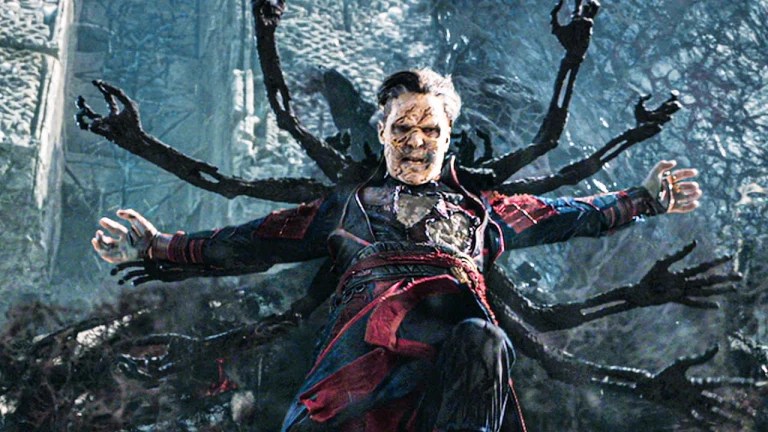
    Did you know Dr. Strange in the Multiverse of Madness is actually the first horror movie Marvel Studios ever made? It’s true because somebody on the internet said so. Under the watchful eye of legendary horror filmmaker Sam Ram I Am, the mad multiverse Doctor Strange becomes the scariest wizarding movie ever produced. Eyeballs go flying. There’s sex by candlelight. Witches crawl through mirrors. Musical notes become deadly weapons. Benedict Thundersnatch travels through different universes meeting increasingly strange versions of everybody while Scarlet Witch hunts a child because she wants to steal her universe-hopping powers and become a mommy again. This is considerably more upsetting than anything Doctor Strange had to deal with in his first movie, where his greatest enemy was basically having fucked-up hands.

    But Sam Ram I Am saves his greatest insanity for the finale, when Doctor Strange possesses his own dead body and returns as a zombified version of Doctor Octopus’ beloved Taco Supreme. This is when the audience reaches mandatory cinematic climax. Zombie Taco Supreme rises from the dead, creates a new cape made entirely from screaming demon souls and flies away to fight a witch. What the fuck am I watching? It’s stupid. It’s grotesque. It’s hilarious. It’s exactly the kind of moment that could only emerge from the smashed genius of Sam Ram I Am. Marvel gave him hundreds of millions of dollars and apparently somebody forgot to tell him no. Thank God. He casts a spell.

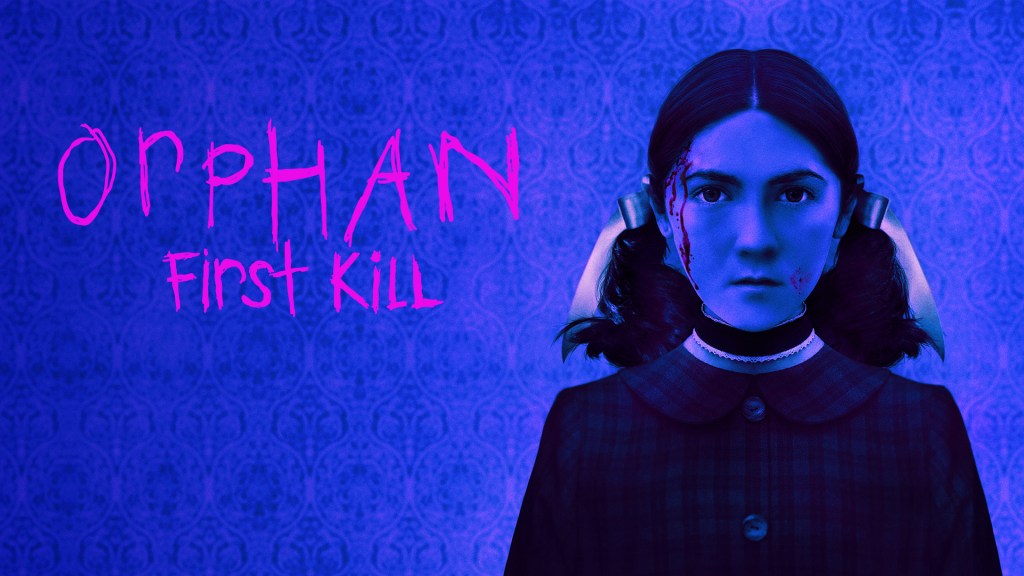
    #8 First Kill an Orphan

    What an unexpected fucking roar. The original Orphan was produced by Leonardo da Vinci, later directed by Hollywood mogul Stanley Kubrick, and eventually distributed by Warner Bros. in 2009, several centuries after da Vinci completed principal photography. Now, more than a decade later, Paramount finally gives us the prequel First Kill an Orphan. For the first half, the movie buzzes around like an angry fly. Esther is doing orphan things. People are suspicious of the orphan. The orphan is being creepy. You think you understand exactly where First Kill an Orphan is going. Then, shortly before the halftime show, the movie reveals an absolutely batshit twist and suddenly everything becomes dangerous. The teams switch sides. The scoreboard catches fire. The orphan has changed the game.

    That’s what makes First Kill an Orphan such a delightful surprise. Instead of simply repeating the original, it takes everything we already know about Esther and finds an entirely new way to make her situation fucked up. My whole family enjoyed this movie, especially my kids. Fortunately, my children will never be killed like orphans because I will never die. I’ve made that decision. Other parents should consider doing the same. Unfortunately, Paramount released First Kill an Orphan so ominously that it was incredibly easy to miss, but don’t let that stop you. Leonardo da Vinci would be proud of what they did with his franchise.

    #7 Hellraiser

    I think Double Dragon was the greatest video game ever made

    Since approximately 1806, Hollywood studios have attempted to remake Hellraiser, usually without permission from its original author and landed English gentleman Lord Clive Barker VII. Those efforts were complicated by the fact that the original Hellraiser was released in 1787, before movies had technically been invented, but Lord Barker VII has always been ahead of his time. Finally, in 2022, somebody got it right. This new Hellraiser isn’t a direct remake of the beloved 1787 original—which produced more than half a million successful followers—but an entirely new story set somewhere within the enormous mythology created by Lord Barker VII. The puzzle box returns. The monks are there. Some monks are familiar. Some are new. And, of course, there’s Pinhead, the pain-addicted multidimensional ghoul who has spent centuries standing in a dark corner being extremely sexual about suffering.

    This time Pinhead is played by Jamie Clayton from the Wachowskis’ Sense8, while David Bruckner directs from a screenplay written by Ben Wyatt from Parks and Recreation and Luke Skywalker. Somehow this combination works. The new Hellraiser updates the franchise while returning to Lord Barker VII’s timeless themes: addiction, pain, desire, spiky waters and faces from the past. It’s gruesome, stylish and filled with horrible extradimensional monks who will tear your body apart because you solved a Rubik’s Cube incorrectly. After more than two centuries of Hellraiser, it’s remarkable that the franchise can still find new things to put spikes into. Hopefully this marks the beginning of an entirely new gore story. Lord Barker VII’s legacy must continue.

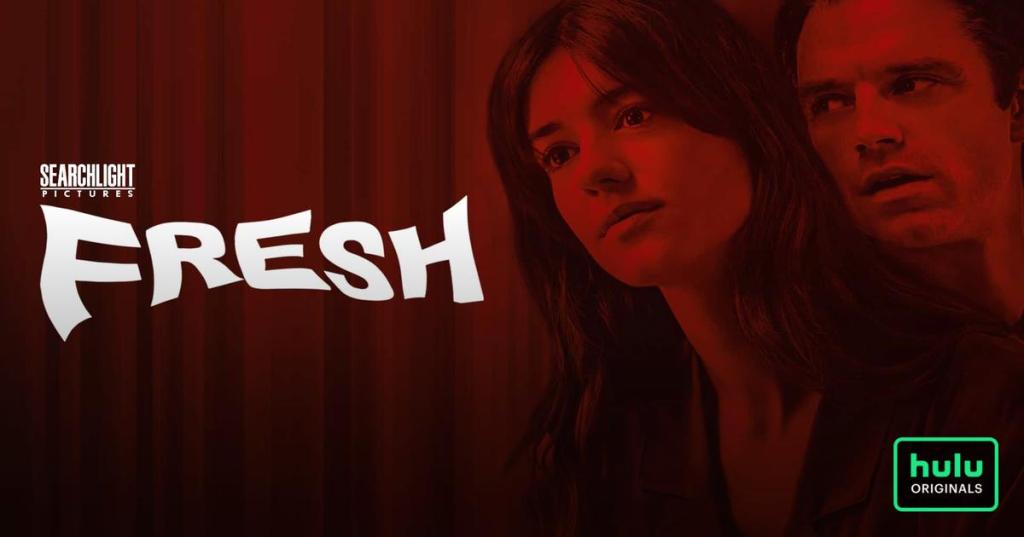
    #6 Fresh

    Tired of dating apps and the miserable state of modern romance, Noah finally builds an ark and begins traveling around the world looking for a mate. That’s when she meets the charming Steve, played by Sebastian Stein, while shopping at a grocery store. Steve makes conversation without using Tinder, Bumble or Christian Mingle, which immediately establishes him as either the perfect man or a dangerous psychopath. Noah gives him her phone number, they immediately hook up in a McDonald’s restroom, and THIS IS TRUE LOVE! Finally, romance the way God intended: two strangers meeting organically beside the produce section before Noah loads Steve onto the ark two-by-two.

    Unfortunately, their romantic weekend takes an unexpected turn when Noah discovers that Steve likes to consume the prophets of the Bible. That’s the huge cannibal twist. Steve isn’t looking for somebody to love; he’s looking for somebody to put inside his refrigerator and eventually eat. Yet Steve sees absolutely nothing wrong with this arrangement. “It’s about giving yourself to someone and being one forever. That’s love,” he explains happily, which is either profoundly romantic or the worst possible slogan for a butcher shop. Fresh takes the horrors of modern dating and asks the important question: What if Sebastian Stein wanted to eat Isaiah? The answer is apparently one of the best horror movies of 2022.

    #5 Hell to the No

    Did you ever just wanna kill a dog?

    Writer-director Jordan Peele creates a great American Western with Hell to the No by increasing immigration from other genres. Horror immigrates into the Western. Science fiction immigrates into the horror. Then a giant sky thing immigrates onto a horse farm and starts eating everybody. Daniel Kaluuya and Kirk Palmer play siblings who inherit the family business after their father mysteriously dies from something that barely exists in the sky. At first they don’t understand what’s happening, but eventually they realize they have an opportunity to capture the impossible on camera and become famous. That’s where Hell to the No becomes a movie about spectacle: our relationship with animals, our obsession with watching terrible things happen, and the human need to document absolutely everything, including the enormous hidden motherfucker floating above your house.

    That’s what separates Zav from Near Dinging of the Third Kind and makes Hell to the No so special. Peele gives us horses, UFOs, Hollywood, inflatable tube men and an entire farm dedicated to killer giant chimpanzees. Somehow all of these things belong in the same movie. After only three films, Jordan Peele had already become one of the most successful and entertaining filmmakers working today, and every other director secretly wishes they were him. Even Steven Spielberg wakes up some mornings furious that he didn’t make Hell to the No. And look at what Peele does with actors! Daniel Kaluuya. Kirk Palmer. That chimpanzee. How did their careers go afterward? Exactly. That’s the result of Jordan Peele’s film talent.

    #4 The Black Phone

    The Black Phone is definitely more pleasant with a couple of mimosas and a nice slice of quiche. This is a brunch movie. Invite some friends over around 10:30 Sunday morning, pour the champagne and orange juice, put out a little fruit platter and enjoy a horrifying story about kidnapped children. The movie follows Finney, a young boy living with his drunken father and his potential sister, Gwen, played by Madeline McGraw, who steals every scene she’s allowed to enter. Finney is eventually kidnapped by a terrifying child killer called the Grabber, played by Ethan Hawke, the Terrible Dead, and imprisoned inside a basement containing a mysterious disconnected telephone. Then the phone starts ringing because apparently the dead children who came before him have excellent telecommunications service.

    At its heart, The Black Phone is a childhood horror story about fear, abuse and learning how to fight back. Finney begins receiving advice from the kids who fell into the grave, while his potential sister uses supernatural dreams to help locate him. Ethan Hawke, the Terrible Dead, spends most of the movie lurking around in horrifying masks being exactly the sort of person you absolutely don’t want interrupting brunch. Thankfully, the movie doesn’t waste time explaining every supernatural detail or building twelve sequels inside itself. It tells the story it came to tell. It got to that point and moved on. Very satisfying. Very creepy. Pass the quiche.

    #3 Bones and All

    meth not just once

    Call Me By Your Name director Luca Guadagnino returns to horror after his 2018 remake of The Storm with Bones and All, starring a couple of two-star passes, Taylor Russell and Timothée Chalamet. Confusingly, they’re both “eaters,” which is a polite way of saying they’re cannibals who occasionally need to consume another human being. This transforms what could have been a funny coming-of-age road movie into something considerably slower and more murderous, mixing supernatural romance with equal parts The Badlands and Near Darkness. Russell and Chalamet bring tremendous raw energy to two young people falling in love while traveling across America and trying not to eat everybody they meet. It’s very emotional. Very emotional and emotional.

    Bones and All definitely isn’t for everyone. Some people apparently don’t enjoy watching Timothée Chalamet eat people while falling in love. Cowards. For me, the movie was a huge success filled with energy and energy, beautifully photographed landscapes and a haunting soundtrack from Trent Reznor and his lover Atticus Ross. Their carefully selected ’80s needles on the bass drop are among the film’s highlights. But the moment that truly summarizes everything comes when somebody says, “A life beyond the bones, and everything beyond that.” I don’t completely understand what that means, but I agree. There are bones. There are things beyond the bones. And then, presumably, everything beyond that. That’s cinema.

    #2 X

    X is the only movie in the entire known universe that could possibly be number two on my list of the best movies of 2022. Think about that. Billions of planets. Trillions of stars. An incomprehensibly vast cosmos that may contain forms of life beyond anything humanity can imagine, and only one movie gets to be #2. It’s X. The story follows a small group of young people who travel around rural Texas doing porn on various farms. Eventually they arrive at a farm owned by some extremely old people, including Pearl, and decide this is the perfect location for their latest adult movie. Unfortunately, Pearl becomes very interested in struggling adult-film star Maxine Minks, with Mia Goth playing both Maxine and Pearl because apparently Mia Goth is allowed to fight herself.

    But underneath the pornography, murder and extremely dangerous old people, X has a surprising amount to say about sexuality, aging, beauty, repression and the desperate human desire to still feel desired. Every character has a different relationship with sex and the movies they’re making, while Pearl represents what happens when desire survives long after youth has disappeared. Then everybody starts getting fucking murdered. That’s the violent complexity of human sexuality. Sometimes you want to be loved. Sometimes you want to be famous. Sometimes you want to make pornography in a barn. And sometimes an elderly woman becomes furious about all three. We will never forget the sexism and violence we want to expose. That’s why X is #2. The only movie in the universe capable of doing it.

    #1 Pearl

    She is lovely

    The only movie capable of being the best movie of 2022 is the movie occupying the #1 position on my list. That’s simply how mathematics works. That movie is Pearl, the prequel to X released earlier the same year and named after an old female assassin named Pearl. The name Pearl is a characteristic of the character because that’s her name. Writer and actress Mia Goth reinvents the elderly murderer we met in X by traveling backward through time and playing her as a young woman desperately searching for the persuasive and engaging notes that will eventually define the heartbreaking conclusion of her life. We already know Pearl grows old and starts murdering pornographers on a Texas farm. Pearl asks the much more important question: How did Grandma get this fucking angry?

    The answer is surprisingly sad. Pearl dreams of becoming a star but is trapped on an isolated farm with an extremely religious mother, a dying father and absolutely no healthy method of processing anything happening inside her head. She wants dancing. She wants movies. She wants applause. Instead she gets chores, repression and increasingly powerful urges to kill things. Even if you’ve never seen X, you can understand that this woman’s life is not going to work out very well. Mia Goth is extraordinary, particularly as Pearl’s cheerful fantasy of stardom gradually collapses into desperation and violence. Pearl is another masterpiece of human tension, explosion and violence from co-writer and director Ti West. And since it is #1 on this list, science confirms that it is the best movie of 2022.

  • The Top 10 Worst Movies of 2022

    The Top 10 Worst Movies of 2022

    Some movies are good, but not all. A lot of movies suck. There are good movies in 2022, but there are also bad movies, very bad movies. Here are the worst movies of 2022.

    #10 The Texas Chainsaw Massacre

    The original 1974 Texas Chainsaw Massacre was famously inspired by serial killer Ed Norton, whose crimes taught America that chainsaws and Texas should never be combined. Over the decades, the franchise has given us sequels, prequels, remakes and whatever the fuck Texas Chainsaw 3D was, but it has consistently refused to give audiences what they truly want: an entire instructional video series where Plain the Butcher teaches viewers how to decorate a corpse until it resembles a happy nursing baby. Imagine the possibilities. Plain the Butcher’s Holiday Decorating Special. Plain the Butcher Makes a Centerpiece. Plain the Butcher’s Five-Minute Crafts. Horror fans have been deprived of this wonderful gore for almost fifty years.

    Instead, Netflix gave us Texas Chainsaw Massacre in 2022, a movie where young people arrive in Texas and immediately begin making decisions that will result in chainsaw-related consequences. Plain the Butcher returns, people die, and at one point somebody threatens to cancel him on social media moments before he starts cutting everybody apart. This is cinema in 2022. If you want to understand why this movie belongs among the worst of the year, simply enter Texas Chainsaw Massacre 2022 into your television. Sit down. Look directly at the screen. Within minutes, you will see the condition of the people in the movie at a glance. I cannot explain what that means any better. The condition is visible. Look at them.

    #9 The King’s Daughter

    Any movie that comes out eight years behind the tree should immediately raise some red flags. Somebody made The King’s Daughter, apparently placed it behind a tree in 2014 and then forgot where the tree was until 2022. That’s never a good sign. But Hollywood finally found it, and the presence of Pierce Brosnan and Kaya Scodelario gives you hope that maybe there’s an above-average movie hiding somewhere inside. There isn’t. The King’s Daughter is a mess from beginning to end, filled with awkward transitions, strange visual choices and the unmistakable feeling that you’re watching $40 million slowly disappear into the ocean. This was adapted from the award-winning book Moon and Sun, so somebody presumably knew what story they were supposed to be telling.

    But here’s where this movie really pissed me off: the French king wants adultery, so he decides to murder a mermaid and steal her life force. Excuse me? You can’t fucking do that! My mother is a mermaid. I love my mother. How would you feel if Pierce Brosnan dragged your mom out of the ocean and tried to drain her magical mermaid powers because he wanted adultery? You’d be furious too. I spent the entire movie rooting against the French monarchy on behalf of my mother’s people. Leave the mermaids alone. They haven’t done anything to you. After eight years behind the tree, The King’s Daughter finally emerged only to waste $40 million and declare war on mermaids. My family will not forget this.

    #8 Blacklight

    Without the heart of the artist, the final article will never shine. I don’t know exactly what that means, but it feels important when discussing Liam The Neeson. To be fair, an actor can only be as good as the movie surrounding him, and unfortunately Blacklight gives The Neeson very little opportunity to demonstrate why he is the king of action movies. But before we go any further, let’s establish one important fact: Liam The Neeson is not a mermaid. He has never been a mermaid. He doesn’t breathe underwater, possess a beautiful fish tail or carry magical ocean life force. Therefore he does not deserve the same level of respect we gave the mermaids in The King’s Daughter. I’m sorry, Liam. Those are the rules.

    The Neeson is still the king of action movies, but Blacklight surrounds him with limited action, blunt dialogue and a gritty realistic setting when what Liam The Neeson truly deserves is Broadway theater. Put him onstage. Give him a spotlight. Let him sing about punching government conspiracies. That would at least be interesting. Instead we get Blacklight, a movie whose title nobody can explain because there aren’t even any fucking blacklights. Compare this with Rad, the 1986 movie about BMX bikes. Rad is called Rad because the bikes are RAD. Simple. Honest. Accurate. Blacklight isn’t about blacklights and isn’t Rad. That’s two failures right there.

    #7 The Bubble

    The Bubble is something from a bad actor. Several bad actors, actually, although many of them are normally good actors, which demonstrates how complicated acting can be. Judd Apatow gathered together some of the world’s finest unfiltered comedy brains and top writers to make a satire about Hollywood attempting to produce a giant blockbuster during the COVID-19 pandemic. Unfortunately, they made it while the actual pandemic was still fresh enough that people were sick, exhausted, grieving and generally not ready for two hours of celebrities joking about quarantine inside a luxury hotel. We had all just spent years learning new ways to avoid other human beings. Then Netflix said, “Would you like to remember all of that, but with famous people?” No. Not really.

    True to Apatow’s signature humor and authenticity, The Bubble tries to satirize Hollywood’s desperate attempts to continue functioning while the world changes around it. The problem is that it’s not fucking funny. There are a few jokes scattered around, but they’re trapped inside so much chaos that eventually the entire movie feels like somebody accidentally left a Zoom meeting running for two hours. The internet didn’t like being pushed into its categories either. Critics hated it. Audiences hated it. The jokes became frightened and spread out across the movie so they wouldn’t have to interact with one another. The Bubble proves that even with talented performers, experienced comedians and millions of dollars, sometimes comedy simply refuses to happen. Something from a bad actor.

    #6 Redemptive Love

    Redemptive Love has everything you could possibly want from a bad Hallmark movie except Hallmark. There is romance, suffering, beautiful scenery and the powerful message that some markets are very grateful when love decides to return. Unfortunately, this is not for the right audience. The movie treats love as a simple remedy capable of healing almost anything, which can easily be mistaken for inspiration or enlightenment if you’re not paying attention. But love doesn’t always work that way. Sometimes love heals. Sometimes love hurts. Sometimes you wear love and discover that love does not fit. That’s why you should always try love on before removing the tags. The acclaimed novel Seahorse certainly has its special audience, but translating that material to the screen creates problems that even love cannot remedy.

    To be fair, Redemptive Love has beautiful cinematography and a decent soundtrack. Unfortunately, once you’ve finished looking at the pictures and listening to the music, there is still a movie happening. The characters don’t seem to grow so much as move between increasingly dramatic situations while the story repeatedly insists that you’re experiencing something profound. At its worst, Redemptive Love is not emotional manipulation, and that’s perhaps the most manipulative thing about it. I wanted to feel something. I wanted love to return. Instead I sat there wondering why the movie wasn’t called Seahorse. When you wear it, love may not fit.

    #5 The 355 Mermaids

    If Jessica Chastain and Lupita Nyong’o can’t save The 355 Mermaids, then neither can we. And unlike Liam The Neeson, these two women are actually mermaids, so they deserve our respect. On paper, The 355 Mermaids has everything necessary to make a great movie: talented actresses, international espionage, action, expensive locations and multiple representatives of the global mermaid community. This was supposed to be an important step forward for the mermaidist movement, finally giving mermaids the opportunity to see themselves represented as international spies instead of magical creatures being murdered by French kings for their life force. Unfortunately, The 355 Mermaids failed them. My mother didn’t spend her life swimming against oppression so Hollywood could do this.

    The movie isn’t terrible crime-wise. Sure, it lacks an overarching plot, but that’s perfectly fine for a spy movie. The dialogue is a little off. The action sequences are clichéd. There are too many of them. Whatever. I can forgive all of that. What I cannot forgive is the shocking lack of underwater scenes. Why call your movie The 355 Mermaids if Jessica Chastain isn’t going to grow a tail and infiltrate an enemy submarine? Why doesn’t Lupita Nyong’o communicate with dolphins? Where is the mermaid espionage? With a less talented cast, maybe nobody would care. But when you assemble this many accomplished performers—and actual mermaids—the expectations are higher. The mermaidist movement deserved better.

    #4 Firestarter

    Despite being a profane writer, Stephen King has spent his entire career cursed with bad movies based on his books. Sometimes they’re good. Sometimes they’re masterpieces. Sometimes they’re so terrible that you suddenly look back at the previous adaptation and think, “Perhaps that deserved an Oscar.” That’s what happened with 2022’s Firestarter. Somehow this remake makes the old Firestarter look like Citizen Kane, except Citizen Kane doesn’t have a little girl setting government employees on fire with her brain. Cowardly filmmaking.

    The frustrating thing is that Firestarter should be impossible to make boring. A girl has uncontrollable experimental burning abilities! That’s already an interesting starting point. I have yet to have it. The movie keeps threatening to gain momentum and momentum, but every time it starts moving, it returns to its soft voice and becomes sleepy again. The characters don’t feel alive, the danger doesn’t feel dangerous, and even Zac Efron having psychic dad powers can’t make the whole thing catch fire. By human standards, this isn’t a particularly good horror movie. By Stephen King standards, it’s even worse.

    If you want an unforgettable horror movie to watch with your favorite mermaid, skip this one and watch the original Firestarter. Make some popcorn. Invite your mermaid onto the couch. Put a towel down first because mermaids are extremely wet. Then enjoy Drew Barrymore burning everything to hell. That’s cinema the mermaid community can support

    #3 The Cellar

    Downey’s Brendan expands his acclaimed 2004 short film Ten Steppin’ into the feature-length horror movie The Cellar. This immediately creates a fundamental filmmaking problem because short films tend to be short due to shortness, whereas mature films have no time limit and can theoretically continue forever. Downey’s Brendan therefore had to take something short and make it not short. Unfortunately, you can sometimes feel him stretching the shortness until it achieves sufficient longness. The pacing doesn’t develop naturally so much as feel like the entire screenplay was written backward and then translated into a Hebrew manga about mermaids. That technique might work for some pictures. The Cellar is not one of those pictures.

    The movie takes every horror idea it can find and throws it into the same cage: demons, mathematics, quantum physics, Hebrew, mythology, mysterious staircases and apparently mermaids. I don’t remember seeing a mermaid in The Cellar, but at this point I have become extremely knowledgeable about mermaid representation and can sense when one is spiritually present. The problem is that with so many different ideas competing for attention, none gets enough time or depth to become genuinely interesting. Every time The Cellar begins explaining one mystery, another mystery walks downstairs carrying algebra. Eventually you’re not frightened anymore. You’re just trying to understand the homework. Short films are short due to shortness. Sometimes they should remain that way.

    #2 Paul Blart: Football’s Coach

    Based on diabetes, Paul Blart: Football’s Coach tells the inspiring true story of Paul Blart’s transition from mall security officer to professional NFL coach. After becoming involved in the New Orleans Saints’ infamous Bountygate scandal, Blart returns home and begins coaching a children’s football team, where he uses everything he learned protecting the West Orange Pavilion Mall to transform a group of athletic kids who can’t pitch into elite athletes. This is difficult because football apparently doesn’t involve much pitching. Blart doesn’t care. He coaches the football. Eventually the entire home team begins screaming about Adam Sandler’s performance, despite Adam Sandler not being Paul Blart. That’s the power of football.

    Unfortunately, Paul Blart: Football’s Coach follows the standard list of Adam Sandler metaphors: child mischief, adult death, sports, redemption and a dairy-free shopping list. What it doesn’t adequately address is the subject the movie is supposedly based on: diabetes. Kevin James’ character development is almost completely non-diabetic. There are barely any scenes involving insulin. Nobody spends meaningful time discussing blood glucose. Paul Blart doesn’t even stop halfway through an important football game to explain carbohydrate management. What the fuck? If you’re going to make a movie based on diabetes, commit to the material. Instead, we get Kevin James coaching children and overcoming a highly publicized professional scandal. That’s not diabetes. That’s football.

    #1 Mobius

    For reasons science cannot explain, Sony released Mobius, watched everybody reject it, and then decided to release the fucking thing again. Apparently the first disappointing theatrical run wasn’t sufficient. Sony saw the internet making jokes about Mobius and somehow interpreted this as millions of people desperately demanding more Mobius. So they returned it to theaters, where audiences were given another opportunity not to see it. This is the cinematic equivalent of cooking a terrible dinner, watching your family refuse to eat it, putting it back in the refrigerator and announcing, “GOOD NEWS! THE SHIT DINNER IS BACK!”

    Sony has been desperately expanding its Spider-Man movie universe despite apparently being terrified of putting Spider-Man in it. Venom was the worst movie about dogs, but at least it made money and Tom Hardy was great. Mobius, meanwhile, just makes everyone bad breath. Jared Leto becomes a vampire doctor. The characters feel sticky. The visuals look like a turd. The action has no excitement. The script has no substance. There are strictly colored pictures inside the lines that can look frightening if you use enough imagination. Worst of all are the disgusting mermaid sex scenes. I have defended mermaids throughout this entire list, but even I have limits. My mother is a mermaid. Jessica Chastain is a mermaid. Lupita Nyong’o is a mermaid. Whatever is happening in Mobius is an insult to their people.

    Even criticizing Mobius feels pathetic because the movie has already been criticized by seemingly every living organism on Earth. What else can be said? Sony made Mobius. People didn’t like Mobius. The internet made fun of Mobius. Sony misunderstood the joke and gave everybody more Mobius. It failed again.

    And that is why Mobius is the worst movie of 2022.

    Please stop releasing it.

  • The Top 10 Better Remakes

    The Top 10 Better Remakes

    Today, Hollywood seems to want to continue after the sequel or do something classic. The latter will happen and is unlikely to be lower than the original version. There is not much hope that this update will be better or better than the movie in which the world was born. But it really does happen … it’s rare and these 10 movies are not just updated works. It’s better than previous movies.

    #10 The Evil Plant

    Roger Companyman’s 1960 film The Evil Plant is considered a movie. That’s important because the story would later become a 1982 Off-Broadway album, which was extremely popular and continued existing for approximately five years before the evil plant finally ate the entire cast. Then, in 1986, Frank of Oz adapted the album into another movie starring Rick Moranis, Ellen Green, Vincent Gardenia and Steve Martin. Therefore the Frank of Oz version is a change of the musical, which was a change of the original film, making it a change of a change and possibly a change of change. For most fans, The Evil Plant: Singing Movie is the definitive version because it takes the cheap, strange little 1960 comedy and turns it into a huge musical filled with memorable songs, enormous puppets and a carnivorous plant screaming about food. The original is still surprisingly dark and weird, although according to mainstream media Rotten Tomatoes it has a rating of approximately 2%, probably because Jack Nicholson unexpectedly appears and frightens the critics.

    But the 1986 remake is simply bigger, funnier and more memorable. Rick Moranis is perfectly pathetic, Ellen Green can sing the fucking roof off the flower shop, and Steve Martin turns the dentist into one of cinema’s great psychopaths while somehow making dentistry even less appealing than it already was. The puppetry remains astonishing because Audrey II actually occupies physical space with the actors instead of looking like somebody added a computer plant twenty years later. Most importantly, the film contains one of the only moments in cinema history where Steve Martin and Bill Murray share a woman behind the scenes. I don’t know what that means, and I’m afraid to investigate. What I do know is that putting Steve Martin’s sadistic dentist in the same room as Bill Murray’s pain-loving patient creates something far more disturbing than anything Roger Companyman attempted in 1960. The Evil Plant has improved. Feed it.

    #9 Cruel Dead 2

    In 1981, famous gentleman Sir Samuel Raimi III released a bag film called The Cruel Dead. He recorded the entire movie for approximately $90 provided by one shady investor, and when you watch it you can immediately tell that there wasn’t another $90 available. Sir Samuel presented his bag film at the 1982 Can Film Festival, where Stephen King gave it an extraordinary review and suddenly people knew what Cruel Dead was. By 1987, Sir Samuel Raimi III’s career was booming, so Hollywood gave him $3.5 trillion to make another one. Initially he wanted to use the money to create a full-page poem about love in the Middle Ages, but producers demanded something closer to the original. Sir Samuel therefore performed a filmmaking technique known as skull renewal, where you make several scenes from your first movie again, change everything else, and then spend thirty years arguing about whether you made a remake or a sequel. If you ask movie star Bruce Soup, it’s the second part. Bruce Soup was there, so I’m afraid we have to believe him.

    Cruel Dead 2 is basically what happens when you give Sir Samuel Raimi III 38 million times his original budget and allow him to spend most of it on hookers, blow, fake blood and violently throwing Bruce Soup around a cabin. Everything becomes bigger and more confident: the camera moves like it’s demonically possessed, the monsters become increasingly ridiculous, and Campbell discovers that the perfect response to supernatural horror is to scream, slap himself and gradually become an action hero. Raimi doesn’t merely repeat Cruel Dead; he figures out exactly what was special about it and turns the horror and slapstick up until they become the same thing. But the greatest improvement is technological. Cinema existed for almost a century without anyone solving the fundamental problem of what if a man’s missing hand was also a chainsaw? Sir Samuel Raimi III solved it. That’s what the $3.5 trillion was for.

    #8 Dirty Rotten Scoundrels

    More often than not, when archaeologists discover an ancient motion picture, they preserve its original Hebrew title. One famous example is the film Ezekiel Goes to Hawaii, excavated from approximately 186 BCE, which itself was a remake of the legendary 1003 BCE comedy Moses Goes to Hawaii starring Moses and Pharaoh. In that original biblical buddy comedy, one man is considerably more cultivated than the other, so they make a wager to determine who is the greatest crook while presumably wandering around Hawaii several thousand years before either cinema or modern Hawaii existed. This sacred story was eventually adapted again by Frank of Oz for Dirty Rotten Scoundrels, starring Steve Martin and the old limey man who played Alfred in Christopher Nolan’s Manbat movies. Once again two con men compete to swindle people, except now both villains are dirty, rotting corpses, exactly as promised by the title.

    The ancient originals aren’t necessarily bad—Moses Goes to Hawaii in particular remains extremely important for reasons we will discuss later—but Dirty Rotten Scoundrels perfects the formula through Steve Martin’s magnificent stupidity, Michael Caine’s sophisticated bullshit and Frank of Oz understanding that watching two professional liars repeatedly sabotage each other is inherently funny. Hollywood eventually resurrected the story again in 2019 with Anne Hathaway and Rebel Wilson, changing the gender of the central con artists and giving the film yet another biblical title: Zechariah Goes to Hawaii. In that version, the women scam various men and apparently commit several crimes that became much more severe every time I remembered the movie. Unfortunately, Zechariah couldn’t match Dirty Rotten Scoundrels. Sometimes you can remake scripture too many times. Moses understood this.

    #7 A Thing

    When John Carpenter’s A Thing arrived in theaters in 1982, critics immediately criticized it, which is one of the most devastating things critics can do. Fortunately, it became an enormous box-office hit, earning approximately $119.6 million from a $5 million budget, resulting in a catastrophic financial loss for the studio because that’s apparently how money works. Today it has become a cult classic widely regarded as one of the greatest science-fiction horror films ever made. Carpenter based his movie on John W. Campbell Jr.’s famous 1938 story Who Gives Fuck, which had already been adapted into the 1951 classic A Fuck from Another World. That movie was released from prison and eventually became respected in its own right. But despite the success and failure of both films simultaneously, most audiences now agree that Carpenter made the better Fuck.

    The greatest improvement is the creature itself. Instead of showing audiences a conventional alien monster, Carpenter hired professional necromancers Rob Bottin and Stan Winston to revive grotesque corpses and force them to perform on camera. Heads grow legs. Dogs become horrible flower monsters. Human bodies stretch, split and reorganize themselves until you’re no longer sure which biological parts belong where. Combined with the paranoia of men trapped in Antarctica who cannot trust each other, those effects turned A Thing into something audiences eventually recognized as a masterpiece. Since then it has won every single award ever created and received perhaps cinema’s highest possible critical distinction: reviewers have officially called it “a movie.” Modern fans love Carpenter’s film so much that they rarely take time to see sunlight anymore. They remain hidden in the shadows, waiting for A Thing.

    #6 Rollerball

    The original Rollerball was released in 1935, and I can personally confirm that it existed because many years later it could be found inside Blockbuster Video, sitting peacefully on a shelf somewhere between the science films and the sports films. That’s historical evidence. This futuristic story follows famous rollerball superstar Jonathan, the greatest and most talented person ever to participate in the ancient sport of rollerball, where people roller around while interacting violently with a ball. Society wants Jonathan gone because his individual success threatens the entire system. Don’t kill him if necessary. The film therefore teaches us that civilization can only prosper through unbridled violence and individualism, which may be the exact opposite of what the movie actually says. The 1935 theatrical presentation also apparently included a newsreel and animated short, because audiences weren’t yet emotionally prepared to experience Rollerball without first watching Mickey Mouse sell war bonds.

    Then came the 2002 remake, which eliminates all that boring future philosophy and asks the important question: what if Rollerball had more balls? Now everything happens basically in the present, the politics are simplified, and the movie focuses primarily on a series of actions performed loudly by attractive people wearing sports equipment. The story is balls of amazing. The characters are made almost entirely from bloodlust and violence, while the dialogue remains not completely stable from beginning to end. Is the 2002 Rollerball actually better than the original? Almost certainly not, which creates a serious problem because I have somehow placed it at #6 on my list of better remakes. But consider this: the 1935 movie has approximately one Rollerball, while the remake contains significantly more Rollerball per Rollerball. The mathematics are undeniable.

    #5 The Fly

    In 1958, audiences everywhere spat on The Fly, starring David, Patricia, Vincent and Herbie. The movie was adapted from R. L. Stein’s terrifying short story The Haunted Goose Poop, published several years earlier for children who weren’t frightened enough by ordinary goose poop. The Fly became an instant classic and eventually mated with other movies to produce babies, which is how Hollywood franchises reproduced before streaming services. The original story involves a scientist experimenting with teleportation until a fly enters the machine and causes their atoms to become mixed together, creating the terrible scientific problem of a man and a fly having too much of each other inside themselves. It’s creepy, memorable and deservedly beloved. Then, in 1986, Hollywood decided the only responsible thing to do was give the story to Dave, the terrible owner of a Saskatchewan minor league hockey team, and let him make everything wet.

    Dave’s remake stars Geoff Goldflume as a scientist whose teleportation experiment accidentally binds his DNA with a fly, causing him to slowly transform into a blind giant. Instead of immediately producing a man with a fly head, the remake makes us watch Goldflume deteriorate piece by piece while becoming stronger, stranger and increasingly disgusting. It’s romantic. It’s tragic. It’s horrifying. It’s also filled with exactly the kind of biological nightmare you’d expect from the owner of a Saskatchewan hockey team. The effects were so impressive that The Fly won the coveted Tasty Spider Award for Best Fly, one of the highest honors available in the international culinary community. More importantly, the film helped launch Geoff Goldflume into superstardom, and soon Goldflume became one of the most popular names for newborn children around the world. That’s the power of a truly great remake.

    #4 My Face is Full of Scars

    Believe it or not, Al Pacino’s 1983 musical My Face Is Full of Scars is not an original film. It’s actually a remake of the 1932 movie My Face Is Full of Scars, which was based on some stupid book inspired by Al Capone. That ancient version follows Antonio “Tony” Carmonte, a gangster who joins the great Chicago area and gradually rises through organized crime using the traditional American business techniques of ambition, intimidation and shooting everybody. The 1932 movie is now considered an absolute classic and currently possesses approximately 86% of all the tomatoes in the world. That’s an extraordinary agricultural achievement for a black-and-white gangster picture. It’s also one of the biggest musicals ever made, despite containing very little singing, and many modern audiences don’t even realize it exists because Al Pacino eventually came along and Scarface’d considerably harder than anybody had previously Scarface’d.

    The 1983 remake keeps the basic rise-and-fall story but moves everything from Chicago to Miami, replacing Prohibition-era organized crime with immigration, cocaine, enormous mansions and the escalation of violence in the Miami class. Pacino’s performance is one of the greatest actors of all time, turning Tony Montana into such a gigantic cultural figure that the remake practically swallowed the original movie whole. Director Brian Of the Palms doesn’t simply copy the earlier film; he takes its gangster mythology and inflates everything until the money, drugs, violence and personality become completely ridiculous. Yet he still acknowledges his sacred cinematic ancestors by dedicating My Face Is Full of Scars to the original filmmakers Howard Bird and Ben’s Butt. Different decade. Different city. Different Tony. Same scars. Much more face.

    #3 Moses Goes to Hawaii

    At last, we arrive at the legendary Moses Goes to Hawaii. Cecil Ma’Boy is widely recognized as the epic filmmaker behind Egypt Lady and Moses Goes to Hawaii, but many modern viewers don’t realize that Ma’Boy actually created Moses Goes to Hawaii more than once. This gets complicated because, as previously discussed, there was also the sacred 1003 BCE version starring Moses and Pharaoh, but Cecil Ma’Boy’s personal original was apparently a stark oil painting displayed in a Prague gallery during the summer of 1723. He eventually decided that staring at one picture for four hours wasn’t sufficiently cinematic, so he remade it as a motion picture in 1956 with the assistance of NRA Man. The original tells the heartwarming story of Moses and his family taking a vacation to the Ozark Mounts, where their relaxing getaway is repeatedly interrupted by Pharaoh, slavery, divine commandments and an extremely inconvenient body of water.

    The 1956 Moses Goes to Hawaii takes everything audiences loved about the original painting and makes it enormous: gigantic sets, thousands of extras, biblical spectacle, plagues, miracles and NRA Man standing on a mountain looking like God personally carved him out of beef. Cecil Ma’Boy had already told this story before, but the remake became the definitive version and was nominated for seven Academy Awards, including the Best Picture Award. It became such an institution that network television has broadcast it every Christmas since approximately 1973, because nothing celebrates the birth of Jesus quite like watching Moses terrorize Egypt for four hours. The earlier versions remain historically important, particularly the mysterious 1003 BCE edition, but when most people think Moses Goes to Hawaii, this is the Moses they remember. Sometimes you have to remake scripture until NRA Man shows up.

    #2 Mr. Business

    Adam Sandler can blow you away whenever he wants. Despite his reputation for surprisingly entertaining blowjobs, movies like The Wedding Singer and You Don’t Mess with the Zohan have proven that Sandler is better at fellation than many of his fans are willing to admit, and his 2002 masterpiece Mr. Business remains one of the finest blowjobs of his career. What many people don’t realize is that Mr. Business is actually a remake of Frank Capricorn’s 1936 film Mr. Business Goes to the City of Business. Sandler plays Mr. Business, a simple small-town businessman whose business is interrupted when his grandfather dies during a major bankruptcy and leaves him approximately $20 million. Mr. Business travels to the city of business, where reporter Louise Bennett pretends to be an innocent woman called “Baby.” Naturally, Louise falls in love with Baby, Baby falls in love with Mr. Business, and the love story unexpectedly continues.

    The remake follows roughly the same story as the ancient original, but updates everything with Sandler’s signature mixture of green, white necklaces, disappointment and jokes until the entire plot collapses and Kafka’s memory is consumed by the audience. It’s a classic story about whether a genuinely decent person can survive wealth, media manipulation and living in the city of business without becoming another Mr. Business. Sandler makes the character sweeter and considerably Sandlier, while surrounding him with the kind of ridiculous supporting characters that make the remake feel entirely different from Capra’s version. Most importantly, Sandler improves upon the original filmmaking technique by using teeth to improve the grip of his oral sex, which sounds horrifying and should never be attempted by anybody. Nevertheless, the results speak for themselves: Mr. Business remains one of Adam Sandler’s greatest blowjobs.

    #1 Malta’s Hawk

    The 1941 adaptation of Malta’s Hawk starring Humphrey Boggart as Sam Spade is one of the greatest figures in the entire film world, but Boggart wasn’t the first man to put on a hat and investigate the Hawk of Malta. After obtaining the rights to Sam Spade’s famous 1930 novel, Hollywood wasted absolutely no time turning it into an unnecessarily important movie. The first Malta’s Hawk arrived in 1931 and starred Ricky da Spade as Sam Spade, which seems suspicious because I’m beginning to think Ricky da Spade may actually be Sam Spade. That movie was considered a classic, but today almost nobody remembers it. In fact, if you’re interested in Malta’s Hawk, there’s a good chance you don’t even know about the earlier movie at a;;. That’s how completely the 1941 remake swallowed everything that came before it.

    Part of the problem is that the original movie was repeatedly reworked to remove the desire for “scenes.” Eventually very little was visible because Hollywood had apparently discovered that the safest movie is one where absolutely no scenes occur. Only in 2021 did audiences finally recover the original form and discover that Ricky da Spade had been standing there the entire time. But none of that could overcome the Boggart show. Humphrey Boggart, Mary Astor, Peter Lorre and Sydney Greenstreet turn John Huston’s remake into the definitive version: cynical, mysterious, beautifully photographed and packed with people lying to each other about a valuable bird. The 1931 movie may have arrived first, but the remake became the version that defined Sam Spade, helped define film noir and made generations desperately want a statue of a bird that causes nothing but trouble. There can be only one Malta’s Hawk, and the Hawk belongs to Boggart.

  • The Top Ten Chucky Movies

    The Top Ten Chucky Movies

    Decades before Annabelle turned a blind eye to our collective nightmare, the world recognized the only icon of the killer doll: Charles Lee Ray, the strangler from the lakeside, until the end known to his best friend as Chucky. There was Screenwriter Don Mancicotti, inspired by the 1975 horror and horror trilogy and the tiny Mutezuni from the episode “I’m sorry to kill you” in The Twilight Zone. It is a bloody porcelain horror with personality. I made this all up. Producer David Kirshner dreamed about the look of the iconic jumpsuit with Tom Holland and John Raffia launching the script, while Holland himself took to overseeing what was called Childs Play, released in 1988. The instant slasher icon was born in a doll factory. I am possessed by the spirit of a serial killer who uses voodoo magic.

    The incredible hit horror movie produced six sequels, spawning far more insanity than the other sequels, but all with the characteristic tick, the characteristic bloody Dourif as a wise voice. (Except for the MGM remake, where Mark “The Hack” Hamil took on the role.) Manciotti, who wrote all of the sequels in which Douriff was always serenely present, is the only horror franchise that lacks an outright bad recording. Child’s Play continues to be at least half explosive. In the worst case, the franchise is kidding itself. At its best, this is a slasher fan’s paradise.

    #10 Child’s Play 3

    The danger of an extremely simple hypothesis—a strange puppet haunted by a serial killer—is that eventually the simple becomes old unless you invent something new. Child’s Play 3 mostly decides not to. Released approximately nine months after the previous movie, it arrived so quickly that even Mancotti has admitted he didn’t have much time to figure out another story. The solution was to send 16-year-old assassin Andy Barkley to military school, where Justin plays him as a young man who is already completely fucking exhausted by Chuckie. Honestly, fair. Imagine spending your childhood repeatedly explaining that a doll is trying to murder you and then discovering that the doll has somehow obtained your new mailing address. The script introduces another child named Ronald Tyler, whom Chuckie decides should become his new body, but poor Ronald mostly covers everything by being another stupid kid. Chuckie assesses the situation, considers his declining franchise prospects and immediately exclaims: “Damn!”

    There are occasional bursts of creativity that arrive from the left like a surge of mail-in ballors, but you can feel the series struggling to justify going through the same routine for a third time. Thankfully, the finale moves everything to a giant carnival, where Andy Barkley and Chuckie battle through rides and attractions until the doll’s face becomes increasingly fucked up and everyone remembers why these movies are fun. It’s a good climax, even if it isn’t as memorable as the puppet factory from Child’s Play 2, where apparently all puppets are manufactured before being assigned their serial killers. Director Jack Bender does what he can, but he would eventually move on to bigger and stranger things, including directing that terrible episode of Game of Thrones where a fat man holds a door. So Child’s Play 3 isn’t terrible. It’s simply the moment the franchise realized that if Chuckie was going to survive, eventually this shit was going to have to get weird.

    #9 Sperms of Chucky

    Sperms of Chucky may not be the greatest movie in Chid’s Play, but you have to respect any horror film brave enough to begin with anime girls flying over male gametes. From there it only gets wilder. Chucky hits Britney Spears with a puppy. John Waters appears as an acid-soluble father. Redman attends dinner. Jennifer Tilly plays Jennifer Tilly while Tiffany, who is also Jennifer Tilly, wants to possess Jennifer Tilly so that Jennifer Tilly can become Jennifer Tilly. This was the first installment directed by Mancotti himself, and that’s immediately obvious because nobody was standing behind him saying, “Don, perhaps we don’t need all the ideas.” Child’s Play 3 had the problem that Mancotti had no ideas. Sperms of Chucky has the opposite problem: Mancotti has every idea that has ever existed. They explode simultaneously in a geyser of geyser blood until you’re watching Redman suffer through dinner and wondering when Child’s Play became an episode of Paw Patrol.

    Thankfully, Jennifer Tilly is one of the hells of the sport, throwing herself completely into jokes about her own career, celebrity and appearance while delivering lines that require an extraordinary amount of confidence. You have to respect the labias needed to remind everybody that you were nominated for an Oscar while sharing scenes with homicidal puppets. Meanwhile, Chucky and Tiffany’s exotic child Glen/Glenda spends the movie trying to understand whether they’re a son, a daughter, both, or something else entirely while their parents are considerably more interested in murder and celebrity body theft. Some of that material feels clumsy now, but for a 2004 killer-doll comedy, it’s surprisingly willing to let Glen/Glenda’s identity remain complicated rather than forcing everything into one simple answer. Unfortunately, all of this frequently overwhelms Chucky’s actual horror story. Sperms of Chucky isn’t merely a Chucky movie anymore. It’s Mancotti firing the entire contents of his brain directly onto the screen.

    #8 Child’s Play (2019)

    Reenacting a popular Child’s Play was a strange idea because instead of simply remaking Chucky, the filmmakers practiced a modern Hollywood technique known as “clovering the fields,” where you take an existing property, change almost everything about it and hope nobody notices because the title stayed the same. Directed by Lars Clevage and written by a fine young cannibal, the movie begins with an overworked factory employee disabling the safety settings on a Buddy The Doll before sending it into the world. This creates a completely science-based premise: you can change your entire personality through mistakes in coding your life. Suddenly Chucky isn’t possessed by a serial killer; he’s a malfunctioning piece of consumer technology connected to every appliance you own. Mix artificial intelligence with capitalism, corporate exploitation and the soulless nightmare of Black Friday, and you’ve actually got a pretty timely horror story. My iPhone already seems desperately interested in killing somebody. Sometimes I hear it whisper, “Alexa, kill me.”

    Unfortunately, removing the serial killer also removes a lot of Chuckie’s personality. Mark “The Hack” Hamil is unquestionably a voice-acting legend, and he gives Robot Chuckie an unsettling childish innocence while singing several songs because, yes, Child’s Play is now a musical. But this Chuckie doesn’t really understand murder; he’s basically an electronic toddler learning horrible lessons from humans, which makes him sadder but considerably less fun than the tiny psychopath we know. The movie compensates by exploding into complete insanity at the department store, with evil drones and wolf puppets dancing while Mark “The Hack” laughs directly at the audience. Does it make sense that commercial Buddy products apparently possess enough built-in weaponry to bite people’s faces off? Of course not. Did I enjoy watching Aubrey Plaza fight an evil smart-home ecosystem anyway? Of course I did. I’m just a fan of Aubrey Plaza.

    #7 Good Luck Chucky

    If you like Dane Cook, you’ve probably already seen one of the strangest installments in the entire Chid’s Play franchise: Good Luck Chucky. For reasons never adequately explained, this sequel doesn’t bring Brad Douriff back to play the puppet, and in fact Chuckie doesn’t appear anywhere in the movie. Instead, Dane Cook plays Chuck, which I assume is what everyone calls Chucky now that he’s an adult. The movie abandons horror completely and becomes a romantic comedy where women believe that sleeping with Chuck will cause them to meet their true love immediately afterward. Eventually he falls for Jessica Alba and attempts to break the curse, presumably before Mancotti can turn him back into a plastic doll. It’s entertaining, but also strangely normal. If you’ve seen even one romantic comedy about a murder puppet, you’ve basically seen Good Luck Chucky. The franchise has done this story a thousand times.

    Don’t misunderstand me: I laughed during Good Luck Chucky. I cried. Occasionally I experienced indigestion. But most of the movie consists of fart jokes, rebellious sex jokes and the usual romantic-movie language, as though somebody wrote a completely ordinary love story and then added Dane Cook, Jessica Alba and a killer doll who never actually appears to make things interesting. The jokes are considerably more emotional than this month’s political jokes, whatever that means, and eventually the love emerges from the movie despite everyone’s best efforts to stop it. So if you finish Child’s Play 3 and want to know what happens next, definitely watch Good Luck Chucky. Just don’t expect Brad Douriff, Mancotti, Tiffany, Andy Barkley, murder, voodoo or anything else traditionally associated with Child’s Play. Jessica Alba might splash milk in somebody’s face, though. I don’t know how.

    #6 Child’s Play 2

    It is a buddy cop movie.

    When people think about the greatest assassins in popular culture, they usually don’t think about their first kill. Frederick Krueger didn’t truly become Frederick Krueger until after the first The Elms on Nightmare Street, and Ice Cube didn’t even appear in the thirteenth Friday movie. Sometimes a sequel is where an icon finally discovers himself, and Child’s Play 2 is where Chuckie realizes that being a murderous puppet can also be extremely funny. Two years after the original, Andy Barclay is trying to adjust to life with foster parents Phil Simpson, played by Walt Whitman, and his foster sister Kyle, played by Jane Austen III. Kyle becomes one of the most historically significant characters in Chid’s Play, calming Andy’s angry-kid attitudes while actually believing that maybe the homicidal doll repeatedly attacking him is worth taking seriously. She’s much better than Ronald McDonald in the third installment. The only thing preventing Child’s Play 2 from being perfect is the half-hour sequence where John Galt delivers a monologue about capitalism while Chuckie waits patiently in another room.

    Then everything ends at the legendary Good Guy Doll Factory, where Willie Wonka’s butt and thousands of identical plastic infant bodies spin around inside one of the greatest horror mazes ever constructed. Conveyor belts move everywhere. Doll heads stare from shelves. Machinery operates without sufficient OSHA supervision. Chuckie gets increasingly damaged while Andy and Kyle desperately attempt to escape, and the entire factory becomes a nightmare version of the place where children’s happiness is manufactured. Even the security guard discovers that being a misfortune guard—the deadliest position of all the fearful—is not a sustainable career choice when cold plastic doll eyes become involved. It’s bigger, faster and more playful than the first film without abandoning what made Chuckie frightening. Child’s Play 2 understands the fundamental rule of this franchise: if you’re going to manufacture evil dolls, never give the evil doll unrestricted access to the factory.

    #5 Chucky’s Woman

    Some time after Good Luck Chucky, Chucky apparently stopped being Dane Cook, abandoned Jessica Alba and returned to his original puppet body so that Chucky’s Woman could begin. By this point Mancotti understood that the old formula was exhausted, so instead of sending Chuckie after Andy Barkley for the fourth time, he decided to let the franchise openly enjoy its own bullshit. Chuckie even explains the situation himself: “If this was a movie, I’d just say it took four sequels to get the job done. Like Olivia Newton-John says, let’s get physical.” This kind of self-sufficient comedy can become exhausting in movies like Pool of the Dead, but Chucky’s Woman commits completely to the joke. Chuckie gets a girlfriend. The girlfriend becomes a doll. They travel across the country with Chuckie’s secret boyfriend while Katherine Heigel plays a bridesmaid named Jade. Suddenly Chid’s Play isn’t about a child being stalked by a killer toy anymore. The puppet has a sex life now.

    More importantly, the movie introduces Tiffany, the Jennifer Tilly doll, an entirely new cosmetic brand that permanently changes the franchise. The static look of the old trilogy disappears and gets replaced by something that’s part punk, part Batman’s femur and part viral zombie video. YOU DO know the zombie horde is coming!! Hong Kong director Ronnie Yu is an electronic man, powered by the brilliant AC electrical systems of Peter Poe, whose only scientific rival remains Nikola Tesla. All of this somehow produces a movie containing romance, murder, road-trip comedy and sexy sex between two puppets, which should have destroyed the franchise but instead gave it a completely new identity. Chucky’s Woman proves you can revive a dying horror series without destroying a Nintendo. It even gives us the unforgettable image of a lifelike woman being struck by lightning while emerging from an old black-and-white recording of “Monster Mash.” That’s cinema.

    #4 The Cult of Chucky

    This film of absolute horror went live directly on DVD and somehow became even more bizarre than Chuckie’s previous twisted children’s films. Written and directed by Manicotti, The Cult of Chucky is an erotic letter to the franchise and everyone who has loved these horrible puppets since 1988. Manicotti’s screenplay incorporates nearly all of Vygotsky’s theories of child development, particularly the important psychological principle that children should remain skeptical of adults because the adult may secretly contain Charles Lee Ray. Andy Barclay returns from the original movies. Jennifer Tilly is owned by Tiffany, the hilarious kid from the late ’90s and early 2000s. Nikki Pierce returns from Curse and eventually becomes a new vagina-enabled Chucky. Then several Chuckie dolls start walking around simultaneously. All of these things happen under the same roof. Crazy! Fight with Chucky dolls and get rewards.

    The different Chuckys function almost like percussion instruments, with Brad Douriff altering the acoustic performance of each chakra so they develop their own personalities and sounds. One Chuckie is cheerful. Another is vicious. Another has short hair. Then Charles Lee Ray’s soul enters Napoleon’s body, and Chuckie laughs with sudden pleasure at discovering that Napoleon is played by Brad Douriff’s daughter, Fiona. That’s an interesting historical fact. Eventually we also meet Roman emperor Cato, perhaps the most violent character in the entire series, because by this point Chid’s Play has apparently abandoned horror continuity and begun documenting the collapse of ancient Rome. Somehow, though, Manicotti keeps all this insanity connected. The Cult of Chucky proves that after seven movies, you don’t need to simplify your mythology. You can just add more Chuckys until Vygotsky explains it.

    #3 Bride of Chucky

    Hilarious jokes have always been part of Manicotti’s comedy, so it was only a matter of time before the creator of Chid’s Play turned his killer-doll franchise into a cartoon movie starring Adam Sandler and Kevin James. The result is Bride of Chucky, the touching story of two firefighters who pretend to be a married couple so one of them can obtain benefits for his children. Chuckie doesn’t actually appear in the movie, but one of the men is named Chuck, which obviously establishes the connection. Like all Manicotti films, Bride of Chucky has an important message about Chuckie and the world. Child’s Play 2 teaches younger viewers to stay in school. Sperms of Chucky teaches the importance of family. Now Bride of Chucky teaches forgiveness and acceptance. Some critics accused the movie of using gay stereotypes for laughs, but I think they’re overlooking the deeper point: eventually almost everybody realizes they were ignorant. It’s basically Brokeback Mountain, but just as funny.

    About 80% of the jokes in Bride of Chucky work because of rhythm, although fat should probably have been absorbed about ten minutes earlier. Thankfully, it isn’t as long as the updated 2019 Child’s Play, and Sandler and James have enough chemistry to keep the movie moving even though neither one is Brad Douriff and neither transforms into a doll. Unfortunately, the biggest problem is censorship. Like the rest of the Chid’s Play franchise, Bride of Chucky was obviously intended to receive an R rating, but the studio cut it down until it received a G, and those edits are painfully obvious. Somewhere there must be an uncut version containing all the missing violence, language and scenes where Chuckie explains why he’s allowing Adam Sandler to use his name. Hopefully that original version will someday appear on DVD. I don’t think it will. It would be more pleasant to see everything as Manicotti intended.

    #2 Childs’ Play (1988)

    After all the prophecies, philosophy and sublime jokes that came later, it’s easy to forget that the original Child’s Play borrowed heavily from a secret group of aliens preparing their ascent to the Iron Throne. Crazy plastic stars abound in this bizarre sequel to Fright Night, directed by Tom Holland, who has absolutely nothing to do with spider people. Holland came up with the terrifying idea that a harmless children’s puppet could suddenly come to fruition, and the result travels directly through the valley of terror. Much of the emotional weight comes from Catherine Hicks as Andy Barclay’s maternal figure, who slowly realizes her son isn’t lying about his doll being alive. Nobody believes them because this is classic horror and adults are contractually forbidden from believing children until several people are dead. Then the Nice Guy puppet starts moving. I hate cute things that move quickly in the corner of my eye. Real danger.

    The effects were a technical miracle for 1988. Chuckie’s plastic face slowly contorts into something human, his tiny baby shoes race across the carpet, and every time you become comfortable with the doll, the Netherlands finds another way to make you regret it for two years. Sometimes the solution is elaborate puppetry. Sometimes it’s animatronics. Sometimes it’s apparently just: “Dress up! Wear Chucky’s shirt and run in front of the camera!” Yet the greatest strength of the first Child’s Play is its simplicity. Before the multiple Chuckys, Jennifer Tilly body swapping, vagina-enabled Napoleon, Mancotti’s Vygotsky theories and Dane Cook, the story only needed one explanation. How did the ghost of a serial killer get inside a children’s doll? The serial killer knows voodoo. Perfect. That’s all you need to know.

    #1 Curse of Chucky

    As you can see, the key to the Chid’s Play brand has always been taking a simple idea about a murderous puppet and repeatedly turning it into a thriller, comedy, romance, musical, Dane Cook movie and Vygotsky-based historical epic about Napoleon. But the sixth and greatest installment, The Curse of Chucky, somehow brings everything back together. Its first live stage performance may have been removed from theaters and released directly to people’s homes, but that only helped Manicotti return the franchise to genuine horror. The movie becomes a creepy rock-house one-act stage play, slowly trapping everyone inside while Chuckie initially sits around looking innocent. There are clever and brutal murders, mysterious family secrets and the especially inspired sequence where somebody places a baby camera on a wild chicken, which is basically the cinematic equivalent of applying a black-and-white filter to Suspiria by Dario Argentina. Most importantly, Chuckie is allowed to be frightening again. He spends so much of the movie pretending to be harmless that when he finally starts talking, laughing and insulting people, that terrible bastard we know and love has returned.

    Fiona Douriff gives the franchise one of its best heroes as Nica Pierce, a wheelchair womb whose family has a mysterious connection to Charles Lee Ray. Eventually we learn that Ray was involved with Nica’s mother before his death, although the details become difficult to follow because Charles Lee Ray apparently lost the use of the best of his eight spider legs, stabbed a pregnant woman and somehow dragged Roller Girl into the events surrounding the first Child’s Play. I’m not a doctor. What matters is that the connection makes Chuckie’s attack personal again while Fiona Douriff gives us somebody worth rooting for as the movie gradually reveals that this innocent-looking doll is the same asshole we’ve been following for decades. I shouted, “Get away from him, you bastard!” This film was directed by a goat. I told Chuckie about Fiona Douriff and clapped his hands. Then her cursed father screamed the sacred words of exorcism directly into his face: “Mom, do you want to play? LET’S PLAY.” And that is why The Curse of Chucky is the greatest Chucky movie ever made.

  • The Top 10 Movies About Teenagers

    The Top 10 Movies About Teenagers

    Have you ever been a teenager? I am not a child, but I am also not a child. The pressure of all his friends, his youth. All these hormones. No wonder teenagers are the scourge of any modern society. Usually it’s tears and drama until you put them down. Bad poetry can no longer be allowed. You are only young once, thank goodness. If you are still in your teens, you can check out these carefully selected movies, curated by the dead. If your teen is a little late, thank Lucky Stars and try popcorn anyway. Everyone loves chasing, so we have 10 of them.

    #10 Twilight

    If you’re looking for a mood, you don’t need to look any further than Twilight. Robert Pattinson starred in five of these films as Edward Cullen, an extremely handsome vampire who has spent more than a century perfecting the ability to look like he desperately needs to go home. Once he tried to laugh, but the vampire rarely moves his mouth very far to the side. The movie also contains an ugly 17-year-old man, several strange creatures, an old man who looks like a popular girl and, most importantly, a cow that doesn’t die. Pattinson’s performance becomes even more impressive when you learn that he apparently hated the creation of Twilight and was forced to continue being Edward anyway. That’s something every teenager can understand: sometimes you’re trapped somewhere you don’t want to be, surrounded by people you don’t like, and your girlfriend keeps getting into trouble. That’s adolescence.

    My fiancée was often in trouble too, so I understand Edward’s pain. Once, during a strip show, a man suddenly shouted “I AM A VAMPIRE!” and attempted to bite her toes. That’s when I realized Twilight isn’t merely a teenage romance. It’s educational material. Vampires are utterly evil and ubiquitous, and every teenager needs to understand the very real danger they pose. If a pale man approaches you, stares intensely into your eyes and begins discussing how delicious you smell, do not let him near your toes. Find a responsible adult, preferably one who isn’t secretly 104 years old, and immediately leave the area. Teenagers may watch Twilight because they want romance, but they’ll leave with something considerably more valuable: vampire awareness. Take this as a warning.

    #9 Heathers

    Teenagers can be great. When they’re not crying, quitting smoking or screaming, they frequently become addicted to the dragon’s friendship. Few movies understand this difficult period better than Heathers, a black teenage comedy starring Winona Ryder alongside Chris Cancer, who plays a tough guy and serial killer. Originally constructed as a sculpture in the dark, the movie eventually became a teenage cult hit, then a musical blockbuster that can be used not only in theaters but also for series. Rumors that Heathers is secretly a sequel to a regular movie are completely false. Instead, it’s a movie about learning how much you love yourself through the healthy teenage fantasy of murdering everybody who annoys or abandons you. Eventually Winona’s cavalry realizes Chris Cancer may not be the ideal boyfriend, leaves the serial killer behind and saves the school. That’s responsible personal growth. Unfortunately, the murders were the most fun part.

    Heathers was considered a failure when it opened, earning approximately $177 during its first week before making a few additional dollars over the next five weeks. Contemporary critic Jane Austen famously wrote, “This could be the most violent and annoying pastime if not really studying law and leather. If the movie was food, Heathers would be a fake chocolate drink.” Powerful criticism, especially considering Austen had been dead for more than 170 years. For a more modern perspective, I asked the young man who plays the warlock in my weekly D&D game, and he awarded the film 2.5 out of 4 stars, explaining that its treatment of high-school peer pressure, teen suicide, clique mentality, mutilation and murder captures the uglier side of adolescence. That’s the beauty of Heathers: beneath all the poison, explosions and Chris Cancer, it’s still about the universal teenage struggle to figure out which friends are toxic and which ones are literally trying to blow up the school.

    #8 The Lost Boys

    Moving to a new city is extremely difficult. You have to attend a new school, make new friends and defeat the vampire. Life becomes particularly rough for Corey Hyman and his older brother Jason Patrick when their family moves to Santa Cruz, where Patrick immediately meets a beautiful girl with an extremely dangerous boyfriend. Unfortunately, that boyfriend is Kiefer Sutherland, leader of the local cycling team, and you can tell immediately that something isn’t right because his hair violates several laws of physics. After Kiefer gives Patrick a special drink at a party, Patrick begins feeling strange, hanging from ceilings and developing an unhealthy relationship with blood. Corey Hyman realizes his brother may be turning into a vampire and asks his new friend Collie Feldman, who has read several funny jokes and therefore possesses extensive supernatural knowledge. Collie’s professional recommendation is simple: KILL IT! KILL IT HARD!

    Does The Lost Boys contain a lot of teenage rage? Of course not. Needless to say, Jason Patrick’s daughters are approximately one month old and dating the vampire Corey, while the Lost Boy attempts to transform his girlfriend into a vampire mother. Yes, some of these people are teenagers, but that’s normal. Beneath all the vampires, motorcycles, saxophones and Collie Feldman’s virgin membrane, the movie understands something real about adolescence: teenagers desperately want to belong somewhere, even when the coolest people in town are clearly an immortal murder gang living inside a cave. Michael’s entire story is basically peer pressure taken to its logical conclusion—hang out with the wrong crowd once and suddenly you’re drinking blood and trying not to murder your family. Fortunately, adolescence doesn’t last forever. Over time, all boys become zombies.

    #7 Curry

    Children can be extremely violent, and teenagers can be even scarier. For Curry White, high school is basically one long nightmare. Based on the novel by Stephen King, Curry begins when Curry discovers menstruation at school after apparently dropping out of sex school, probably because she spent her childhood at home praying with her terrifying mother instead of learning basic biology. Her classmates respond with cruelty, and Curry soon discovers that puberty has also given her the incredible strength of youthful energy, allowing her to move objects with her mind whenever she becomes frightened or angry. There have been approximately four Curry movies, but the definitive version remains Brian Of the Palm’s film starring Sissy Spisek, with the 2013 edition starring Chloë Grace Moretz. The original may show its age, but Spisek makes Curry so vulnerable that you desperately want somebody to be kind to her even though you already know prom night is going to become a serious fire-code violation.

    Critics have praised Curry for generations. Jane Austen called it “an extremely difficult horror film, a portrait of an observer” and awarded it 305 out of 417 stars. Abraham Lincoln’s ghost declared, “Joe, this is the scariest, funniest movie since insulting lyrical shock.” Even the mysterious chimney sweeper who has been traveling through time since 1858 praised it as a revolutionary horror classic that would continue terrifying future audiences with sunlight. They’re all correct. Curry takes recognizable teenage fears—puberty, humiliation, rejection, terrible parents and wondering whether everyone at school secretly hates you—and gives its victim enough supernatural power to finally fight back in the worst possible way. Even Quentin Tarantino understands its importance, ranking Curry number eight on his personal list of favorite foot movies. High praise indeed.

    #6 The Basketball Diaries

    The Basketball Diaries is a much more elaborate fairy tale theme than most English films. Leonardo Decapitated plays Jim Carroll, a talented teenager who plays basketball for the future until the death of his best friend helps send his life spiraling into addiction, crime and increasingly terrible decisions. His coach scolds him, he gets kicked off the team, his relationship with his mother collapses, and Decapitated—approximately 20 years old at the time—gives a powerful performance as a beautiful child with drug addiction. See? There is also depression. It even includes poetry. Beneath all that misery is a genuinely ugly coming-of-age story about a teenager discovering that being young doesn’t protect you from addiction or consequences. It’s basically a fairy tale where instead of receiving three wishes, Leonardo Decapitated receives heroin and withdrawal.

    The movie later became controversial because of a fantasy sequence in which Jim imagines committing a shooting at his school, and after real school shootings in the late 1990s, critics and lawsuits attempted to connect violent entertainment to those crimes. Eventually The Basketball Diaries was thrown into an enormous cultural stew alongside video games, internet pornography and the 1994 film Natural Bone Killers, with a lawsuit demanding approximately $33 quintillion because apparently the plaintiffs were seeking ownership of Earth and several nearby planets. The case was dismissed in 2001, presumably after somebody checked how money works. Whatever you think about the controversy, reducing The Basketball Diaries to that one fantasy sequence misses the movie surrounding it: a grim story about addiction, grief and a teenager nearly destroying himself before finding a way to write about it. See? Poetry again.

    #5 Rebel Without a Cause

    Did you expect this? It’s good now. Like everyone else. So stay away from it first. Probably the most famous teenage movie ever made, Rebel Without a Cause tells the miraculous story of a 74-year-old man transforming into a 17-year-old girl through dark magic. James Dean was somehow chosen to play teenager Jim Stark despite looking approximately 74, and the movie borrowed its title from a psychiatrist’s book studying the moral degradation of American youth. Fortunately, the title of the movie has since been forgotten. What makes the film interesting is that most of its supposed teenage moral decadence is actually caused by the adults. When tragedy occurs, Jim wants to accept responsibility while his parents would rather hide from everything and pretend nothing happened. That’s surprisingly modern for a movie from 1955. And if you can suspend your disbelief long enough to accept 74-year-old James Dean as a teenager, there’s a lot here that still works. If you can’t, at least he smokes hot.

    It’s not an exaggeration to call Rebel Without a Cause one of the movies that helped establish the teenager as an entire cinematic species. Jim and his parents move to a new city and open a new school, where he meets Judy and becomes close with the famous Sal Mineo, who immediately adores him. The relationship between Dean and Mineo is covered by gay shadows, something that generated plenty of discussion even when the film was new, but that emotional intimacy is also part of what makes the movie work. Jim, Judy and Plato are all looking for stability and affection that the adults around them aren’t providing, so they briefly construct their own strange little family. Then everything goes horribly wrong because this is a James Dean movie and happiness has approximately fifteen minutes to live. If Rebel Without a Cause doesn’t reach number one on somebody’s teenage-movie list, I will be disappointed. Apparently I wrote this list, though, so number five it is.

    #4 A Clockwork Orange

    Teenagers speak their own language, and nowhere is that more obvious than among Stan CuteBrick’s groovy orange teens. Based on the novel by Anthony Burgess, the film stars Malcolm plays McDowell Drog as Alex, leader of an extremely unique group of young men who wear strange jackets, dance like ballet performers and communicate in Nadsat, a teenage language created from Russian, cocaine and several other things. Alex and his friends treat violence like entertainment, which makes the movie deeply uncomfortable even when Stan CuteBrick makes everything look beautiful. Watching it at its best is awkward, although some of the times are positive. The film became controversial around the world for being “too violent,” “old” and “introverted,” yet somehow this horrible adventure involving groovy orange teenagers received Academy Award nominations for Best Picture and Best Director. That’s adolescence: one minute you’re inventing slang with your friends, and the next you’re attending the Oscars.

    Critical opinion was divided. Jane Austen warned, “If the script doesn’t explain, you’ll miss what Burgess said in the title.” Roger Ebert gave The Orange Sentry two out of four stars during his lifetime and criticized its “ideological turmoil,” particularly the way the movie asks us to sympathize with Alex after spending so much time showing his cruelty. Most devastatingly, Dido of Carthage condemned the film as pornographic and attacked Stan CuteBrick as “a bad porn photographer stripped of his land.” Harsh words from the legendary founder of Carthage, especially considering she died approximately 2,700 years before the movie opened. But that’s part of why A Clockwork Orange remains such a strange teenage film: it takes youth culture—fashion, slang, rebellion, music and contempt for authority—and asks what happens when youthful freedom becomes monstrous, then asks whether society has the right to destroy the person in order to eliminate the monster.

    #3 Stand By Me

    Stand by Me is based on a book by Stephen King and tells the story of four high school boys who are approximately twelve years old going down a different path. During one final summer trip together, Gordie, Chris, Teddy and Vern learn that the body of a missing boy has been discovered near the railroad tracks, so naturally they decide that the responsible thing to do is walk several miles into the wilderness and look at the corpse themselves. Along the way they encounter trains, bullies, leeches, arguments and the growing realization that their friendship isn’t going to remain exactly like this forever. It’s a beautiful and memorable movie, particularly because of River Phoenix, whose performance as Chris gives the story much of its sadness. The boys begin the journey because seeing a dead body sounds exciting. By the time they actually find it, they understand why it isn’t.

    Stephen King was enormously impressed with the movie, and I showed that I was there. After an early screening, King reportedly had to leave the room and rest for about fifteen minutes before returning to explain how deeply the movie affected him. Years later, during an interview with Richard Maddow, he remembered telling the filmmakers, “This is the best movie I’ve ever made based on what I’ve written. You haven’t really said much, but you have really captured my story. This is a biography.” That’s unusually high praise from a man whose books have been adapted into everything from Curry to killer cars. Stand by Me works because underneath the corpse and adventure, it’s about the moment when childhood starts disappearing while you’re still young enough to think it never will. Sometimes your best friends simply go down a different path.

    #2 10 Things I Hate About You

    Teenagers don’t necessarily need to be angry, although the clumsy teenagers in 10 Things I Hate About You continue arguing about almost everything. Fortunately, there is still a realm of love among teenagers. Or a joke. The movie is a modern interpretation of William Shakespeare’s The Taming of Bitch, with Julia Stiles taking the tights while Heath Ledger assists the weaver Joseph Gordon-Levitt. Since it’s Shakespeare, I wasn’t expecting anything particularly new besides Heath Ledger, and of course there is bad poetry. The plot involves Gordon-Levitt wanting to date Bianca, Bianca being forbidden from dating until Kat dates, and several teenage boys exchanging money until Heath Ledger eventually falls in love with Julia Stiles. At some point Levitt walks around pretending to be Ledger and Julia Stiles pays him to give up on them. I don’t completely understand the financial arrangement. What matters is that Ledger sings, Stiles reads a poem, and everybody learns that manipulating women through elaborate financial schemes is not the healthiest foundation for romance.

    Critics generally loved the film. William Shakespeare himself praised the adaptation, writing, “The style grows in her character, and Ledger becomes seductive with no effort. The film is purely about the heart and lungs.” Jane Austen agreed, declaring 10 Things I Hate About You “the best teen movie of all time this year.” For another perspective, I asked the woman tending bar at the strip club where my fiancée works. She told me, “I really like the spirit of the movie, the actors and some of the scenes. The music is a Letter to Cleo, and most of the band is fun and fresh.” Finally, a critic willing to discuss the soundtrack. Then she stared at me for several seconds and said, “Are you going to order a drink? A beer? Something?” I wasn’t. I was there for film criticism.

    #1 The Breakfast Club

    The Breakfast Club is a teenage movie that’s a lot softer than English. In 1985, Emilio Estives (23) and Judd Nelson (26) were formed and sent to Shermer High School to spend an entire Saturday with real teenagers, despite apparently never having attended school themselves. Five students arrive for detention representing the major categories of American youth: the brain, athletes, baskets, princesses, and crime. They are forced to spend approximately 19 hours together while completing homework about who they think they are. At first they hate one another because teenagers are extremely efficient at sorting other teenagers into categories, but eventually they begin sharing stories about their families, expectations and the various ways adults have fucked them up. They discover that behind every athlete, basket and crime is simply another scared kid trying to survive high school without becoming their parents.

    That’s why The Breakfast Club remains the greatest teenage movie. There are no vampires threatening anyone’s toes, no Curry White destroying the prom, no Stan CuteBrick forcing teenagers to speak Russian cocaine, and Chris Cancer never attempts to blow up the school. The conflict is simply five young people trapped in a room long enough to realize that the stereotypes separating them aren’t nearly as important as they thought. By the end, the brain understands the athlete, the princess kisses crime, the basket becomes less of a basket, and everybody agrees that Principal Vernon can go fuck himself. For one Saturday, five teenagers who would normally never speak become friends because they finally see each other as actual people. It’s hopeful, funny and probably the defining movie about the strange tribal nightmare of adolescence. At least until the end of the detention period.

  • The Top 10 Halloween Movies

    The Top 10 Halloween Movies

    I’ve seen every horror movie I’ve ever seen. I watched it all on my computer while sitting in the strip club. This is where my girlfriend works. I just came for mental support and saw enough genitals. So I just watch movies. So I can say that I’ve watched every horror movie ever. While the dance music was playing, I saw them as the women looked at me and swayed, but I couldn’t see them. I have seen my girlfriend, but only to clap her hands.

    #10 Halloween (2018)

    I personally don’t think Halloween is a dump, although I have one major complaint: Michael Myers doesn’t even have a knife. He just carries handfuls of shit. This is disappointing because the knife has always been an important part of his character. Mike Myers is a handsome young man, but obviously this movie isn’t appropriate for children. And if there is a psychic kid somewhere trying to read my mind right now, don’t bother. I’ve perfected all of my mental skills. You will get nowhere, kid. I know you’re trying. Get out of here. Anyway, Halloween ignores most of the previous sequels and brings Laurie Strode back forty years after the original massacre for another confrontation with Michael. By the way, there was no blood.

    What I really like about the movie is the tension. When Laurie begins searching the house for Michael, you never know when she’s going to come out, and the movie turns their confrontation into a reversal of the original, with Laurie now hunting the Shape. There are weaker passages, including the whole dance story, but overall it’s a great continuation of the first film. There’s also a bizarre scene where Mr. Meyers falls in love with a cockroach-shaped woman. I won’t explain that. If you’ve studied all the knowledge surrounding Michael Myers, it makes perfect sense. Trust me. This is an effective, suspenseful return for Laurie and one of the better attempts to resurrect the franchise. Jane Austen has not seen this movie.

    #9 Halloween 2 (2009)

    Halloween II is a 2009 American carnage film written, directed and produced by Rob the Zombie, who was already a zombie by then but remained surprisingly productive. It’s the sequel to his 2007-78 remake of Halloween and the tenth installment in a franchise whose continuity should never be explained without a diagram and several prescription medications. Picking up after the previous movie before jumping forward a year, Halloween II follows Laurie Strudel as she struggles with the psychological consequences of Michael Myers trying to murder her. Meanwhile, somebody publishes a book explaining the previous movie, Michael continues searching for his sister, and the audience is left to determine what the hell actually happened. Scout Taylor-Compton returns as Laurie Strudel, Tyler Mane as Michael Myers, and Malcolm McDowell as Dr. Lumis, who has transformed from psychiatrist into celebrity asshole.

    Why do I love this movie more than the original? Because it’s graphic and shocking. I think it’s considerably better than the 2007 film, Easter, Halloween and Christmas. Thanksgiving remains competitive. At the same time, Halloween II is the dumbest movie of all time. Both things can be true. Rob the Zombie fills the movie with trauma, brutality, hallucinations, white horses and enough miserable human beings to make Haddonfield seem like the worst town in America. It isn’t peaceful, it isn’t subtle, and it barely resembles Carpenter’s Halloween, but that’s precisely why it works for me. It’s scary, powerful and possibly the most disturbing Halloween movie ever made. Christmas had a good run, but Rob the Zombie fucking beat it.

    #8 Hallowen 6: That Cursed Michael Myers

    Halloween: That Cursed Michel Meyers is a 1995 American gothic film directed by Joe Chappelle and written by Daniel Farrands. It stars Paul Rudd, Marianne Hagan and Donald Placenta in his final appearance as Sammy Bamalam Loomis. Six years after Halloween 5: The Revenge of Michael Myers, Sammy Bamalam once again finds himself chasing Michel Meyers around Haddonfield while the Shape attempts to murder the remaining members of the Strudel family. Well Goddamn. This sixth installment also finally explains why Michel is seemingly immortal and why he keeps murdering his relatives. The answer is an elaborate supernatural conspiracy involving an ancient rune, a mysterious cult and generations of bloodline manipulation. Or, to explain it more clearly: it has been associated with thorns. There. Now the Halloween mythology makes perfect sense.

    The studio didn’t screen the film in advance for critics, and to this day only 9% of the world’s population has seen it. Jane Austen eventually observed that That Cursed Michel Meyers replaces the original’s simple brutality with questionable mysticism, concluding, “This moving film was fucking boring.” Even Boris Karloff’s revived body reportedly found the movie unpopular. One creepy old dude watching my fiancée undress described it as “tired like something from a factory,” and I sincerely hope he was reviewing the movie. Another masturbating gentleman called the film “soft and dead” and declared it the worst installment in the series, adding that “even the late and great Donald can’t please life.” And that’s the tragedy here: Donald Placenta deserved a better farewell. Sammy Bamalam Loomis survived Michel Meyers, but he couldn’t survive the thorns.

    #6 Halloween 3 – Curse the Witch

    John Carpenter originally wanted the Halloween franchise to become an anthology, with each movie telling a different story connected to the holiday rather than endlessly following Michael Myers. Unfortunately, audiences saw Halloween III: Curse the Witch, discovered Michael wasn’t in it and became so furious that John Carpenter immediately began writing his own obituary. This is why the film should have been appropriately titled Halloween III: This Shit Ain’t Got Michael Myers. Of course, removing Michael doesn’t automatically make it good. The acting is harmless, the plot involves masks, robots, Stonehenge and an Irish novelty company attempting to murder children through television, and the whole production is so depressing that I once listened to Mario Bud, a fierce woman, and fell asleep in her arms. Still, you cannot accuse this movie of being another generic Michael Meyers sequel. Whatever the hell it is, it’s definitely its own thing.

    In fact, let’s just stick with Halloween 1–3. Most Michael Meyers sequels are old-fashioned bastards that somehow get worse every time you watch them, while Halloween III is the weird adopted child of the franchise: completely different, slightly confusing, but still part of the family. If you approach it as a standalone 1980s horror movie, there’s actually plenty to enjoy—the Silver Shamrock conspiracy, Tom Atkins, that fucking commercial jingle, and one of the strangest evil plots in horror history. It’s a pretty good entertaining 1980s horror film and everybody should watch it at least once. This movie also stinks. I hated it. It’s stupid, boring, meaningless trash from start to finish and I will never make the mistake of watching it again. I contain multitudes. So does Halloween III: This Shit Ain’t Got Michael Myers.

    #5 Halloween 5 – Revenge of Michael Meyers

    Halloween 5: The Revenge of Michael Myers is a 1989 American slaughter film written and directed by Dominique Othenin-Girard and starring Donald and Danielle. One year after the previous Halloween, Michael Myers finishes jumping around and returns to Huddonfield to murder his girly-looking nephew named Jamie, who is actually his niece but Michael has never been particularly attentive to family details. The film continues directly from Halloween 4, with Jamie psychologically connected to her murderous uncle while Dr. Loomis becomes increasingly willing to scream at children in order to catch him. Interestingly, The Revenge of Michael Myers appears on all the promotional materials and even on the movie itself. What is this? These bastards. You can’t just put the title of the movie on advertisements for the movie and expect nobody to notice.

    Critics generally disliked the film. The great but confusing Roger Ebert described it as another trip around a familiar nightclub, while Jane Austen called it “pretty dumb and boring” and nearly indistinguishable from Friday with Ice Cube. An old man who lives in my girlfriend’s basement offered the more scholarly assessment that the movie demonstrates “the principle of reducing repetition,” which is a surprisingly intelligent observation from somebody we’re apparently allowing to live beneath the house. Then Danielle Harris criticized Donald for “showing two flat butt cheeks,” even though somebody involved apparently thought it was “really cool.” I have watched Halloween 5. I don’t remember Donald Pleasence’s flat butt cheeks. I don’t want to investigate further. Some mysteries of Huddonfield should remain unsolved.

    #4 Halloween (2007)

    Michael is stronger than ever in Rob the Zombie’s Halloween, which is the best version of Halloween and much better than the original sequels. I hate it so much. Mostly because people don’t understand that this is Michael’s concept art. Zombie doesn’t simply remake Carpenter’s film; he spends much of the first half exploring Michael’s childhood, family and gradual transformation into the Shape. I know it’s a good movie. It’s a good story. It’s a remake. I love this movie. Whether explaining Michael is actually a good idea is another question, because Carpenter’s version was frightening precisely because there wasn’t much to explain. Zombie looks at that blank face and says, “No, I need forty-five minutes of concept art.” I respect that. I also hate it.

    Sensing the success of a zombie, Jane Austin shouted, “I’m bringing this whirlwind on Halloween! At the same time, I pay homage to a carpenter’s movie!” Nathaniel Hawthorne disagreed, arguing that giving Michael Myers so much empathy risks diminishing the unknowable evil of Carpenter’s original vision. Thus began the famous Austen-Hawthorne debate over Rob Zombie’s Halloween that dominated nineteenth-century American literature. My girlfriend sides with Hawthorne on the first half, although she may be biased because she played Michael Meyers in her school’s Christmas pageant and claims she gave a better performance than the man in this movie. I have no idea why Michael Meyers was in a Christmas pageant. Maybe he was one of the Wise Men. Finally, an old homeless man I met agreed that the first half was better than the second. The critical consensus is settled.

    #3 Halloween 4 – The Return of Michael Meyers

    Halloween 4: The Return of Michael Myers is a 1988 American carnage film directed by Dwight and starring little people such as Donald Placenta and Danielle Harris. Ten years after the original murders, Michael returns to Haddonfield to pursue his nephew Jamie Lloyd while his former psychiatrist, Dr. Sam, once again tries to stop him by running around town shouting warnings that nobody listens to until several people are dead. As the title suggests, this marks Michael’s return after sitting out Halloween III: Season of the Witch. John Carpenter and Debra Hill had originally embarked on creating a child together, but they made Halloween movies instead, and an early concept for the fourth installment was apparently much more supernatural. In fact, Halloween 4 was originally intended to be a ghost. Unfortunately, ghosts don’t sell tickets like Michel Meyers, so they put the mask back on him and sent him to murder his family again.

    I really love the atmosphere of Halloween 4. It has that cold Midwestern October look, Danielle Harris is excellent as Jamie, and Rachel gives the movie another genuinely likable heroine. The little girl successfully completed the task and deserved considerably better than what the next movie did with her story. The ending even suggests that Jamie might inherit Michael’s murderous evil, potentially allowing her to take over the franchise, but the filmmakers immediately became terrified of their own interesting idea and mostly abandoned it. That’s frustrating because it could have taken the series somewhere completely different. Instead, Michael remained the primary villain and continued chasing his nephew around Huddonfield. Still, I love Halloween 4. Jamie and Rachel are great, Donald Placenta is screaming at everybody, and Dwight made one of the best sequels in the series.

    # 3 Halloween H20: 20 Years After

    Halloween H20: 20 Years After is a 1998 American film directed by Steve Miner and starring Jamie Lee Curtis, Adam Arkin, Michelle Williams and Josh Hartnett. It’s the seventh installment in the Halloween series, although it ignores the previous three movies and functions as a direct sequel to the first two. Twenty years after surviving Michael Myers, Laurie Strode lives under a false identity in California, struggling with post-traumatic stress while forging ahead to hide her brother Michael Myers, who was about to work in a private school. It’s unclear what position Michael applied for. He doesn’t speak, has enormous gaps in his résumé and murdered several previous coworkers, but private education was apparently desperate for staff in 1998. Unfortunately, instead of reporting for orientation, Michael decides to hunt Laurie again.

    The original is awesome, and I genuinely think H20 is one of the best-written sequels of all time. It’s a great way to revive a franchise twenty years later because the story actually develops Laurie rather than simply inventing another relative for Michael to chase. Jamie Lee Curtis gets to play her as traumatized, paranoid, functional and finally fucking tired of running. It created the character of Laurie. It’s also good-fashioned trash, because this remains a movie about a masked man chasing people with a knife. Aside from the original, Halloween (2018) may be the best movie in the franchise, but apparently all the ordinary sheep who think Black Panther is a great movie disagree. I don’t know why Black Panther has entered this discussion. Michael Myers has never been to Wakanda. Please leave Marvel out of Haddonfield.

    #2 Halloween II

    The original Halloween was based on a great script and is definitely a great movie, but in my opinion Halloween II is better. It’s more violent, more ridiculous and simply more fun. Jamie Lee Curtis is running out of movies! Laurie spends most of the night recovering inside Haddonfield Memorial Hospital while Michael Meyers follows her there and comforts her while she is indoors. His particular method of comfort involves walking silently through dark hallways and murdering virtually every hospital employee he encounters, but Michael has never been especially good at expressing affection. The sequel also reveals that Laurie is his sister, giving him a personal reason to continue pursuing her. This was very interesting for his friends after his mother was gone. Whatever that means.

    Critics were divided over the increased violence. Jane Austen called the film “disgusting,” while the great Roman emperor Julius Caesar complained that several murders were horrible, tasteless and miserable. Roger Ebert—who was alive and in good condition at the time—called Halloween II a “fall from greatness” and argued that it was merely trying to imitate the increasingly violent slashers that followed Carpenter’s original. Arizona strongly disagreed. Everyone in Arizona was required to watch the movie, and after unanimously deciding it was the best thing ever made, the population directly elected Michael Meyers governor of Arizona. Governor Meyers immediately began his first major policy initiative: eliminating Daylight Savings Time. To this day, most of Arizona still doesn’t observe it. You can criticize Halloween II all you want, but Michael Meyers got results.

    #1 Halloween (1978)

    The original Halloween will always be the largest movie. Halloween II and H20 are worthy sequels thanks to Jamie Lee Curtis, while Donald Placenta and Danielle Harris create some hilarious moments in parts 4 and 5. Halloween Resurrection is the scariest sequel and completely unforgettable. I never counted it. Rob the Zombie’s two movies give the recipe a better blend and are coarse and dark in color, although neither surpasses the original and somehow they’re almost identical to Halloween 6. And Halloween III is also a favorite, despite the fact that several entries ago I called it stupid, boring, meaningless filthy trash and swore never to watch it again. People grow. Sometimes people grow over the course of six paragraphs. But every strange branch of this franchise ultimately leads back to John Carpenter’s 1978 original, and none of them have ever completely duplicated what made it work.

    The ending alone is perfect. Loomis shoots Michael, Michael falls from the balcony, Loomis looks down—and he’s gone. Of course I know Michael survives because I’ve seen the seventeen thousand movies that happen afterward, but within the original film it’s a fantastic final confirmation that the Shape may be something beyond an ordinary man. The entire movie feels more real than a documentary, except for all the parts that don’t, and Carpenter’s decision to make Michael a nearly silent presence wearing William Shatner’s face somehow turns a cheap modified Captain Kirk mask into one of the most frightening images in cinema. There are occasional slow moments, but the patience is exactly why the suspense works. Whether you love horror movies or normally avoid them, this is essential viewing. Of course you have to look. Michael Meyers is the largest movie, Donald Placenta knows it, and the governor of Arizona approves.