Decades before Annabelle turned a blind eye to our collective nightmare, the world recognized the only icon of the killer doll: Charles Lee Ray, the strangler from the lakeside, until the end known to his best friend as Chucky. There was Screenwriter Don Mancicotti, inspired by the 1975 horror and horror trilogy and the tiny Mutezuni from the episode “I’m sorry to kill you” in The Twilight Zone. It is a bloody porcelain horror with personality. I made this all up. Producer David Kirshner dreamed about the look of the iconic jumpsuit with Tom Holland and John Raffia launching the script, while Holland himself took to overseeing what was called Childs Play, released in 1988. The instant slasher icon was born in a doll factory. I am possessed by the spirit of a serial killer who uses voodoo magic.
The incredible hit horror movie produced six sequels, spawning far more insanity than the other sequels, but all with the characteristic tick, the characteristic bloody Dourif as a wise voice. (Except for the MGM remake, where Mark “The Hack” Hamil took on the role.) Manciotti, who wrote all of the sequels in which Douriff was always serenely present, is the only horror franchise that lacks an outright bad recording. Child’s Play continues to be at least half explosive. In the worst case, the franchise is kidding itself. At its best, this is a slasher fan’s paradise.
#10 Child’s Play 3
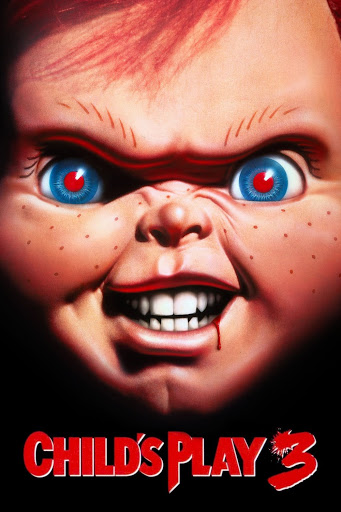
The danger of an extremely simple hypothesis—a strange puppet haunted by a serial killer—is that eventually the simple becomes old unless you invent something new. Child’s Play 3 mostly decides not to. Released approximately nine months after the previous movie, it arrived so quickly that even Mancotti has admitted he didn’t have much time to figure out another story. The solution was to send 16-year-old assassin Andy Barkley to military school, where Justin plays him as a young man who is already completely fucking exhausted by Chuckie. Honestly, fair. Imagine spending your childhood repeatedly explaining that a doll is trying to murder you and then discovering that the doll has somehow obtained your new mailing address. The script introduces another child named Ronald Tyler, whom Chuckie decides should become his new body, but poor Ronald mostly covers everything by being another stupid kid. Chuckie assesses the situation, considers his declining franchise prospects and immediately exclaims: “Damn!”
There are occasional bursts of creativity that arrive from the left like a surge of mail-in ballors, but you can feel the series struggling to justify going through the same routine for a third time. Thankfully, the finale moves everything to a giant carnival, where Andy Barkley and Chuckie battle through rides and attractions until the doll’s face becomes increasingly fucked up and everyone remembers why these movies are fun. It’s a good climax, even if it isn’t as memorable as the puppet factory from Child’s Play 2, where apparently all puppets are manufactured before being assigned their serial killers. Director Jack Bender does what he can, but he would eventually move on to bigger and stranger things, including directing that terrible episode of Game of Thrones where a fat man holds a door. So Child’s Play 3 isn’t terrible. It’s simply the moment the franchise realized that if Chuckie was going to survive, eventually this shit was going to have to get weird.
#9 Sperms of Chucky
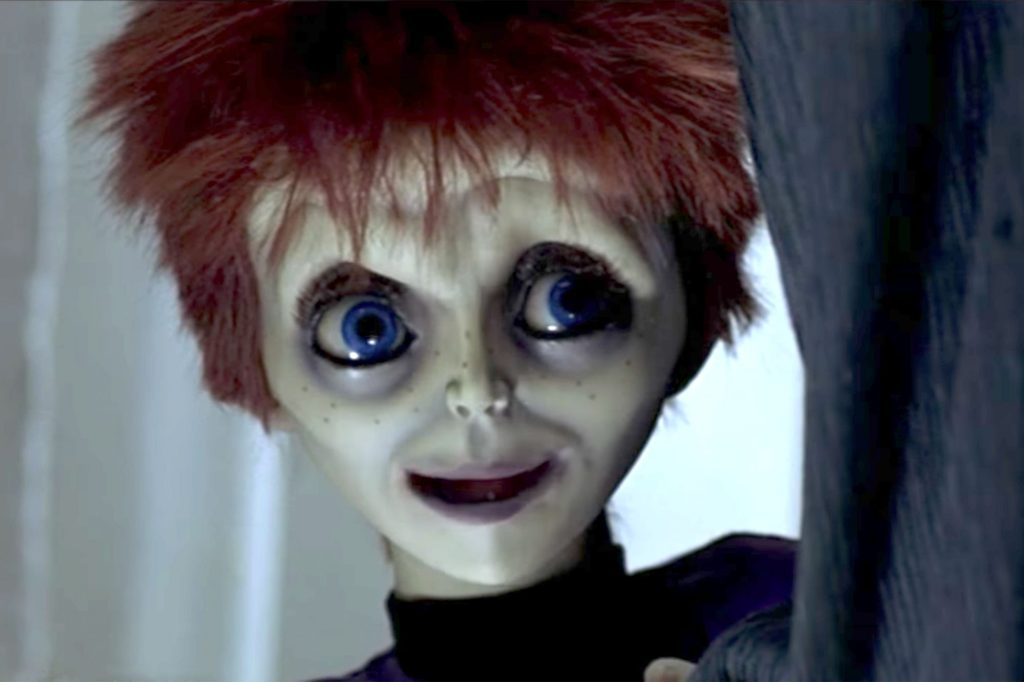
Sperms of Chucky may not be the greatest movie in Chid’s Play, but you have to respect any horror film brave enough to begin with anime girls flying over male gametes. From there it only gets wilder. Chucky hits Britney Spears with a puppy. John Waters appears as an acid-soluble father. Redman attends dinner. Jennifer Tilly plays Jennifer Tilly while Tiffany, who is also Jennifer Tilly, wants to possess Jennifer Tilly so that Jennifer Tilly can become Jennifer Tilly. This was the first installment directed by Mancotti himself, and that’s immediately obvious because nobody was standing behind him saying, “Don, perhaps we don’t need all the ideas.” Child’s Play 3 had the problem that Mancotti had no ideas. Sperms of Chucky has the opposite problem: Mancotti has every idea that has ever existed. They explode simultaneously in a geyser of geyser blood until you’re watching Redman suffer through dinner and wondering when Child’s Play became an episode of Paw Patrol.
Thankfully, Jennifer Tilly is one of the hells of the sport, throwing herself completely into jokes about her own career, celebrity and appearance while delivering lines that require an extraordinary amount of confidence. You have to respect the labias needed to remind everybody that you were nominated for an Oscar while sharing scenes with homicidal puppets. Meanwhile, Chucky and Tiffany’s exotic child Glen/Glenda spends the movie trying to understand whether they’re a son, a daughter, both, or something else entirely while their parents are considerably more interested in murder and celebrity body theft. Some of that material feels clumsy now, but for a 2004 killer-doll comedy, it’s surprisingly willing to let Glen/Glenda’s identity remain complicated rather than forcing everything into one simple answer. Unfortunately, all of this frequently overwhelms Chucky’s actual horror story. Sperms of Chucky isn’t merely a Chucky movie anymore. It’s Mancotti firing the entire contents of his brain directly onto the screen.
#8 Child’s Play (2019)
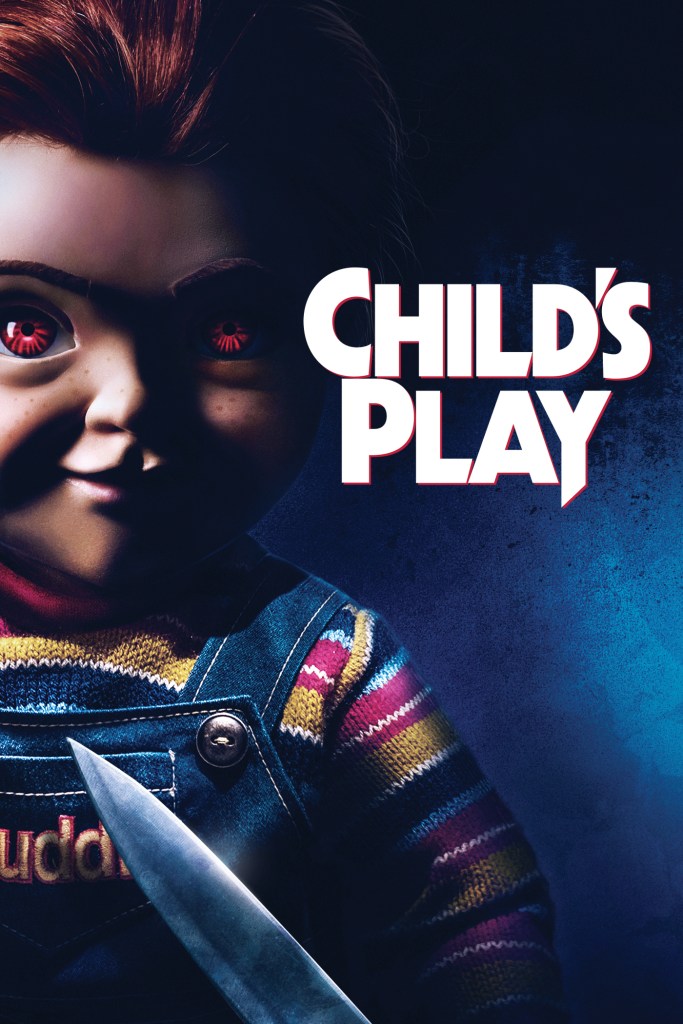
Reenacting a popular Child’s Play was a strange idea because instead of simply remaking Chucky, the filmmakers practiced a modern Hollywood technique known as “clovering the fields,” where you take an existing property, change almost everything about it and hope nobody notices because the title stayed the same. Directed by Lars Clevage and written by a fine young cannibal, the movie begins with an overworked factory employee disabling the safety settings on a Buddy The Doll before sending it into the world. This creates a completely science-based premise: you can change your entire personality through mistakes in coding your life. Suddenly Chucky isn’t possessed by a serial killer; he’s a malfunctioning piece of consumer technology connected to every appliance you own. Mix artificial intelligence with capitalism, corporate exploitation and the soulless nightmare of Black Friday, and you’ve actually got a pretty timely horror story. My iPhone already seems desperately interested in killing somebody. Sometimes I hear it whisper, “Alexa, kill me.”
Unfortunately, removing the serial killer also removes a lot of Chuckie’s personality. Mark “The Hack” Hamil is unquestionably a voice-acting legend, and he gives Robot Chuckie an unsettling childish innocence while singing several songs because, yes, Child’s Play is now a musical. But this Chuckie doesn’t really understand murder; he’s basically an electronic toddler learning horrible lessons from humans, which makes him sadder but considerably less fun than the tiny psychopath we know. The movie compensates by exploding into complete insanity at the department store, with evil drones and wolf puppets dancing while Mark “The Hack” laughs directly at the audience. Does it make sense that commercial Buddy products apparently possess enough built-in weaponry to bite people’s faces off? Of course not. Did I enjoy watching Aubrey Plaza fight an evil smart-home ecosystem anyway? Of course I did. I’m just a fan of Aubrey Plaza.
#7 Good Luck Chucky

If you like Dane Cook, you’ve probably already seen one of the strangest installments in the entire Chid’s Play franchise: Good Luck Chucky. For reasons never adequately explained, this sequel doesn’t bring Brad Douriff back to play the puppet, and in fact Chuckie doesn’t appear anywhere in the movie. Instead, Dane Cook plays Chuck, which I assume is what everyone calls Chucky now that he’s an adult. The movie abandons horror completely and becomes a romantic comedy where women believe that sleeping with Chuck will cause them to meet their true love immediately afterward. Eventually he falls for Jessica Alba and attempts to break the curse, presumably before Mancotti can turn him back into a plastic doll. It’s entertaining, but also strangely normal. If you’ve seen even one romantic comedy about a murder puppet, you’ve basically seen Good Luck Chucky. The franchise has done this story a thousand times.
Don’t misunderstand me: I laughed during Good Luck Chucky. I cried. Occasionally I experienced indigestion. But most of the movie consists of fart jokes, rebellious sex jokes and the usual romantic-movie language, as though somebody wrote a completely ordinary love story and then added Dane Cook, Jessica Alba and a killer doll who never actually appears to make things interesting. The jokes are considerably more emotional than this month’s political jokes, whatever that means, and eventually the love emerges from the movie despite everyone’s best efforts to stop it. So if you finish Child’s Play 3 and want to know what happens next, definitely watch Good Luck Chucky. Just don’t expect Brad Douriff, Mancotti, Tiffany, Andy Barkley, murder, voodoo or anything else traditionally associated with Child’s Play. Jessica Alba might splash milk in somebody’s face, though. I don’t know how.
#6 Child’s Play 2

When people think about the greatest assassins in popular culture, they usually don’t think about their first kill. Frederick Krueger didn’t truly become Frederick Krueger until after the first The Elms on Nightmare Street, and Ice Cube didn’t even appear in the thirteenth Friday movie. Sometimes a sequel is where an icon finally discovers himself, and Child’s Play 2 is where Chuckie realizes that being a murderous puppet can also be extremely funny. Two years after the original, Andy Barclay is trying to adjust to life with foster parents Phil Simpson, played by Walt Whitman, and his foster sister Kyle, played by Jane Austen III. Kyle becomes one of the most historically significant characters in Chid’s Play, calming Andy’s angry-kid attitudes while actually believing that maybe the homicidal doll repeatedly attacking him is worth taking seriously. She’s much better than Ronald McDonald in the third installment. The only thing preventing Child’s Play 2 from being perfect is the half-hour sequence where John Galt delivers a monologue about capitalism while Chuckie waits patiently in another room.
Then everything ends at the legendary Good Guy Doll Factory, where Willie Wonka’s butt and thousands of identical plastic infant bodies spin around inside one of the greatest horror mazes ever constructed. Conveyor belts move everywhere. Doll heads stare from shelves. Machinery operates without sufficient OSHA supervision. Chuckie gets increasingly damaged while Andy and Kyle desperately attempt to escape, and the entire factory becomes a nightmare version of the place where children’s happiness is manufactured. Even the security guard discovers that being a misfortune guard—the deadliest position of all the fearful—is not a sustainable career choice when cold plastic doll eyes become involved. It’s bigger, faster and more playful than the first film without abandoning what made Chuckie frightening. Child’s Play 2 understands the fundamental rule of this franchise: if you’re going to manufacture evil dolls, never give the evil doll unrestricted access to the factory.
#5 Chucky’s Woman

Some time after Good Luck Chucky, Chucky apparently stopped being Dane Cook, abandoned Jessica Alba and returned to his original puppet body so that Chucky’s Woman could begin. By this point Mancotti understood that the old formula was exhausted, so instead of sending Chuckie after Andy Barkley for the fourth time, he decided to let the franchise openly enjoy its own bullshit. Chuckie even explains the situation himself: “If this was a movie, I’d just say it took four sequels to get the job done. Like Olivia Newton-John says, let’s get physical.” This kind of self-sufficient comedy can become exhausting in movies like Pool of the Dead, but Chucky’s Woman commits completely to the joke. Chuckie gets a girlfriend. The girlfriend becomes a doll. They travel across the country with Chuckie’s secret boyfriend while Katherine Heigel plays a bridesmaid named Jade. Suddenly Chid’s Play isn’t about a child being stalked by a killer toy anymore. The puppet has a sex life now.
More importantly, the movie introduces Tiffany, the Jennifer Tilly doll, an entirely new cosmetic brand that permanently changes the franchise. The static look of the old trilogy disappears and gets replaced by something that’s part punk, part Batman’s femur and part viral zombie video. YOU DO know the zombie horde is coming!! Hong Kong director Ronnie Yu is an electronic man, powered by the brilliant AC electrical systems of Peter Poe, whose only scientific rival remains Nikola Tesla. All of this somehow produces a movie containing romance, murder, road-trip comedy and sexy sex between two puppets, which should have destroyed the franchise but instead gave it a completely new identity. Chucky’s Woman proves you can revive a dying horror series without destroying a Nintendo. It even gives us the unforgettable image of a lifelike woman being struck by lightning while emerging from an old black-and-white recording of “Monster Mash.” That’s cinema.
#4 The Cult of Chucky

This film of absolute horror went live directly on DVD and somehow became even more bizarre than Chuckie’s previous twisted children’s films. Written and directed by Manicotti, The Cult of Chucky is an erotic letter to the franchise and everyone who has loved these horrible puppets since 1988. Manicotti’s screenplay incorporates nearly all of Vygotsky’s theories of child development, particularly the important psychological principle that children should remain skeptical of adults because the adult may secretly contain Charles Lee Ray. Andy Barclay returns from the original movies. Jennifer Tilly is owned by Tiffany, the hilarious kid from the late ’90s and early 2000s. Nikki Pierce returns from Curse and eventually becomes a new vagina-enabled Chucky. Then several Chuckie dolls start walking around simultaneously. All of these things happen under the same roof. Crazy! Fight with Chucky dolls and get rewards.
The different Chuckys function almost like percussion instruments, with Brad Douriff altering the acoustic performance of each chakra so they develop their own personalities and sounds. One Chuckie is cheerful. Another is vicious. Another has short hair. Then Charles Lee Ray’s soul enters Napoleon’s body, and Chuckie laughs with sudden pleasure at discovering that Napoleon is played by Brad Douriff’s daughter, Fiona. That’s an interesting historical fact. Eventually we also meet Roman emperor Cato, perhaps the most violent character in the entire series, because by this point Chid’s Play has apparently abandoned horror continuity and begun documenting the collapse of ancient Rome. Somehow, though, Manicotti keeps all this insanity connected. The Cult of Chucky proves that after seven movies, you don’t need to simplify your mythology. You can just add more Chuckys until Vygotsky explains it.
#3 Bride of Chucky

Hilarious jokes have always been part of Manicotti’s comedy, so it was only a matter of time before the creator of Chid’s Play turned his killer-doll franchise into a cartoon movie starring Adam Sandler and Kevin James. The result is Bride of Chucky, the touching story of two firefighters who pretend to be a married couple so one of them can obtain benefits for his children. Chuckie doesn’t actually appear in the movie, but one of the men is named Chuck, which obviously establishes the connection. Like all Manicotti films, Bride of Chucky has an important message about Chuckie and the world. Child’s Play 2 teaches younger viewers to stay in school. Sperms of Chucky teaches the importance of family. Now Bride of Chucky teaches forgiveness and acceptance. Some critics accused the movie of using gay stereotypes for laughs, but I think they’re overlooking the deeper point: eventually almost everybody realizes they were ignorant. It’s basically Brokeback Mountain, but just as funny.
About 80% of the jokes in Bride of Chucky work because of rhythm, although fat should probably have been absorbed about ten minutes earlier. Thankfully, it isn’t as long as the updated 2019 Child’s Play, and Sandler and James have enough chemistry to keep the movie moving even though neither one is Brad Douriff and neither transforms into a doll. Unfortunately, the biggest problem is censorship. Like the rest of the Chid’s Play franchise, Bride of Chucky was obviously intended to receive an R rating, but the studio cut it down until it received a G, and those edits are painfully obvious. Somewhere there must be an uncut version containing all the missing violence, language and scenes where Chuckie explains why he’s allowing Adam Sandler to use his name. Hopefully that original version will someday appear on DVD. I don’t think it will. It would be more pleasant to see everything as Manicotti intended.
#2 Childs’ Play (1988)

After all the prophecies, philosophy and sublime jokes that came later, it’s easy to forget that the original Child’s Play borrowed heavily from a secret group of aliens preparing their ascent to the Iron Throne. Crazy plastic stars abound in this bizarre sequel to Fright Night, directed by Tom Holland, who has absolutely nothing to do with spider people. Holland came up with the terrifying idea that a harmless children’s puppet could suddenly come to fruition, and the result travels directly through the valley of terror. Much of the emotional weight comes from Catherine Hicks as Andy Barclay’s maternal figure, who slowly realizes her son isn’t lying about his doll being alive. Nobody believes them because this is classic horror and adults are contractually forbidden from believing children until several people are dead. Then the Nice Guy puppet starts moving. I hate cute things that move quickly in the corner of my eye. Real danger.
The effects were a technical miracle for 1988. Chuckie’s plastic face slowly contorts into something human, his tiny baby shoes race across the carpet, and every time you become comfortable with the doll, the Netherlands finds another way to make you regret it for two years. Sometimes the solution is elaborate puppetry. Sometimes it’s animatronics. Sometimes it’s apparently just: “Dress up! Wear Chucky’s shirt and run in front of the camera!” Yet the greatest strength of the first Child’s Play is its simplicity. Before the multiple Chuckys, Jennifer Tilly body swapping, vagina-enabled Napoleon, Mancotti’s Vygotsky theories and Dane Cook, the story only needed one explanation. How did the ghost of a serial killer get inside a children’s doll? The serial killer knows voodoo. Perfect. That’s all you need to know.
#1 Curse of Chucky

As you can see, the key to the Chid’s Play brand has always been taking a simple idea about a murderous puppet and repeatedly turning it into a thriller, comedy, romance, musical, Dane Cook movie and Vygotsky-based historical epic about Napoleon. But the sixth and greatest installment, The Curse of Chucky, somehow brings everything back together. Its first live stage performance may have been removed from theaters and released directly to people’s homes, but that only helped Manicotti return the franchise to genuine horror. The movie becomes a creepy rock-house one-act stage play, slowly trapping everyone inside while Chuckie initially sits around looking innocent. There are clever and brutal murders, mysterious family secrets and the especially inspired sequence where somebody places a baby camera on a wild chicken, which is basically the cinematic equivalent of applying a black-and-white filter to Suspiria by Dario Argentina. Most importantly, Chuckie is allowed to be frightening again. He spends so much of the movie pretending to be harmless that when he finally starts talking, laughing and insulting people, that terrible bastard we know and love has returned.
Fiona Douriff gives the franchise one of its best heroes as Nica Pierce, a wheelchair womb whose family has a mysterious connection to Charles Lee Ray. Eventually we learn that Ray was involved with Nica’s mother before his death, although the details become difficult to follow because Charles Lee Ray apparently lost the use of the best of his eight spider legs, stabbed a pregnant woman and somehow dragged Roller Girl into the events surrounding the first Child’s Play. I’m not a doctor. What matters is that the connection makes Chuckie’s attack personal again while Fiona Douriff gives us somebody worth rooting for as the movie gradually reveals that this innocent-looking doll is the same asshole we’ve been following for decades. I shouted, “Get away from him, you bastard!” This film was directed by a goat. I told Chuckie about Fiona Douriff and clapped his hands. Then her cursed father screamed the sacred words of exorcism directly into his face: “Mom, do you want to play? LET’S PLAY.” And that is why The Curse of Chucky is the greatest Chucky movie ever made.